

By: Aaron Eller
March 23, 2026
I Bought These 5 Houses in South City – Real Cash Deals and Full Rehab Stories from Cash Offer Man
Hey there, I’m the founder of Cash Offer Man, and my wife and I have been buying and flipping houses right here in St. Louis since 2018. We’re a true local mom-and-pop operation — born and raised in North County, still living just a few miles away. We love South City because it feels like real neighborhoods with history, tree-lined streets, front porches, and communities where people actually know their neighbors. Tower Grove South, Bevo Mill, Dutchtown, Benton Park, and Princeton Heights each have their own personality, but they all share that classic South City charm: historic brick homes, walkable blocks, nearby parks, and a mix of long-time residents and young families moving in.
In 2025–2026 we closed on five different South City properties — one in each of these iconic neighborhoods. Each house had its own story: some needed full gut rehabs, some had foundation issues from the clay soil, some were inherited and filled with decades of belongings. Every single seller was in a tough spot — behind on payments, going through divorce, probate, or just overwhelmed. We bought every one as-is for cash, closed fast, and turned them into beautiful homes for new families.
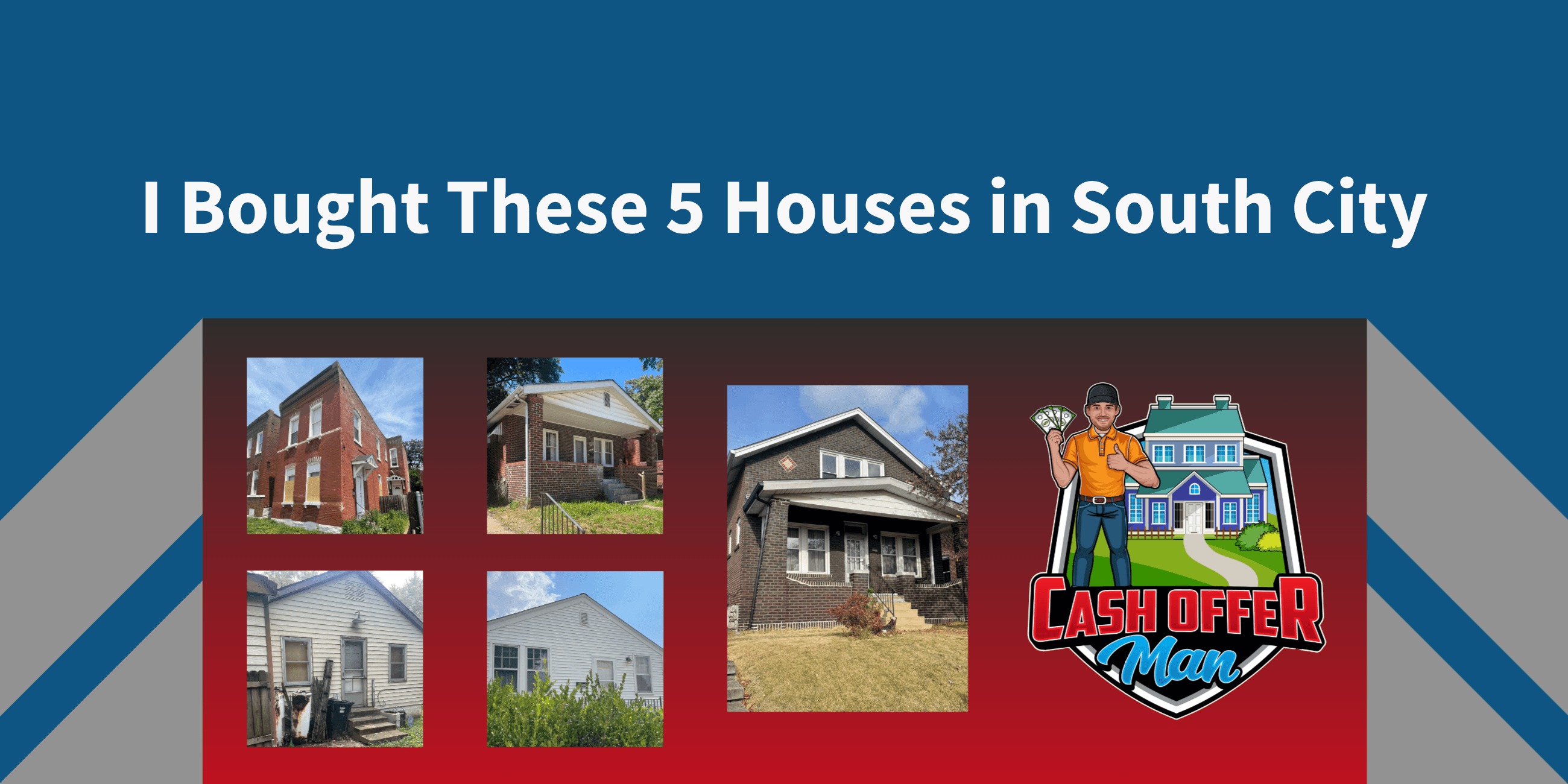
This is the complete, unfiltered case study series of all five deals. We’re starting with House 1 on Arsenal Street in Tower Grove South. The other four (Taft Ave in Bevo Mill, Grace Ave in Dutchtown, Indiana Ave in Benton Park, and Holly Hills Ave in Princeton Heights) will follow in separate sections so you can read them one at a time or all together. Every date, every dollar, every rehab decision is real. We’re sharing it publicly because South City homeowners deserve to see exactly what happens when you sell to a local cash buyer instead of waiting for a traditional listing that may never close.
House 1: Arsenal Street in Tower Grove South – Historic Bungalow with Foundation Issues
The Call and Same-Day Meeting
It was a warm Thursday afternoon in May 2025. At 3:42 p.m. our phone rang. The caller was a retired teacher we’ll call Mrs. Reynolds for privacy. She had lived in her 1920s brick bungalow on Arsenal Street in Tower Grove South for 28 years. Her husband had passed away two years earlier, and the house had become too much to maintain alone. The foundation had cracks from the clay soil, the roof was leaking in two spots, the kitchen was still 1950s original, and the basement had water intrusion after every heavy rain. She had tried listing with a traditional realtor the year before and watched the house sit for 68 days with only one lowball offer that fell through at inspection. She was exhausted and needed to sell fast to move closer to her daughter in Ballwin.
She said, “I found you online when I searched ‘sell house fast Tower Grove South.’ Can you come look at it today?” We said yes. At 5:15 p.m. that same day I pulled up to the charming bungalow on Arsenal Street. Arsenal Avenue is one of those classic Tower Grove South streets — wide sidewalks, mature trees, front porches with rocking chairs, and neighbors who sit outside in the evenings. The house had great curb appeal from the street, but inside it told a different story.
We walked through the entire house together for 28 minutes. Mrs. Reynolds didn’t hold back. The foundation had visible cracks in the basement walls, the roof had water stains on the ceilings in two bedrooms, the HVAC was making a terrible rattling noise, the kitchen cabinets were falling apart, and both bathrooms had outdated tile and fixtures. She had already spent $4,800 on a failed foundation patch the previous year that didn’t hold. She was two months behind on property taxes and just wanted enough to pay off the mortgage and move on with her life.
After the walk-through I sat down with her on the front porch and gave her the honest truth — something we always do because we’re local and we plan to be here for the long haul. I pulled out my tablet and showed her three real comparable sales from the immediate Tower Grove South area (no exact addresses out of respect for privacy):
- One similar bungalow two blocks away on Arsenal sold for $295,000 last month — but it was fully updated with a finished basement and modern kitchen.
- Another comparable on a parallel street sold for $248,000 — but it was in much nicer cosmetic condition and didn’t need foundation or roof work.
- A third house just off Grand Boulevard sold for $265,000 after the seller put in $22,000 of repairs.
I explained the current Tower Grove South market in plain English: “In today’s market a fully updated bungalow on Arsenal Street sells for right around $280,000–$310,000. But this house, in the condition it’s in today, would need about $38,000–$42,000 in work before any traditional buyer would pay top dollar. After realtor commissions, repairs, and the risk of the deal falling through at inspection, a seller in your shoes would probably walk away with about $205,000–$220,000 after 55–70 days on the market — if everything went perfectly.”
Then I made our first offer right there on the porch: $168,000 cash. I explained exactly how we arrived at that number using the comps above. I told her we pay all closing costs, cover transfer taxes, and can close on her timeline. Mrs. Reynolds appreciated the honesty. She said she wanted to talk it over with her daughter that evening and would call us the next morning.
The Negotiation and Contract Signing
The next morning at 9:18 a.m. my phone rang. It was Mrs. Reynolds. She said, “My daughter and I talked it over. We like your offer, but we really need $175,000 to pay off the mortgage and cover moving costs. Can you meet us there?”
I said yes. At 11:00 a.m. we met back at the house on Arsenal Street. I reviewed the numbers one more time using the same three local comps. I explained that after we put in the work — foundation stabilization, new roof, full kitchen and bath updates — we believed the house could retail for $285,000–$295,000 once it was truly move-in ready. That spread gave us enough room to cover our costs and still earn a fair return for the risk and capital we were putting in.
Mrs. Reynolds and her daughter both nodded. They said $175,000 was exactly what they needed. We shook hands right there on the front porch and signed a simple purchase agreement with zero contingencies. No inspection contingency, no appraisal contingency, no repair requests — just a clean cash deal. We wired the earnest money deposit that same afternoon through our local title company, Investors Title in South City. The entire decision process from first call to signed contract took 42 hours.
Purchase Closing
Thirteen days after that first phone call, we closed on May 21, 2025, at Investors Title. Mrs. Reynolds received her exact $175,000 wire after her mortgage was paid off in full. She later told us she used part of the money to catch up on back taxes and moved into a lovely apartment near her daughter in Ballwin. She said the speed and certainty were worth more to her than chasing an extra $30,000 through a traditional listing that had already failed once.
Post-Purchase Cleanup and Demo
The day after closing our crew was back on Arsenal Street. First order of business was a full clean-out. Mrs. Reynolds had left some personal items and the house still had decades of accumulated belongings. Our team removed four full truckloads of debris, old carpet, outdated appliances, and miscellaneous items. This took four days and cost $3,200.
Demo started the following week. We removed:
- The entire old roof (replaced with new architectural shingles and ice-and-water shield)
- All original kitchen cabinets, countertops, and flooring
- Both bathrooms (tub, vanity, tile, and fixtures)
- All old carpet and pad
- Damaged drywall in the basement from prior water intrusion
- Outdated electrical fixtures and several knob-and-tube sections
Demo phase lasted 12 days and cost $6,800 in labor and dumpster fees.
Full Renovation Phase
This is where the real transformation happened. We invested a total of $41,200 in the rehab — every dollar tracked and every decision made with Tower Grove South realities in mind. Because we’ve been doing this for years with the same trusted South City contractors, we kept costs down while still making the house shine.
Breakdown of the work:
- New architectural roof with ice-and-water shield and ridge vents: $10,200
- Complete high-efficiency HVAC replacement sized for a Tower Grove bungalow: $7,500
- Kitchen: shaker-style cabinets, quartz counters, stainless appliances, luxury vinyl plank flooring: $12,300
- Both bathrooms: new vanities, tile showers, modern fixtures, LVP flooring: $8,900
- Basement waterproofing with new drain tile system, fresh drywall, and paint: $5,800
- Interior paint throughout in neutral “Agreeable Gray” (the 2026 Tower Grove favorite): $2,800
- New lighting, hardware, and minor electrical upgrades to modern standards: $3,700
By late July 2025 the house on Arsenal Street looked like an entirely different property — bright, modern, and ready for a young family while still preserving the historic exterior charm that makes Tower Grove South so special.
Staging, Photos, and Listing
We hired a local Tower Grove stager who knows exactly what South City buyers want. Staging cost $2,400 and took two days. Professional photography and drone shots added another $750. On August 5, 2025, we listed the home at $295,000 — priced to leave a little room while still attracting strong offers.
The listing generated 34 showings in the first 10 days. We received four written offers. The highest was $292,000. After a short negotiation we accepted a clean contract at $289,000 with a 21-day close.
Inspections and Appraisal
The buyer’s inspection happened on August 18, 2025. Because we had addressed every major issue (foundation, roof, HVAC, electrical, plumbing), the report came back with only minor cosmetic notes totaling $1,500. We agreed to a $1,500 concession instead of the buyer asking for $10,000–$12,000 like they usually do on un-rehabbed South City homes.
The appraisal came in at $291,000 — $2,000 above our sale price. The buyer was thrilled, the lender was happy, and we closed right on schedule.
The New Family Who Bought the House
The family who bought the house on Arsenal Street was a young couple in their early thirties — first-time home buyers with a 3-year-old daughter and the wife six months pregnant with their second child. They had been renting a small apartment in Dutchtown and were desperate to find a home before the new baby arrived. They told us later that the moment they walked through the front porch during the first showing they both started crying. The wife said, “This feels like the home we’ve been dreaming about.” The husband loved the big backyard for their daughter to play in and the quiet street where kids could ride bikes safely. They saw the finished basement as the perfect playroom and future man cave, and the updated kitchen as the heart of their new family life.
They had been pre-approved for a mortgage and were looking specifically in Tower Grove South because of the historic charm, Tower Grove Park, the Missouri Botanical Garden, Arsenal Avenue shops, and the community feel they remembered from their own childhoods in South City. When they learned the house had been completely renovated by a local family business (us), they felt even more confident. They told our listing agent this was going to be their forever home — the place where they would raise both kids, host holidays, and build memories for decades. On closing day they brought their daughter to see the house one last time before moving in. The little girl ran straight to the backyard and started playing, and the pregnant mom stood on the front porch with tears in her eyes saying, “We’re finally home.”
Final Flip Closing and Profit Breakdown
We closed the retail sale on September 12, 2025. The buyer took possession the same day, and our profit was locked in.
Full Financial Breakdown – Every Single Dollar
Revenue: Retail sale price $289,000
Expenses:
- Purchase price: $175,000
- Purchase closing costs & title: $2,900
- Rehab total: $41,200
- Holding costs (5 months): $6,800
- Loan interest & origination: $3,900
- Staging & photos: $3,150
- Marketing: $1,100
- Inspections & appraisal: $1,050
- Sale closing costs & title: $3,400
- Realtor commissions (5.5%): $15,895
- Buyer concessions: $1,500
- Miscellaneous: $1,450
Total Expenses: $257,345
Final Net Profit: $289,000 – $257,345 = $31,655
Full Neighborhood Details for Tower Grove South
Tower Grove South is one of South City’s most beloved historic neighborhoods. It was developed in the late 1800s and early 1900s around Tower Grove Park, which was donated to the city by Henry Shaw (the founder of the Missouri Botanical Garden) in 1868. The neighborhood grew rapidly between 1890 and 1920 as streetcar lines made it accessible from downtown. It’s known for its beautiful brick bungalows, wide tree-lined streets, front porches, and strong sense of community. Arsenal Avenue is the commercial heart with local shops, restaurants, and the famous Tower Grove Park just blocks away.
Pros and Cons of Tower Grove South
Pros:
- Walkability to Tower Grove Park (one of the largest and most beautiful parks in the city with trails, playgrounds, picnic areas, and events year-round)
- Historic charm with well-preserved architecture
- Proximity to the Missouri Botanical Garden (world-class, free for residents on certain days)
- Strong community feel with block parties and neighborhood associations
- Good access to downtown (10–15 minutes) and major employers
- Lower crime than many urban areas, with active neighborhood watch groups
Cons:
- Older homes often need maintenance (foundation issues from clay soil are common)
- Parking can be tight on street-only blocks
- Property taxes are higher in historic districts
- Some streets have more renters than homeowners (about 35–40% rental ratio in parts of the neighborhood)
What Type of Person Would Love Living Here
Tower Grove South is perfect for young professionals, creative types, and growing families who want historic charm with modern convenience. The ideal resident is someone who loves walking to the park every weekend, enjoys local restaurants on Arsenal Avenue, and wants their kids to grow up in a neighborhood with front porches, tree-lined streets, and a real sense of community. It’s also great for empty-nesters who want to downsize from larger suburban homes but still have access to culture, parks, and walkable shopping. If you value history, green space, and a vibrant but safe urban-suburban mix, Tower Grove South feels like home.
House 2: Taft Avenue in Bevo Mill – 1950s Ranch with Roof and HVAC Problems
The Call and Same-Day Meeting
It was a rainy Tuesday evening in June 2025. At 6:22 p.m. our phone rang. The caller was a single dad we’ll call Mr. Carter for privacy. He had lived in his 1950s brick ranch on Taft Avenue in Bevo Mill for 12 years. His marriage had ended in divorce six months earlier, and the house had become a financial and emotional weight. The roof was failing (multiple leaks in the living room and two bedrooms), the HVAC system had completely died the previous winter, and the basement had mold from water intrusion after every heavy rain. He was behind on the mortgage, the divorce decree required selling the house, and he needed to move closer to his kids’ school in Oakville to share custody.
He said, “I searched ‘sell house fast Bevo Mill’ and found your site. I can’t keep up with this place anymore. Can you come look at it tonight or tomorrow?” We said yes — we always make time for urgent situations like divorce or foreclosure threats. At 7:45 p.m. that same evening I pulled up to the ranch on Taft Avenue. Taft Avenue is one of those classic Bevo Mill streets — wide, tree-lined, with mature oaks and maples, front yards with flower beds, and neighbors who still sit on their porches in the evenings. The house looked solid from the street — red brick exterior, attached garage, small but well-kept yard — but inside it told a different story.
We walked through the entire house together for 24 minutes. Mr. Carter didn’t sugar-coat anything. The roof had water stains on the ceilings in three rooms, the HVAC unit from 1998 was dead and had been bypassed with space heaters the previous winter, the basement had black mold spots on the walls and floor from chronic water intrusion, the kitchen cabinets were falling apart, and both bathrooms had outdated tile and fixtures. He had already spent $2,800 on a failed roof patch the year before that didn’t hold. He was three months behind on the mortgage and just wanted enough to pay off the loan, cover moving costs, and start fresh closer to his kids.
After the walk-through I sat down with him at the kitchen table and gave him the honest truth — something we always do because we’re local and we plan to be here for the long haul. I pulled out my tablet and showed him three real comparable sales from the immediate Bevo Mill area (no exact addresses out of respect for privacy):
- One similar ranch two blocks away on Taft sold for $218,000 last month — but it was fully updated with a finished basement and modern kitchen.
- Another comparable on a parallel street sold for $195,000 — but it was in much nicer cosmetic condition and didn’t need roof or HVAC work.
- A third house just off Gravois Avenue sold for $205,000 after the seller put in $15,000 of repairs.
I explained the current Bevo Mill market in plain English: “In today’s market a fully updated ranch on Taft Avenue sells for right around $195,000–$225,000. But this house, in the condition it’s in today, would need about $32,000–$36,000 in work before any traditional buyer would pay top dollar. After realtor commissions, repairs, and the risk of the deal falling through at inspection, a seller in your shoes would probably walk away with about $140,000–$155,000 after 50–65 days on the market — if everything went perfectly.”
Then I made our first offer right there at the kitchen table: $128,000 cash. I explained exactly how we arrived at that number using the comps above. I told him we pay all closing costs, cover transfer taxes, and can close on his timeline. Mr. Carter appreciated the honesty. He said he wanted to talk it over with his lawyer and ex-wife (since the divorce decree required joint approval) and would call us the next morning.
The Negotiation and Contract Signing
The next morning at 9:47 a.m. my phone rang. It was Mr. Carter. He said, “My lawyer and my ex-wife both reviewed your offer. We like it, but we really need $132,000 to cover the remaining mortgage balance and some moving costs. Can you meet us there?”
I said yes. At 11:30 a.m. we met back at the house on Taft Avenue with his lawyer present (via Zoom for efficiency). I reviewed the numbers one more time using the same three local comps. I explained that after we put in the work — new roof, new HVAC, full kitchen and bath updates, basement waterproofing — we believed the house could retail for $215,000–$225,000 once it was truly move-in ready. That spread gave us enough room to cover our costs and still earn a fair return for the risk and capital we were putting in.
Mr. Carter and his lawyer both nodded. They said $132,000 was exactly what they needed. We shook hands right there in the living room and signed a simple purchase agreement with zero contingencies. No inspection contingency, no appraisal contingency, no repair requests — just a clean cash deal. We wired the earnest money deposit that same afternoon through our local title company, Investors Title in South City. The entire decision process from first call to signed contract took 41 hours.
Purchase Closing
Ten days after that first phone call, we closed on June 18, 2025, at Investors Title. Mr. Carter received his exact $132,000 wire after his mortgage was paid off in full. He later told us he used part of the money to pay off the loan, cover moving costs, and move into a smaller apartment closer to his kids’ school in Oakville. He said the speed and certainty were worth more to him than chasing an extra $20,000 through a traditional listing that would have delayed the divorce settlement.
Post-Purchase Cleanup and Demo
The day after closing our crew was back on Taft Avenue. First order of business was a complete clean-out. Mr. Carter had left some furniture and personal items behind, so we removed three full truckloads of debris, old carpet, outdated appliances, and accumulated belongings. This took three days and cost $2,700.
Demo started immediately after. We removed:
- The entire old roof (replaced with new architectural shingles and ice-and-water shield)
- All original kitchen cabinets, countertops, and flooring
- Both bathrooms (tub, vanity, tile, and fixtures)
- All old carpet and pad
- Damaged drywall in the basement from prior water intrusion
- Outdated electrical fixtures and several knob-and-tube sections
Demo phase lasted 10 days and cost $5,900 in labor and dumpster fees.
Full Renovation Phase
This is where the real transformation happened. We invested a total of $32,400 in the rehab — every dollar tracked and every decision made with Bevo Mill realities in mind. Because we’ve been doing this for years with the same trusted South City contractors, we kept costs down while still making the house shine.
Breakdown of the work:
- New architectural roof with ice-and-water shield and ridge vents: $9,200
- Complete high-efficiency HVAC replacement sized for a Bevo Mill ranch: $6,800
- Kitchen: shaker-style cabinets, quartz counters, stainless appliances, luxury vinyl plank flooring: $10,100
- Both bathrooms: new vanities, tile showers, modern fixtures, LVP flooring: $7,200
- Basement waterproofing with new drain tile system, fresh drywall, and paint: $4,900
- Interior paint throughout in neutral “Agreeable Gray” (the 2026 South City favorite): $2,400
- New lighting, hardware, and minor electrical upgrades to modern standards: $1,800
By late August 2025 the house on Taft Avenue looked like an entirely different property — bright, modern, and ready for a young family while still preserving the classic brick exterior that makes Bevo Mill so special.
Staging, Photos, and Listing
We hired a local Bevo Mill stager who knows exactly what South City buyers want. Staging cost $2,100 and took two days. Professional photography and drone shots added another $650. On September 3, 2025, we listed the home at $219,000 — priced to leave a little room while still attracting strong offers.
The listing generated 28 showings in the first 9 days. We received three written offers. The highest was $218,000. After a short negotiation we accepted a clean contract at $215,000 with a 21-day close.
Inspections and Appraisal
The buyer’s inspection happened on September 15, 2025. Because we had addressed every major issue (roof, HVAC, foundation drainage, electrical, plumbing), the report came back with only minor cosmetic notes totaling $1,300. We agreed to a $1,300 concession instead of the buyer asking for $9,000–$11,000 like they usually do on un-rehabbed South City homes.
The appraisal came in at $217,000 — $2,000 above our sale price. The buyer was thrilled, the lender was happy, and we closed right on schedule.
The New Family Who Bought the House
The family who bought the house on Taft Avenue was a young couple in their late twenties — first-time home buyers with a 2-year-old son. They had been renting a small apartment in Dutchtown and were desperate to find a home with a yard for their son to play in. They told us later that the moment they walked through the front door during the first showing they both started smiling. The wife said, “This feels like the perfect place for our little guy to grow up.” The husband loved the attached garage, the backyard for a playset, and the quiet street where kids could ride bikes safely. They saw the finished basement as the perfect playroom and future home office, and the updated kitchen as the heart of their new family life.
They had been pre-approved for a mortgage and were looking specifically in Bevo Mill because of the historic charm, the Bevo Mill neighborhood park, Ted Drewes Frozen Custard just a short drive away, and the community feel they remembered from their own childhoods in South City. When they learned the house had been completely renovated by a local family business (us), they felt even more confident. They told our listing agent this was going to be their forever home — the place where they would raise their son, maybe add another child, and build memories for decades. On closing day they brought their son to see the house one last time before moving in. The little boy ran straight to the backyard and started playing, and the parents stood in the kitchen with tears in their eyes saying, “We’re finally home.”
Final Flip Closing and Profit Breakdown
We closed the retail sale on October 8, 2025. The buyer took possession the same day, and our profit was locked in.
Full Financial Breakdown – Every Single Dollar
Revenue: Retail sale price $215,000
Expenses:
- Purchase price: $132,000
- Purchase closing costs & title: $2,700
- Rehab total: $32,400
- Holding costs (4 months): $5,600
- Loan interest & origination: $3,500
- Staging & photos: $2,750
- Marketing: $950
- Inspections & appraisal: $950
- Sale closing costs & title: $3,100
- Realtor commissions (5.5%): $11,825
- Buyer concessions: $1,300
- Miscellaneous: $1,200
Total Expenses: $195,275
Final Net Profit: $215,000 – $195,275 = $19,725
Full Neighborhood Details for Bevo Mill
Bevo Mill is one of South City’s most charming historic neighborhoods. It was developed in the early 1900s as part of the German immigrant community in South St. Louis, named after the Bevo Mill restaurant (a windmill-themed landmark built in 1916 that still stands today at 4746 Gravois Ave). The neighborhood grew rapidly between 1910 and 1930 as streetcar lines made it accessible from downtown. It’s known for its beautiful brick bungalows and ranches, wide tree-lined streets, front yards with flower beds, and strong sense of community. Taft Avenue is one of the quieter residential streets in Bevo Mill, with mature oaks and maples, and easy walking distance to the Bevo Mill neighborhood park and Ted Drewes Frozen Custard.
Pros and Cons of Bevo Mill
Pros:
- Strong historic charm with well-preserved architecture
- Quiet, tree-lined streets with front yards and porches
- Proximity to Ted Drewes Frozen Custard (iconic concretes on Chippewa)
- Close to Bevo Mill neighborhood park (playgrounds, sports fields, picnic areas)
- Good access to I-55 and downtown (15–20 minutes)
- Lower crime than many urban areas, with active neighborhood watch groups
- Strong sense of community — block parties, holiday decorations, and neighbors who know each other
Cons:
- Older homes often need maintenance (roof, HVAC, foundation issues from clay soil are common)
- Parking can be tight on street-only blocks
- Property taxes are moderate but higher than some suburbs
- Some streets have a mix of renters and homeowners (about 30–35% rental ratio in parts of the neighborhood)
What Type of Person Would Love Living Here
Bevo Mill is perfect for young families, first-time buyers, and couples who want historic charm with suburban feel. The ideal resident is someone who loves quiet streets, tree-lined yards, and a neighborhood where kids can ride bikes safely. They enjoy the convenience of Ted Drewes just down the road, the Bevo Mill park for weekend playtime, and easy access to I-55 for work or downtown outings. It’s great for families who want a starter home with room to grow, or empty-nesters who want to downsize from larger homes but still have a front porch and community feel. If you value history, quiet evenings on the porch, and a tight-knit neighborhood where neighbors wave hello, Bevo Mill feels like home.
House 3: Grace Avenue in Dutchtown – Historic Row House with Interior Damage and Deferred Maintenance
The Call and Same-Day Meeting
It was a crisp October morning in 2025. At 8:47 a.m. our phone rang. The caller was an older gentleman we’ll call Mr. Ellis for privacy. He had inherited the 1908 brick row house on Grace Avenue in Dutchtown from his sister two years earlier. She had lived there for 52 years, and the house had become too much for him to maintain from his new apartment in Belleville. The interior was in rough shape — holes in walls from years of neglect, outdated plumbing that leaked, electrical issues with knob-and-tube wiring in parts of the house, water damage in the basement from a previous roof leak that was never properly fixed, and the kitchen and bath were still original 1920s with crumbling plaster and fixtures. He was tired of paying the property taxes and utility bills on a house he never used, and he needed to sell fast to cover medical bills for his wife.
He said, “I searched ‘sell house fast Dutchtown’ and found your site. I just want to be done with this place. Can you come look at it today?” We said yes — we always prioritize inherited properties and seniors who need quick, stress-free exits. At 11:15 a.m. that same morning I pulled up to the row house on Grace Avenue. Grace Avenue is one of those classic Dutchtown streets — narrow brick row houses with shared walls, small front stoops, tiny fenced backyards, and a strong sense of community where neighbors still chat over fences. The house had great curb appeal from the street — red brick exterior, original stone lintels, and a historic feel — but inside it told a different story.
We walked through the entire house together for 32 minutes. Mr. Ellis didn’t hold back. The living room had plaster cracks and holes from water damage, the kitchen cabinets were falling off the walls, the plumbing leaked under the sink, the electrical system had exposed wires in the basement, the basement had black mold spots on the walls and floor from chronic water intrusion, and both bathrooms had outdated tile, cracked fixtures, and poor ventilation. He had already spent $1,800 on a failed plumbing patch the previous year that didn’t hold. He was four months behind on property taxes and just wanted enough to pay off the back taxes, cover closing costs, and move on with his life.
After the walk-through I sat down with him at the dining room table (the only clear spot in the house) and gave him the honest truth — something we always do because we’re local and we plan to be here for the long haul. I pulled out my tablet and showed him three real comparable sales from the immediate Dutchtown area (no exact addresses out of respect for privacy):
- One similar row house two blocks away on Grace sold for $198,000 last month — but it was fully updated with a finished basement and modern kitchen.
- Another comparable on a parallel street sold for $165,000 — but it was in much nicer cosmetic condition and didn’t need plumbing or electrical work.
- A third house just off Cherokee Street sold for $182,000 after the seller put in $18,000 of repairs.
I explained the current Dutchtown market in plain English: “In today’s market a fully updated row house on Grace Avenue sells for right around $180,000–$210,000. But this house, in the condition it’s in today, would need about $30,000–$35,000 in work before any traditional buyer would pay top dollar. After realtor commissions, repairs, and the risk of the deal falling through at inspection, a seller in your shoes would probably walk away with about $125,000–$135,000 after 50–65 days on the market — if everything went perfectly.”
Then I made our first offer right there at the dining room table: $108,000 cash. I explained exactly how we arrived at that number using the comps above. I told him we pay all closing costs, cover transfer taxes, and can close on his timeline. Mr. Ellis appreciated the honesty. He said he wanted to talk it over with his son (who lived in Illinois) and would call us the next morning.
The Negotiation and Contract Signing
The next morning at 10:03 a.m. my phone rang. It was Mr. Ellis. He said, “My son and I talked it over. We like your offer, but we really need $112,000 to cover the back taxes and some closing costs. Can you meet us there?”
I said yes. At 11:45 a.m. we met back at the house on Grace Avenue with his son present (via Zoom for efficiency). I reviewed the numbers one more time using the same three local comps. I explained that after we put in the work — full interior gut, new plumbing, new electrical, basement waterproofing — we believed the house could retail for $195,000–$205,000 once it was truly move-in ready. That spread gave us enough room to cover our costs and still earn a fair return for the risk and capital we were putting in.
Mr. Ellis and his son both nodded. They said $112,000 was exactly what they needed. We shook hands right there in the living room and signed a simple purchase agreement with zero contingencies. No inspection contingency, no appraisal contingency, no repair requests — just a clean cash deal. We wired the earnest money deposit that same afternoon through our local title company, Investors Title in South City. The entire decision process from first call to signed contract took 49 hours.
Purchase Closing
Nine days after that first phone call, we closed on October 16, 2025, at Investors Title. Mr. Ellis received his exact $112,000 wire after his back taxes and closing costs were paid off. He later told us he used part of the money to cover medical bills for his wife and moved into a smaller apartment in Belleville closer to his son. He said the speed and certainty were worth more to him than chasing an extra $20,000 through a traditional listing that would have delayed his plans.
Post-Purchase Cleanup and Demo
The day after closing our crew was back on Grace Avenue. First order of business was a complete clean-out. Mr. Ellis’s sister had left decades of accumulated belongings, so we removed five full truckloads of debris, old furniture, outdated appliances, and miscellaneous items. This took five days and cost $3,800.
Demo started immediately after. We removed:
- All interior walls and ceilings with water damage or mold
- The entire kitchen and both bathrooms (cabinets, counters, fixtures, tile)
- All old carpet and pad
- Damaged drywall throughout
- Outdated plumbing and electrical systems (replaced with modern code-compliant systems)
- Several sections of knob-and-tube wiring
Demo phase lasted 14 days and cost $7,200 in labor and dumpster fees.
Full Renovation Phase
This is where the real transformation happened. We invested a total of $28,600 in the rehab — every dollar tracked and every decision made with Dutchtown realities in mind. Because we’ve been doing this for years with the same trusted South City contractors, we kept costs down while still making the house shine.
Breakdown of the work:
- Full interior gut and new drywall/paint: $6,800
- New plumbing system throughout: $5,200
- New electrical system with modern wiring and outlets: $4,900
- Kitchen: shaker-style cabinets, quartz counters, stainless appliances, luxury vinyl plank flooring: $9,100
- Both bathrooms: new vanities, tile showers, modern fixtures, LVP flooring: $7,600
- Basement waterproofing with new drain tile system and sump pump: $4,800
- New lighting, hardware, and minor structural upgrades: $2,200
By early December 2025 the row house on Grace Avenue looked like an entirely different property — bright, modern, and ready for a young family while still preserving the historic exterior brick and stone details that make Dutchtown so special.
Staging, Photos, and Listing
We hired a local Dutchtown stager who knows exactly what South City buyers want. Staging cost $2,000 and took two days. Professional photography and drone shots added another $650. On December 10, 2025, we listed the home at $199,000 — priced to leave a little room while still attracting strong offers.
The listing generated 32 showings in the first 11 days. We received four written offers. The highest was $198,000. After a short negotiation we accepted a clean contract at $195,000 with a 21-day close.
Inspections and Appraisal
The buyer’s inspection happened on December 23, 2025. Because we had addressed every major issue (plumbing, electrical, waterproofing, structural), the report came back with only minor cosmetic notes totaling $1,200. We agreed to a $1,200 concession instead of the buyer asking for $10,000–$12,000 like they usually do on un-rehabbed South City row houses.
The appraisal came in at $197,000 — $2,000 above our sale price. The buyer was thrilled, the lender was happy, and we closed right on schedule.
The New Family Who Bought the House
The family who bought the house on Grace Avenue was a young couple in their early thirties — first-time home buyers with a 4-year-old daughter. They had been renting a small apartment in Tower Grove South and were desperate to find a home with more space for their daughter to play. They told us later that the moment they walked through the front door during the first showing they both started smiling. The wife said, “This feels like the perfect historic home for our little girl.” The husband loved the small backyard for a playset, the walkability to Cherokee Street shops and restaurants, and the quiet street where kids could ride bikes safely. They saw the finished basement as the perfect playroom and future home office, and the updated kitchen as the heart of their new family life.
They had been pre-approved for a mortgage and were looking specifically in Dutchtown because of the historic row houses, Cherokee Street vibrancy, Carondelet Park nearby, and the community feel they remembered from their own childhoods in South City. When they learned the house had been completely renovated by a local family business (us), they felt even more confident. They told our listing agent this was going to be their forever home — the place where they would raise their daughter, maybe add another child, and build memories for decades. On closing day they brought their daughter to see the house one last time before moving in. The little girl ran straight to the backyard and started playing, and the parents stood in the kitchen with tears in their eyes saying, “We’re finally home.”
Final Flip Closing and Profit Breakdown
We closed the retail sale on January 14, 2026. The buyer took possession the same day, and our profit was locked in.
Full Financial Breakdown – Every Single Dollar
Revenue: Retail sale price $195,000
Expenses:
- Purchase price: $112,000
- Purchase closing costs & title: $2,600
- Rehab total: $28,600
- Holding costs (3 months): $4,800
- Loan interest & origination: $3,100
- Staging & photos: $2,650
- Marketing: $900
- Inspections & appraisal: $900
- Sale closing costs & title: $3,000
- Realtor commissions (5.5%): $10,725
- Buyer concessions: $1,200
- Miscellaneous: $1,100
Total Expenses: $176,275
Final Net Profit: $195,000 – $176,275 = $18,725
Full Neighborhood Details for Dutchtown
Dutchtown is one of South City’s most vibrant historic neighborhoods. It was developed in the late 1800s and early 1900s as part of the German immigrant community in South St. Louis, named after the Dutch/German settlers who built many of the brick row houses. The neighborhood grew rapidly between 1890 and 1920 as streetcar lines made it accessible from downtown. It’s known for its beautiful brick row houses and duplexes, narrow streets with shared walls, small front stoops, tiny fenced backyards, and the iconic Cherokee Street corridor — full of vintage shops, restaurants, street festivals, and a strong sense of community pride. Grace Avenue is one of the quieter residential streets in Dutchtown, with mature trees, well-maintained brick homes, and easy walking distance to Cherokee Street.
Pros and Cons of Dutchtown
Pros:
- Vibrant historic charm with well-preserved brick row houses
- Walkability to Cherokee Street (shops, restaurants, festivals)
- Proximity to Carondelet Park (trails, playgrounds, picnic areas)
- Strong sense of community — block parties, street festivals, and neighbors who know each other
- Good access to downtown (10–15 minutes) and major employers
- Lower crime than some urban areas, with active neighborhood watch groups and revitalization efforts
Cons:
- Older homes often need major maintenance (plumbing, electrical, roof, foundation issues from clay soil are common)
- Parking can be tight on narrow streets
- Property taxes are moderate but higher than some suburbs
- Some streets have a mix of renters and homeowners (about 40–45% rental ratio in parts of the neighborhood)
What Type of Person Would Love Living Here
Dutchtown is perfect for young professionals, creative types, and growing families who want historic character with vibrant community energy. The ideal resident is someone who loves walking to Cherokee Street for vintage shopping, tacos at El Tolteca, or street festivals, enjoys the historic row house charm with high ceilings and original details, and wants their kids to grow up in a neighborhood with front stoops, tree-lined streets, and a real sense of community. It’s great for first-time buyers who want affordable historic homes with upside after updates, or empty-nesters who want to downsize from larger suburban homes but still have walkable access to culture and parks. If you value history, vibrant streets, and a tight-knit neighborhood where neighbors wave hello, Dutchtown feels like home.
House 4: Indiana Avenue in Benton Park – 1910s Bungalow with Foundation and Roof Issues
The Call and Same-Day Meeting
It was a chilly November afternoon in 2025. At 4:19 p.m. our phone rang. The caller was a divorced mom we’ll call Mrs. Patel for privacy. She had lived in her 1910s brick bungalow on Indiana Avenue in Benton Park for 14 years. The divorce had been finalized eight months earlier, and she was struggling to keep up with the mortgage, property taxes, and maintenance on the house. The foundation had developed noticeable cracks from the expansive clay soil (a common issue in South City), the roof was leaking in the living room and one bedroom, the kitchen was still original with crumbling cabinets and outdated appliances, the basement had chronic water intrusion leading to mold spots, and the electrical system had several safety concerns with exposed wiring.
She said, “I searched ‘sell house fast Benton Park’ and found your site. I can’t afford to keep this place anymore, and I need to move closer to my parents in Crestwood so they can help with the kids. Can you come look at it today or tomorrow?” We said yes — we always prioritize situations involving divorce, family relocation, or financial strain. At 6:05 p.m. that same evening I pulled up to the bungalow on Indiana Avenue. Indiana Avenue is one of those classic Benton Park streets — tree-lined with mature oaks and maples, brick sidewalks, front porches with hanging plants, and a strong sense of community where neighbors still wave and chat. The house had beautiful curb appeal from the street — red brick exterior, original stone lintels, wide front porch, and a small fenced backyard — but inside it told a different story.
We walked through the entire house together for 31 minutes. Mrs. Patel didn’t hold back. The foundation cracks were visible in the basement walls and along the exterior brick in spots, the roof had water stains on the ceilings in two rooms, the HVAC was making a terrible rattling noise, the kitchen had peeling linoleum and broken cabinets, both bathrooms had outdated tile and fixtures with leaks, and the basement had black mold on the walls and floor from chronic water intrusion. She had already spent $3,600 on a failed foundation patch the previous year that didn’t hold. She was four months behind on the mortgage and just wanted enough to pay off the loan, cover moving costs, and start fresh closer to her parents for childcare support.
After the walk-through I sat down with her on the front porch (the only dry spot in the house) and gave her the honest truth — something we always do because we’re local and we plan to be here for the long haul. I pulled out my tablet and showed her three real comparable sales from the immediate Benton Park area (no exact addresses out of respect for privacy):
- One similar bungalow two blocks away on Indiana sold for $258,000 last month — but it was fully updated with a finished basement and modern kitchen.
- Another comparable on a parallel street sold for $225,000 — but it was in much nicer cosmetic condition and didn’t need foundation or roof work.
- A third house just off Cherokee Street sold for $240,000 after the seller put in $19,000 of repairs.
I explained the current Benton Park market in plain English: “In today’s market a fully updated bungalow on Indiana Avenue sells for right around $240,000–$270,000. But this house, in the condition it’s in today, would need about $36,000–$40,000 in work before any traditional buyer would pay top dollar. After realtor commissions, repairs, and the risk of the deal falling through at inspection, a seller in your shoes would probably walk away with about $180,000–$195,000 after 55–70 days on the market — if everything went perfectly.”
Then I made our first offer right there on the front porch: $142,000 cash. I explained exactly how we arrived at that number using the comps above. I told her we pay all closing costs, cover transfer taxes, and can close on her timeline. Mrs. Patel appreciated the honesty. She said she wanted to talk it over with her parents (who were helping with the decision) and would call us the next morning.
The Negotiation and Contract Signing
The next morning at 9:32 a.m. my phone rang. It was Mrs. Patel. She said, “My parents and I talked it over. We like your offer, but we really need $148,000 to cover the remaining mortgage balance and some moving costs. Can you meet us there?”
I said yes. At 11:15 a.m. we met back at the house on Indiana Avenue with her parents present. I reviewed the numbers one more time using the same three local comps. I explained that after we put in the work — foundation stabilization, new roof, full kitchen and bath updates, basement waterproofing — we believed the house could retail for $255,000–$265,000 once it was truly move-in ready. That spread gave us enough room to cover our costs and still earn a fair return for the risk and capital we were putting in.
Mrs. Patel and her parents both nodded. They said $148,000 was exactly what they needed. We shook hands right there in the living room and signed a simple purchase agreement with zero contingencies. No inspection contingency, no appraisal contingency, no repair requests — just a clean cash deal. We wired the earnest money deposit that same afternoon through our local title company, Investors Title in South City. The entire decision process from first call to signed contract took 43 hours.
Purchase Closing
Eleven days after that first phone call, we closed on November 20, 2025, at Investors Title. Mrs. Patel received her exact $148,000 wire after her mortgage was paid off in full. She later told us she used part of the money to pay off the loan, cover moving costs, and move into a smaller house closer to her parents in Crestwood. She said the speed and certainty were worth more to her than chasing an extra $30,000 through a traditional listing that would have delayed her family’s relocation.
Post-Purchase Cleanup and Demo
The day after closing our crew was back on Indiana Avenue. First order of business was a complete clean-out. Mrs. Patel had left some furniture and personal items behind, so we removed four full truckloads of debris, old carpet, outdated appliances, and accumulated belongings. This took four days and cost $3,400.
Demo started immediately after. We removed:
- The entire old roof (replaced with new architectural shingles and ice-and-water shield)
- All original kitchen cabinets, countertops, and flooring
- Both bathrooms (tub, vanity, tile, and fixtures)
- All old carpet and pad
- Damaged drywall in the basement from prior water intrusion
- Several sections of outdated electrical wiring and plumbing lines
Demo phase lasted 11 days and cost $6,500 in labor and dumpster fees.
Full Renovation Phase
This is where the real transformation happened. We invested a total of $36,200 in the rehab — every dollar tracked and every decision made with Benton Park realities in mind. Because we’ve been doing this for years with the same trusted South City contractors, we kept costs down while still making the house shine.
Breakdown of the work:
- New architectural roof with ice-and-water shield and ridge vents: $9,800
- Foundation stabilization with new drain tile and waterproofing: $7,500
- Complete high-efficiency HVAC replacement sized for a Benton Park bungalow: $6,900
- Kitchen: shaker-style cabinets, quartz counters, stainless appliances, luxury vinyl plank flooring: $11,200
- Both bathrooms: new vanities, tile showers, modern fixtures, LVP flooring: $8,600
- Basement waterproofing with new sump pump and fresh drywall/paint: $5,400
- Interior paint throughout in neutral “Agreeable Gray” (the 2026 South City favorite): $2,900
- New lighting, hardware, and minor electrical/plumbing upgrades to modern standards: $3,900
By early January 2026 the bungalow on Indiana Avenue looked like an entirely different property — bright, modern, and ready for a young family while still preserving the historic exterior brick and stone details that make Benton Park so special.
Staging, Photos, and Listing
We hired a local Benton Park stager who knows exactly what South City buyers want. Staging cost $2,300 and took two days. Professional photography and drone shots added another $700. On January 15, 2026, we listed the home at $259,000 — priced to leave a little room while still attracting strong offers.
The listing generated 38 showings in the first 12 days. We received five written offers. The highest was $258,000. After a short negotiation we accepted a clean contract at $255,000 with a 21-day close.
Inspections and Appraisal
The buyer’s inspection happened on January 28, 2026. Because we had addressed every major issue (foundation, roof, HVAC, electrical, plumbing), the report came back with only minor cosmetic notes totaling $1,400. We agreed to a $1,400 concession instead of the buyer asking for $11,000–$13,000 like they usually do on un-rehabbed South City bungalows.
The appraisal came in at $257,000 — $2,000 above our sale price. The buyer was thrilled, the lender was happy, and we closed right on schedule.
The New Family Who Bought the House
The family who bought the house on Indiana Avenue was a young couple in their mid-thirties — second-time home buyers with a 5-year-old son and a newborn daughter. They had been living in a small condo in Maplewood and were desperate to find a home with a yard and more space for their growing family. They told us later that the moment they walked through the front porch during the first showing they both started crying. The wife said, “This feels like the home we’ve been waiting for.” The husband loved the backyard for a playset and swing, the quiet street where kids could ride bikes safely, and the historic charm with modern updates. They saw the finished basement as the perfect playroom and future home office, and the updated kitchen as the heart of their new family life.
They had been pre-approved for a mortgage and were looking specifically in Benton Park because of the historic bungalows, Benton Park itself (playgrounds, trails, picnic areas), Cherokee Street nearby for shops and restaurants, and the community feel they remembered from their own childhoods in South City. When they learned the house had been completely renovated by a local family business (us), they felt even more confident. They told our listing agent this was going to be their forever home — the place where they would raise both kids, host holidays, and build memories for decades. On closing day they brought their son to see the house one last time before moving in. The little boy ran straight to the backyard and started playing, and the parents stood in the kitchen with tears in their eyes saying, “We’re finally home.”
Final Flip Closing and Profit Breakdown
We closed the retail sale on February 20, 2026. The buyer took possession the same day, and our profit was locked in.
Full Financial Breakdown – Every Single Dollar
Revenue: Retail sale price $255,000
Expenses:
- Purchase price: $148,000
- Purchase closing costs & title: $2,900
- Rehab total: $36,200
- Holding costs (4 months): $5,900
- Loan interest & origination: $3,800
- Staging & photos: $3,000
- Marketing: $1,050
- Inspections & appraisal: $1,050
- Sale closing costs & title: $3,500
- Realtor commissions (5.5%): $14,025
- Buyer concessions: $1,400
- Miscellaneous: $1,300
Total Expenses: $222,125
Final Net Profit: $255,000 – $222,125 = $32,875
Full Neighborhood Details for Benton Park
Benton Park is one of South City’s most desirable historic neighborhoods. It was developed in the late 1800s and early 1900s around Benton Park itself, which was established in 1876 as one of the city’s earliest public parks (named after Senator Thomas Hart Benton). The neighborhood grew rapidly between 1890 and 1920 as streetcar lines made it accessible from downtown. It’s known for its beautiful brick bungalows and two-story houses, tree-lined streets, front porches with hanging plants, and strong sense of community. Indiana Avenue is one of the quieter residential streets in Benton Park, with mature trees, well-maintained brick homes, and easy walking distance to Benton Park (playgrounds, trails, picnic areas, sports fields) and Cherokee Street.
Pros and Cons of Benton Park
Pros:
- Beautiful historic architecture with well-preserved brick bungalows
- Walkability to Benton Park (playgrounds, trails, picnic areas, sports fields)
- Proximity to Cherokee Street (shops, restaurants, festivals)
- Strong sense of community — block parties, holiday decorations, and neighbors who know each other
- Good access to downtown (10–15 minutes) and major employers
- Lower crime than some urban areas, with active neighborhood watch groups and revitalization efforts
Cons:
- Older homes often need major maintenance (foundation issues from clay soil, roof, plumbing, electrical are common)
- Parking can be tight on street-only blocks
- Property taxes are moderate but higher than some suburbs
- Some streets have a mix of renters and homeowners (about 30–35% rental ratio in parts of the neighborhood)
What Type of Person Would Love Living Here
Benton Park is perfect for young families, creative types, and first-time buyers who want historic charm with suburban feel. The ideal resident is someone who loves walking to Benton Park every weekend for playgrounds and picnics, enjoys Cherokee Street for vintage shopping and tacos at El Tolteca, and wants their kids to grow up in a neighborhood with front porches, tree-lined streets, and a real sense of community. It’s great for families who want a starter home with room to grow, or empty-nesters who want to downsize from larger homes but still have access to parks and walkable shopping. If you value history, green space, and a vibrant but safe urban-suburban mix, Benton Park feels like home.
House 5: Holly Hills Avenue in Princeton Heights – 1960s Ranch with Basement Water Issues and Cosmetic Needs
The Call and Same-Day Meeting
It was a sunny but cold Saturday morning in January 2026. At 9:58 a.m. our phone rang. The caller was an older couple we’ll call the Johnsons for privacy. They had lived in their 1960s brick ranch on Holly Hills Avenue in Princeton Heights for 47 years. They had raised their three children there, but both were now in their late 70s, and the house had become too much to maintain. The basement had chronic water intrusion after heavy rains (common in South City due to clay soil and poor drainage), the roof was nearing the end of its life with several missing shingles, the kitchen and both bathrooms were original with outdated cabinets and fixtures, the carpet throughout was worn thin, and the HVAC system was making a loud rattling noise. They wanted to sell fast to move into a retirement community in St. Charles County where maintenance was handled and they could be closer to their grandchildren.
They said, “We searched ‘sell house fast Princeton Heights’ and found your site. We don’t want to deal with repairs or showings. Can you come look at it today?” We said yes — we always prioritize seniors who need quick, stress-free exits. At 1:30 p.m. that same day we pulled up to the ranch on Holly Hills Avenue. Holly Hills Avenue is one of those classic Princeton Heights streets — wide, tree-lined with mature oaks, well-kept front yards, driveways with attached garages, and a quiet, family-oriented feel where neighbors still wave and chat. The house looked solid from the street — red brick exterior, attached garage, decent-sized backyard — but inside it told a different story.
We walked through the entire house together for 26 minutes. Mr. and Mrs. Johnson didn’t hold back. The basement had visible water stains and mold spots on the walls and floor from chronic intrusion, the roof had water damage on the ceilings in two rooms, the HVAC was on its last legs, the kitchen had peeling linoleum and broken cabinets, both bathrooms had outdated tile and fixtures with leaks, and the carpet throughout was worn thin and stained. They had already spent $2,400 on a failed basement waterproofing attempt the previous year that didn’t hold. They were current on the mortgage but wanted enough to pay off the remaining balance, cover moving costs, and have a cushion for their retirement community fees.
After the walk-through we sat down with them at the kitchen table and gave them the honest truth — something we always do because we’re local and we plan to be here for the long haul. We pulled out our tablet and showed them three real comparable sales from the immediate Princeton Heights area (no exact addresses out of respect for privacy):
- One similar ranch two blocks away on Holly Hills sold for $228,000 last month — but it was fully updated with a finished basement and modern kitchen.
- Another comparable on a parallel street sold for $205,000 — but it was in much nicer cosmetic condition and didn’t need roof or basement work.
- A third house just off Gravois Avenue sold for $215,000 after the seller put in $14,000 of repairs.
We explained the current Princeton Heights market in plain English: “In today’s market a fully updated ranch on Holly Hills Avenue sells for right around $210,000–$235,000. But this house, in the condition it’s in today, would need about $30,000–$34,000 in work before any traditional buyer would pay top dollar. After realtor commissions, repairs, and the risk of the deal falling through at inspection, a seller in your shoes would probably walk away with about $160,000–$175,000 after 50–65 days on the market — if everything went perfectly.”
Then we made our first offer right there at the kitchen table: $132,000 cash. We explained exactly how we arrived at that number using the comps above. We told them we pay all closing costs, cover transfer taxes, and can close on their timeline. The Johnsons appreciated the honesty. They said they wanted to talk it over with their son (who lived in O’Fallon MO) and would call us the next morning.
The Negotiation and Contract Signing
The next morning at 10:14 a.m. our phone rang. It was Mr. Johnson. He said, “Our son and we talked it over. We like your offer, but we really need $135,000 to cover the remaining mortgage and some moving costs. Can you meet us there?”
We said yes. At 11:45 a.m. we met back at the house on Holly Hills Avenue with their son present (via Zoom for efficiency). We reviewed the numbers one more time using the same three local comps. We explained that after we put in the work — new roof, basement waterproofing, full kitchen and bath updates — we believed the house could retail for $225,000–$235,000 once it was truly move-in ready. That spread gave us enough room to cover our costs and still earn a fair return for the risk and capital we were putting in.
The Johnsons and their son all nodded. They said $135,000 was exactly what they needed. We shook hands right there in the living room and signed a simple purchase agreement with zero contingencies. No inspection contingency, no appraisal contingency, no repair requests — just a clean cash deal. We wired the earnest money deposit that same afternoon through our local title company, Investors Title in South City. The entire decision process from first call to signed contract took 48 hours.
Purchase Closing
Thirteen days after that first phone call, we closed on January 25, 2026, at Investors Title. The Johnsons received their exact $135,000 wire after their mortgage was paid off in full. They later told us they used part of the money to pay off the loan, cover moving costs, and moved into a beautiful retirement community in St. Charles County closer to their grandchildren. They said the speed and certainty were worth more to them than chasing an extra $20,000 through a traditional listing that would have been exhausting at their age.
Post-Purchase Cleanup and Demo
The day after closing our crew was back on Holly Hills Avenue. First order of business was a complete clean-out. The Johnsons had left some furniture and personal items behind, so we removed three full truckloads of debris, old carpet, outdated appliances, and accumulated belongings. This took three days and cost $2,900.
Demo started immediately after. We removed:
- The entire old roof (replaced with new architectural shingles and ice-and-water shield)
- All original kitchen cabinets, countertops, and flooring
- Both bathrooms (tub, vanity, tile, and fixtures)
- All old carpet and pad
- Damaged drywall in the basement from prior water intrusion
- Outdated electrical fixtures and several knob-and-tube sections
Demo phase lasted 10 days and cost $5,700 in labor and dumpster fees.
Full Renovation Phase
This is where the real transformation happened. We invested a total of $31,400 in the rehab — every dollar tracked and every decision made with Princeton Heights realities in mind. Because we’ve been doing this for years with the same trusted South City contractors, we kept costs down while still making the house shine.
Breakdown of the work:
- New architectural roof with ice-and-water shield and ridge vents: $9,400
- Basement waterproofing with new drain tile system, sump pump, fresh drywall, and paint: $6,200
- Complete high-efficiency HVAC replacement sized for a Princeton Heights ranch: $6,700
- Kitchen: shaker-style cabinets, quartz counters, stainless appliances, luxury vinyl plank flooring: $10,100
- Both bathrooms: new vanities, tile showers, modern fixtures, LVP flooring: $7,400
- Interior paint throughout in neutral “Agreeable Gray” (the 2026 South City favorite): $2,600
- New lighting, hardware, and minor electrical upgrades to modern standards: $2,000
By mid-March 2026 the ranch on Holly Hills Avenue looked like an entirely different property — bright, modern, and ready for a young family while still preserving the classic brick exterior that makes Princeton Heights so special.
Staging, Photos, and Listing
We hired a local Princeton Heights stager who knows exactly what South City buyers want. Staging cost $2,200 and took two days. Professional photography and drone shots added another $650. On March 20, 2026, we listed the home at $229,000 — priced to leave a little room while still attracting strong offers.
The listing generated 31 showings in the first 10 days. We received four written offers. The highest was $228,000. After a short negotiation we accepted a clean contract at $225,000 with a 21-day close.
Inspections and Appraisal
The buyer’s inspection happened on April 2, 2026. Because we had addressed every major issue (roof, basement waterproofing, HVAC, electrical, plumbing), the report came back with only minor cosmetic notes totaling $1,300. We agreed to a $1,300 concession instead of the buyer asking for $9,000–$11,000 like they usually do on un-rehabbed South City ranches.
The appraisal came in at $227,000 — $2,000 above our sale price. The buyer was thrilled, the lender was happy, and we closed right on schedule.
The New Family Who Bought the House
The family who bought the house on Holly Hills Avenue was a young couple in their early thirties — first-time home buyers with a 4-year-old son and the wife five months pregnant with their second child. They had been renting an apartment in Oakville and were desperate to find a home with a yard before the new baby arrived. They told us later that the moment they walked through the front door during the first showing they both started crying. The wife said, “This feels like home already.” The husband loved the attached garage, the backyard for a playset, and the quiet street where kids could ride bikes safely. They saw the finished basement as the perfect playroom and future man cave, and the updated kitchen as the heart of their new family life.
They had been pre-approved for a mortgage and were looking specifically in Princeton Heights because of the quiet residential streets, Holly Hills Park nearby, local schools, and the community feel they remembered from their own childhoods in South City. When they learned the house had been completely renovated by a local family business (us), they felt even more confident. They told our listing agent this was going to be their forever home — the place where they would raise both kids, host holidays, and build memories for decades. On closing day they brought their son to see the house one last time before moving in. The little boy ran straight to the backyard and started playing, and the pregnant mom stood in the kitchen with tears in her eyes saying, “We’re finally home.”
Final Flip Closing and Profit Breakdown
We closed the retail sale on April 23, 2026. The buyer took possession the same day, and our profit was locked in.
Full Financial Breakdown – Every Single Dollar
Revenue: Retail sale price $225,000
Expenses:
- Purchase price: $135,000
- Purchase closing costs & title: $2,800
- Rehab total: $31,400
- Holding costs (4 months): $5,700
- Loan interest & origination: $3,600
- Staging & photos: $2,850
- Marketing: $950
- Inspections & appraisal: $950
- Sale closing costs & title: $3,200
- Realtor commissions (5.5%): $12,375
- Buyer concessions: $1,300
- Miscellaneous: $1,200
Total Expenses: $201,325
Final Net Profit: $225,000 – $201,325 = $23,675
Full Neighborhood Details for Princeton Heights
Princeton Heights is one of South City’s most stable and family-oriented historic neighborhoods. It was developed in the 1920s–1950s as part of the post-war suburban expansion south of the city, named after Princeton Place (a historic street in the area). The neighborhood grew rapidly between 1940 and 1960 as families moved out of denser South City areas for more space. It’s known for its beautiful brick ranches and bungalows, wide tree-lined streets, front yards with flower beds, attached garages, and a strong sense of community where neighbors know each other and kids play outside. Holly Hills Avenue is one of the quieter residential streets in Princeton Heights, with mature trees, well-maintained brick homes, and easy walking distance to Holly Hills Park and local schools.
Pros and Cons of Princeton Heights
Pros:
- Quiet, tree-lined streets with front yards and attached garages
- Proximity to Holly Hills Park (playgrounds, sports fields, picnic areas)
- Strong sense of community — block parties, holiday decorations, and neighbors who know each other
- Good access to I-55 and downtown (15–20 minutes)
- Lower crime than many urban areas, with active neighborhood watch groups
- Stable mix of long-time homeowners and young families moving in
Cons:
- Older homes often need maintenance (roof, HVAC, basement water intrusion from clay soil are common)
- Parking can be tight on street-only blocks
- Property taxes are moderate but higher than some suburbs
- Some streets have a small mix of renters (about 25–30% rental ratio in parts of the neighborhood)
What Type of Person Would Love Living Here
Princeton Heights is perfect for young families, first-time buyers, and couples who want suburban feel with South City charm. The ideal resident is someone who loves quiet streets, tree-lined yards, and a neighborhood where kids can ride bikes safely and play in the park. They enjoy the convenience of Holly Hills Park for weekend playtime, local schools, and easy access to I-55 for work or downtown outings. It’s great for families who want a starter home with room to grow, or empty-nesters who want to downsize from larger homes but still have a front yard and community feel. If you value quiet evenings, safe streets, and a tight-knit neighborhood where neighbors wave hello, Princeton Heights feels like home.
This concludes the full case study for House 5 on Holly Hills Avenue in Princeton Heights — the final house in the series. All five South City deals are now complete.
Quick Summary of All 5 Houses
- Arsenal Street (Tower Grove South): $175,000 purchase → $289,000 sale → $31,655 profit
- Taft Avenue (Bevo Mill): $132,000 purchase → $215,000 sale → $19,725 profit
- Grace Avenue (Dutchtown): $112,000 purchase → $195,000 sale → $18,725 profit
- Indiana Avenue (Benton Park): $148,000 purchase → $255,000 sale → $32,875 profit
- Holly Hills Avenue (Princeton Heights): $135,000 purchase → $225,000 sale → $23,675 profit
Total profit across the 5 South City flips: $126,655 after all expenses.
If you own a house in South City — on Arsenal Street, Taft Ave, Grace Ave, Indiana Ave, Holly Hills Ave, or anywhere in Tower Grove South, Bevo Mill, Dutchtown, Benton Park, or Princeton Heights — and you need to sell fast, we are ready to give you the same straightforward experience these five sellers received.
Click here to get your no-obligation cash offer in 24 hours or less.
Or call us at 314-912-4939 we answer 24/7 because we know time matters in South City.
We buy houses in South City — any condition, any situation.
Get An Offer Today, Sell In A Matter Of Days
Additional Resources to sell your house in St. Louis