

How to Prepare Your Home to Sell for Top Dollar in St. Louis
By Aaron Eller, Founder — Cash Offer Man | St. Louis, Missouri
April 29, 2026
Selling a home for top dollar is not an accident. It is the result of a specific series of decisions made in the right order, executed at the right time, with an honest understanding of what the market actually rewards and what it ignores. Most homeowners who leave money on the table when they sell do so not because their home was bad, but because they prepared it wrong — they over-invested in the wrong places, under-invested in the right ones, misjudged what St. Louis buyers actually care about, or simply did not understand how the psychology of first impressions translates into offer prices.
I am Aaron Eller, founder of Cash Offer Man. I have bought homes in virtually every price range and neighborhood across St. Louis City, St. Louis County, and the surrounding communities. I have walked through hundreds of properties at every stage of condition and preparation — some that were flawless and still struggled to sell, and some that were strategic masterclasses that generated multiple offers above asking within days. I know the difference intimately.
This article is the comprehensive guide I would give to any St. Louis homeowner who is serious about maximizing their sale price. It covers every dimension of preparation — from the mechanical and structural work that must be done to the cosmetic and psychological work that moves buyers from interested to compelled. Read it carefully. The difference between a home that sells for $215,000 and one that sells for $245,000 on the same street is almost always preparation, not luck.
Start with an Honest Assessment — Before You Spend a Dollar
The single most common preparation mistake St. Louis homeowners make is starting with a hammer. They begin demolishing the outdated kitchen or pulling up carpet before they have done the one thing that should come first: a clear-eyed, unsentimental assessment of the property’s actual condition and its realistic market position.
Get a Pre-Listing Inspection
Spend $350 to $500 on a pre-listing home inspection from a licensed home inspector before you make any decisions about what to repair or update. This is one of the highest-ROI investments available to a seller, and most sellers skip it entirely.
Here is why it matters: buyer inspections will happen regardless of what you do. The question is whether you discover problems before buyers do or after. If a buyer’s inspector finds a cracked heat exchanger in the furnace, a failing sewer lateral, or knob-and-tube wiring in the attic, that information arrives at the worst possible moment — after the buyer is emotionally invested, after a contract is signed, and during a negotiation of the home inspection where the buyer has maximum leverage. In that moment, a $3,000 problem becomes a $6,000 concession because the buyer’s anxiety amplifies the perceived risk.
If you discover those same problems in your own pre-listing inspection, you have choices. You can repair them and market the home as inspection-ready. You can disclose them proactively and price accordingly, removing the mystery that inflates buyer risk perception. Or you can decide they are not worth addressing and factor them into your expectations. All three are legitimate strategies. None of them are available to you if you wait for the buyer’s inspector to find them.
In St. Louis’s older housing stock — much of it built in the 1940s through 1970s — pre-listing inspections are especially valuable. Common issues that consistently surface: aging electrical panels approaching end-of-life or containing Federal Pacific breakers (a documented fire hazard that will kill a sale with most lenders), galvanized water supply lines corroding from the inside, failing sewer laterals (a specific and significant St. Louis issue given the age of sewer infrastructure throughout the metro), deteriorating chimney liners, and knob-and-tube wiring that has never been replaced. These are not cosmetic concerns. They are structural and mechanical issues that directly affect a buyer’s ability to finance the purchase and their willingness to proceed.
Understand Your Competition Before Pricing
Before you prepare a single thing, drive to every comparable home currently listed for sale within a half-mile of yours. Walk into open houses. Read listing descriptions. Look at what other sellers are offering at your price point. This intelligence is more valuable than anything a Zestimate will tell you.
What you are trying to understand is the comparison your buyer will make. Every buyer who walks through your home has already walked through or considered three or four others in the same price range. They are not evaluating your home in isolation. They are evaluating it against a field of alternatives. Your preparation strategy should be designed to win that comparison, not to achieve some abstract standard of perfection.
In St. Louis’s $175,000 to $275,000 primary market — where the majority of transactions occur — the competitive field typically consists of homes in similar age and condition. If every competing home has original kitchens and dated bathrooms, a minor kitchen update puts you definitively at the top of the field. If three of the five comparable listings have already been updated, you need to match that standard or price below it.
Set a Realistic Budget and a Return Threshold
Before any work begins, establish a budget and a return threshold. You want to update your home to get maximum appreciation, the return threshold is simple: do not spend money on a preparation item unless you are confident it will return at least its cost in additional sale price. Some items — like deep cleaning and fresh paint — reliably return multiples of their cost. Others — like a full kitchen gut renovation — reliably return less than they cost. Knowing the difference before you open your wallet is the discipline that separates smart sellers from ones who spend $40,000 preparing a home and get $30,000 back.
The 30% rule is a useful guardrail: total preparation and renovation investment should not exceed 30% of your home’s current as-is market value. On a $225,000 St. Louis home, that is $67,500. Most thoughtful preparation projects fall well within that number.
The Non-Negotiable Foundation — Mechanical and Structural
Buyers and their lenders will scrutinize these items. Failing any of them can kill a transaction outright, or it will generate concession demands that eliminate any savings you achieved by not addressing them. These are not optional.
The Electrical System
If your home has a Federal Pacific Stab-Lok panel — common in St. Louis homes built from the late 1950s through the 1980s — replacing it before listing is not a suggestion. It is mandatory. Federal Pacific panels are documented fire hazards. Most insurance companies will refuse to write homeowners policies for a home with one, which means most lenders will refuse to fund a mortgage on it, which means most buyers cannot purchase it through conventional or FHA financing. The universe of buyers for a home with a Federal Pacific panel is limited to cash buyers, and even cash buyers will demand a substantial concession.
A panel replacement runs $2,000 to $4,000 in St. Louis depending on whether the service entrance also needs upgrading. Budget for it. Get it done. The alternative is discovering it during a buyer’s inspection, watching your buyer’s agent negotiate a $6,000 to $8,000 concession, and knowing you could have solved the whole problem for $2,500.
If your home has 100-amp service and you are targeting buyers in the $225,000 and above range in St. Louis, consider upgrading to 200-amp service. Modern buyers expect it. HVAC systems, EV chargers, and general electrical demand in modern households often stress 100-amp systems. The upgrade costs $1,500 to $2,500 and eliminates an objection that otherwise colors every showing.
HVAC System
An HVAC system that is more than 15 years old will be flagged in every buyer’s inspection. In St. Louis, where summers routinely reach the upper 90s with oppressive humidity and winters bring sustained cold, a functioning air conditioning and heating system is not a luxury. It is non-negotiable.
An aging system does not need to be in active failure to hurt your sale. An inspector who notes “HVAC system is approximately 18 years old and approaching end of service life” plants a financial anxiety in the buyer’s mind that compounds through the rest of the inspection. The buyer starts doing math: “How much to replace it? What if it fails this summer?” A $6,000 to $10,000 mental liability gets attached to your home before they have finished reading the report.
If your system is over 15 years old, get a professional HVAC evaluation ($75 to $150) before listing. If the technician recommends replacement, do it. A complete HVAC replacement in St. Louis for a home of typical size runs $7,000 to $12,000. You will recover perhaps $3,000 to $5,000 of that in sale price — not a full return, but the more important outcome is that you eliminate the single most common post-inspection concession demand and keep the sale moving forward without drama.
Important: document the replacement with a paid invoice from the HVAC company, noting the system specifications and installation date. This documentation becomes a selling point — “New HVAC installed June 2026” — that reassures buyers and removes uncertainty.
The Roof
A roof failure during a buyer’s inspection can collapse a deal faster than almost any other single issue. Lenders require the roof to be in acceptable condition. Buyers expect it.
In St. Louis, asphalt shingle roofs have a useful life of 20 to 25 years under our specific climate — 40 inches of annual rainfall, 17 inches of snow, frequent hail events, and UV exposure from Missouri summers that accelerates granule loss. If your roof is within five years of the end of that range, have it inspected before listing.
Signs that a roof needs replacement rather than repair: curling or buckling shingles, significant granule loss visible in gutters or around downspouts, dark staining from algae growth indicating moisture retention, sagging in any section of the roof plane, and flashing failures around chimneys and skylights. Any of these conditions will appear in a buyer’s inspection report.
A full roof replacement in St. Louis averages $7,000 to $9,500 for a home of typical size, with variation based on pitch complexity, number of penetrations, and material choice. The ROI on a new roof is approximately 50% to 60% in added sale price — meaning it does not fully pay for itself, but it prevents a much larger concession demand and allows the sale to proceed without financing complications.
If the roof is borderline — five to eight years remaining — consider having a licensed roofer provide a written certification of remaining useful life. This documentation, handed to buyers as part of your disclosure package, gives them confidence without requiring full replacement.
Plumbing: Sewer Laterals Are a St. Louis-Specific Issue
This is the item that St. Louis sellers most commonly overlook and that buyers most commonly discover at the worst possible moment.
The sewer lateral is the underground pipe that connects your home’s plumbing to the municipal sewer main. In St. Louis City and many older County municipalities, these pipes were installed in the early-to-mid 20th century using clay tile pipe, which eventually deteriorates, cracks, develops root intrusion, and fails. A sewer lateral camera inspection — which involves running a fiber optic camera through the line from the cleanout to the main — costs $200 to $400 and takes 30 minutes.
Many buyers’ agents in St. Louis now routinely require sewer lateral inspections as a condition of any offer. If you have not had yours inspected before listing, the buyer will. And if the camera reveals root intrusion or a collapsed section, the buyer will get a repair quote ($3,000 to $15,000 depending on the depth, length, and method of repair) and use that number in their concession negotiation.
Get the inspection done before listing. If there are issues, address the most critical ones. At minimum, know what is there so you are not surprised.
A water heater that is over 12 years old should be replaced before listing. A new 40- to 50-gallon natural gas water heater installed in St. Louis costs $900 to $1,500. Buyers notice them. An inspector who writes “water heater is 14 years old — near end of useful life” adds another line item to the buyer’s mental concession list.
Curb Appeal — The Most Powerful ROI Available
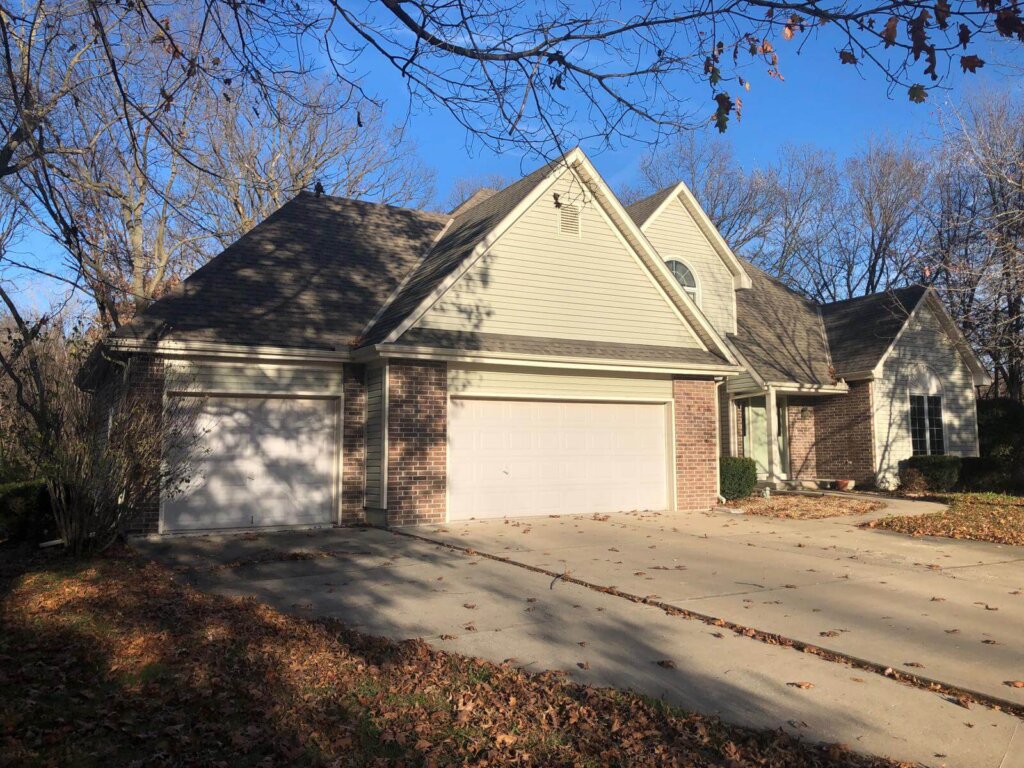
You have approximately seven seconds to make a first impression on a buyer driving up to your home for the first time. In those seven seconds, before they have stepped out of their car, they have formed an emotional impression that will color everything they see inside. Buyers who arrive at a property with strong curb appeal walk through the front door predisposed to find things they like. Buyers who arrive at a property with weak curb appeal arrive primed to look for problems.
This is not speculation. It is buyer psychology that every experienced listing agent in St. Louis knows and that the data on showing-to-offer conversion rates confirms. The investment required to create a strong curb appeal impression is almost always among the lowest-cost, highest-return work a seller can do.
The Front Door
The 2025 Cost vs. Value report from Zonda — the most comprehensive renovation ROI data in the industry — shows steel entry door replacement returning 88% to 194% of cost depending on market. In some scenarios it returns more than it costs.
Your front door is the focal point of every listing photograph, the physical object buyers touch before they enter, and the single item that most directly communicates “this home is cared for.” A worn, faded, or dated front door communicates neglect. A fresh, modern front door communicates quality.
A quality steel entry door installed in St. Louis runs $1,800 to $3,500. If replacing the entire door is not in the budget, a fresh coat of paint on the existing door in a current, compelling color — deep navy, forest green, matte black, or a rich red all photographed exceptionally well against St. Louis brick — costs $50 in materials and an afternoon of work. Do this regardless of everything else.
The Garage Door
For the second consecutive year, garage door replacement ranked as the single highest-ROI renovation in the 2025 Cost vs. Value report, returning 100% or more of cost. For a home where the garage constitutes 20% to 30% of the visible street-facing exterior, a tired, dated, or damaged garage door is a dominant negative visual.
A new insulated steel two-car garage door installed in St. Louis runs $2,500 to $4,500 depending on size and style. For a home in the $200,000 to $300,000 range where the garage is prominent from the street, this investment is as close to a guaranteed return as anything in real estate preparation.
Landscaping and Lawn
Buyers form strong opinions about how maintained a property is based on the lawn and landscaping. Brown grass, overgrown shrubs, dead annuals, and bare mulch beds all signal that the home has not been actively cared for. Fresh mulch, trimmed shrubs, edged beds, and healthy grass signal exactly the opposite.
The investment required for a strong landscaping presentation is almost always modest. For most St. Louis homes, the preparation involves:
Fresh mulch in all planting beds ($150 to $400 in materials, or $400 to $800 professionally installed). This single item transforms the appearance of overgrown or neglected beds more dramatically than almost any other landscaping investment.
Shrub and tree trimming to reveal the home rather than hide it. Overgrown foundation plantings that reach the first-floor windows make a home look smaller and suggest the property has been neglected. Trim everything back so the home’s exterior is fully visible from the street.
Seasonal color plantings — flats of annual flowers in season — placed at the front entry and in prominent bed locations. A $30 to $60 investment in petunias, impatiens, or marigolds at the front door photographs beautifully and creates warmth that bare mulch cannot.
Lawn care: mow freshly before every showing, edge the driveway and walkway, treat any visible bare or brown spots, and eliminate weeds from visible areas. If the lawn is in genuinely poor condition — large bare areas, dense weed growth, significant thin spots — a full overseeding or sod installation in visible areas is worth considering.
Power Washing
Power washing the exterior of a brick home, the driveway, and all concrete surfaces costs $200 to $400 professionally done. The transformation it creates is dramatic and immediate. Brick that appears dark and grimy from years of environmental exposure looks fresh and clean after washing. A stained driveway looks like a clean one. A film-covered porch looks inviting.
Do this within two weeks of listing. Schedule it to coincide with other exterior preparation work so the result is photographed fresh.
Interior Preparation When Selling a House
The Kitchen: Your Highest-Stakes Interior Space
Buyers spend more time evaluating the kitchen than any other room. It is where they imagine family meals, dinner parties, and daily life. A kitchen that reads as dated, cramped, or worn generates an automatic mental deduction in the buyer’s offer calculation. A kitchen that reads as modern and functional generates enthusiasm.
The key distinction — and the one that most sellers miss — is between a kitchen that looks updated and one that actually needs to be gutted. These are not the same thing, and confusing them leads to massive overspending.
Cabinet refacing or painting is the highest-ROI kitchen intervention available. Solid wood cabinet boxes from the 1960s through 1980s are actually more durable than much of what you can buy new at a big box retailer today. Strip the existing doors, paint the boxes in a current color (white, off-white, warm gray, or navy all sell extremely well in St. Louis right now), replace the doors with a simple Shaker profile, and add new hardware. The result reads as a renovated kitchen at 20% to 30% of the cost of full cabinet replacement.
New countertops in quartz are the single upgrade that St. Louis buyers in the $200,000 to $350,000 price range notice and specifically value. The word “quartz countertops” in a listing description is a search-and-decision trigger. Budget $65 to $85 per square foot installed for a mid-grade quartz. For a standard St. Louis kitchen, that totals $3,500 to $5,500. The return in perceived value is significantly higher than the cost.
New appliances in stainless finish — even mid-grade appliances — create visual cohesion and modernity. If your appliances are mismatched, dated, or in poor cosmetic condition, a new appliance package from a mid-tier brand runs $1,800 to $3,000 and creates a dramatically improved kitchen impression.
A tile or subway tile backsplash where none currently exists adds visual sophistication and textural interest for $400 to $1,200 in materials and labor. This is a high-visibility, high-return upgrade.
Updated lighting — under-cabinet LED strips and a modern overhead fixture replacing a dated fluorescent or globe fixture — costs $300 to $700 and changes the quality of light in a way buyers can feel even if they cannot articulate why.
The total investment for a minor kitchen update on a typical St. Louis home: $15,000 to $25,000. The return: data consistently shows 72% to 96% ROI on minor kitchen updates, meaning a $20,000 update typically adds $14,000 to $19,000 in sale price. When combined with the shortened time on market and the reduction in concession negotiation, the economic case is strong.
What to avoid: full cabinet replacement, moving walls, relocating plumbing, or any work that crosses from “update” into “renovation.” A full kitchen gut renovation on a $225,000 St. Louis home costs $45,000 to $85,000 and returns approximately 51% of cost at resale. You will lose money.
Bathrooms: The Second Most-Evaluated Space
Buyers inspect bathrooms closely and personally. An original 1968 bathroom with pink or avocado tile, a small vanity with brass hardware, and fluorescent lighting communicates “this home is stuck in the past” in a way that follows every other impression buyers form during the showing.
A midrange bathroom remodel — new vanity and countertop, updated toilet, refreshed shower surround (or tub-to-shower conversion), new tile flooring, updated lighting and mirrors — costs $10,000 to $18,000 per bathroom and returns 74% to 80% of cost in added sale price nationally, with Midwest market data showing consistent results in that range.
The non-negotiables in bathroom preparation: The vanity must look current. Brass or gold hardware on a dated vanity is the single most powerful “dated” signal in a bathroom. A new mid-grade vanity with a quartz or solid-surface top runs $400 to $1,200 at retail and takes one weekend to install. The toilet should be white and current — a round toilet from 1990 with a colored lid is a distraction that costs buyers’ attention. The lighting must be bright and modern. Outdated Hollywood bar lighting or a single ceiling fixture provides inadequate light and makes even clean bathrooms look dim and unappealing.
The most impactful single bathroom upgrade that I consistently recommend in St. Louis: tub-to-shower conversions in the hall bath, preserving a tub in the primary bath. St. Louis buyers with families specifically seek at least one tub. Removing all tubs from a home at the $200,000 to $275,000 price point is a genuine selling liability. Converting the hall bath to a tiled walk-in shower with frameless glass, while keeping the tub in the primary, gives you the best of both worlds.
Floors: Reveal What Is Already There
This is the most underutilized opportunity in St. Louis real estate preparation, and it costs a fraction of installing new flooring.
The majority of St. Louis homes built from the 1940s through the 1970s have original hardwood floors under the carpet that was installed in subsequent decades. Before you invest a dollar in new flooring, pull a corner of the carpet in a closet and identify what is underneath. If there is solid oak or walnut hardwood in salvageable condition — which there frequently is — removing the carpet and refinishing the hardwood will cost $1,200 to $2,500 for a typical main living area and will add $3,000 to $8,000 in perceived value while delivering something far more appealing than any new carpet you could install.
Refinished original hardwood is not just a floor. It is a story. “Original hardwood floors” in a listing description is a specific search term buyers use. It signals history, quality, and authenticity that resonates particularly strongly with buyers in South City, Maplewood, Webster Groves, and the inner-ring suburbs where the architectural character of older homes is valued.
Where new flooring is required — in areas without hardwood, in kitchens and laundry rooms, in damaged sections — luxury vinyl plank (LVP) is the appropriate choice for a selling renovation in the St. Louis market. It is waterproof, durable, looks excellent in photographs, and costs $3 to $6 per square foot installed. Do not install high-end hardwood in a home priced under $300,000 in St. Louis. The neighborhood price ceiling will not reward it.
Replace carpet in bedrooms if it is stained, worn, or strongly odor-affected. Fresh builder-grade carpet in neutral gray or beige costs $1.50 to $3 per square foot installed and creates an impression of clean and new that buyers respond to even at a subconscious level.
Paint: The Highest-ROI Interior Investment
Fresh, neutral interior paint is the single highest-return investment per dollar available in home preparation. Period. Not subject to debate.
A full professional interior paint job on a typical St. Louis ranch or two-story home costs $3,000 to $6,000. The return in buyer perception, shortened time on market, and reduced negotiation concessions is estimated at 107% to 150% of cost by multiple industry research sources. No other preparation investment comes close to this ratio.
The reason is psychological. Fresh paint communicates “this home has been cared for.” Peeling, scuffed, or strongly-colored walls communicate the opposite. Every showing in a home with tired paint is an uphill battle. Every showing in a home with fresh, neutral paint starts from a position of advantage.
Color selection matters enormously. Avoid white — it reads as clinical and unfinished in photographs. Avoid strong accent colors that reflect personal taste — buyers see them and immediately think about repainting. The current palette that sells fastest in St. Louis in 2026: warm off-whites (Benjamin Moore White Dove, Sherwin-Williams Alabaster), warm greiges (Sherwin-Williams Accessible Beige, Agreeable Gray), and soft warm whites with slightly creamy undertones. These colors photograph beautifully, read as bright and fresh in person, and appeal to the broadest possible buyer pool.
Paint trim white or bright white regardless of wall color selection. Crisp, clean white trim against a warm wall color creates the visual contrast that makes rooms look finished, well-maintained, and intentionally designed.
The Primary Bedroom
The primary bedroom should feel like a retreat. Buyers are evaluating whether they can imagine themselves sleeping here, getting ready here, having the privacy and quiet that the master bedroom represents.
Preparation priorities in the primary bedroom: fresh paint, clean carpet or refinished floors, a ceiling fan or attractive overhead lighting fixture, and neutral window treatments. Remove furniture that makes the room feel cramped — buyers need to mentally place their own furniture in the space, and too much of yours prevents that visualization.
The closet matters more than most sellers realize. A primary bedroom closet that appears small, disorganized, or inadequate is a genuine selling liability. Install a basic closet organization system ($150 to $400 at any home improvement retailer) and make sure the closet is impeccably organized when showing. What buyers see in a closet is what they imagine their life in this house looks like.
All Bedrooms
Fresh paint, clean floors, neutral blinds or curtains, and enough staged furniture to indicate the room’s purpose without overwhelming the space. Every bedroom should have a bed, a dresser, and enough floor visible to communicate adequate size.
The most common mistake in bedroom staging: showing a bedroom so full of furniture and personal items that buyers can barely visualize it as a room. When in doubt, remove furniture. More floor space reads as more square footage, even when the actual square footage is unchanged.
The Deep Clean — Non-Negotiable, No Exceptions
You cannot stage, photograph, or show a home that is not deeply, professionally clean. Not surface-clean. Not “pretty clean.” Professionally clean.
A professional deep cleaning of a typical St. Louis home costs $300 to $600 and should be done before professional photography and before the first showing. Every subsequent day of showing requires maintenance of that level of cleanliness.
What the deep clean must address: kitchen appliances cleaned to their factory condition (oven interior, refrigerator interior, microwave, dishwasher), bathroom grout scrubbed white, all bathroom fixtures polished to spot-free shine, baseboards and door frames wiped clean, window interiors cleaned to crystal clarity, ceiling fans dusted, light fixtures cleaned, HVAC vents dusted, and all flooring deep-cleaned.
The reason this is non-negotiable is what a dirty home communicates to buyers. Buyers who encounter a home that is not impeccably clean make a logical inference: if the sellers did not care enough to clean it before showing, what other maintenance has been deferred? The cleanliness of a home is a proxy signal for how well the whole property has been maintained. A dirty home suggests a neglected home, regardless of whether that inference is accurate.
Pet odor is in its own category. If pets have lived in the home — and in St. Louis, they often have — the odor that residents have stopped noticing is immediately apparent to visiting buyers. Enzymatic odor treatments applied to carpet and upholstery, professional carpet cleaning, and deep-cleaning of all hard surfaces is required. If the odor is severe, consider having a neutral party (a neighbor, friend, or your listing agent) evaluate honestly before listing. Some situations require carpet replacement even if the carpet is visually acceptable.
Decluttering and Depersonalization — The Mental Work
Selling a home requires a psychological shift that most sellers underestimate: the home must stop being your home and start being the buyer’s potential home. Buyers cannot make that mental transition when every surface is covered with your personal photographs, your children’s artwork, your sports memorabilia, your religious icons, and the accumulated artifacts of your life.
This is not a criticism. It is a fact about buyer psychology that is well-documented and that every experienced selling agent in St. Louis confirms. Buyers who can see themselves in a home offer more. Buyers who feel like they are intruding on someone else’s home offer less or do not offer at all.
The decluttering standard for a listing-ready home: every surface should have one-third fewer items on it than currently. Every closet should be organized to the point that it looks half-empty — because buyers open every closet and interpret a full closet as inadequate storage. Every bookshelf should be curated to look intentional rather than accumulated. Every personal photograph should be removed from common areas. Family photos, in particular, remind buyers that this is someone else’s home.
Remove what you can to storage. Rent a storage unit if necessary — a 10-by-10 unit in St. Louis runs $80 to $120 per month and is one of the best selling investments you can make. The furniture and boxes you move to storage are replaced by open, airy, inviting spaces that buyers interpret as spacious and carefully maintained.
Professional Photography — Where Everything Comes Together
In St. Louis, where approximately 97% of buyers begin their search online, your listing photographs are your first showing. Not second. Not supplementary. First, Buyers who do not like what they see in photographs do not schedule an in-person showing. You cannot recover from bad photographs.
Professional real estate photography in St. Louis costs $200 to $400 for a standard package including interior and exterior photography with proper lighting and editing. This is non-negotiable. Smartphone photographs taken by a well-meaning seller or even a budget-minded listing agent are visually inferior to professional photography in every dimension that matters — lighting, perspective, dynamic range, white balance, and composition.
What professional photography specifically delivers that amateur photography cannot: wide-angle lenses that make rooms appear accurately spacious (not deceptively fisheyed, but properly representative of the actual room dimensions), proper lighting that eliminates the flat, shadowy appearance of natural-light-only shots, and exterior shots timed for the hour before sunset when the warm light makes facades look their most appealing.
Consider adding video or a 3D Matterport tour for homes in the $250,000 and above range. Video walkthroughs create an emotional experience that static photographs cannot. They allow buyers who are relocating from out of state — a growing segment of the St. Louis buyer pool — to feel they have walked through the home before committing to an in-person visit. 3D tours can add $100 to $200 to the photography package and are particularly effective for homes with distinctive floor plans.
Pricing Strategy — The Decision That Overrides All Preparation
All of the preparation described above delivers its maximum return only when paired with the right pricing strategy. A home that is impeccably prepared and dramatically overpriced will sit. A home that is impeccably prepared and correctly priced will generate competition.
In the St. Louis market, where the median home price in St. Louis County sits around $250,000 and days on market average 33 days for well-prepared homes, the pricing sweet spot is the one that attracts multiple buyers simultaneously. Multiple buyers create competition. Competition creates offers above asking. Offers above asking are how sellers maximize their net proceeds.
The mechanics of this are well-understood: a home priced at $235,000 that attracts five competing buyers will frequently sell at $243,000 to $248,000 — above the asking price — because buyers competing against each other bid up from the list price. That same home priced at $248,000 to attract the highest possible single buyer will typically sell at $241,000 to $244,000 after negotiation — below asking. The lower list price, counterintuitively, produces the higher sale.
Your listing agent’s comparative market analysis should be your primary pricing tool. Demand that the CMA include only homes sold in the last 60 to 90 days, only within a half-mile of your property, and only homes that are genuinely comparable in size, condition, and preparation level. Comps that are six months old in a moving market, or comps from neighborhoods with different buyer profiles, produce inaccurate pricing guidance.
One specific pricing caution for the St. Louis market: do not price based on your renovation investment. What you spent preparing the home is irrelevant to what the market will pay. The market pays what comparable homes are selling for, adjusted for condition and presentation quality. Emotional pricing based on investment recovery is one of the most common and costly mistakes sellers make.
The Showing Experience — Converting Visitors Into Buyers
All of the preparation above creates a home that shows well. The showing experience itself — how buyers feel when they are physically inside the property — converts that potential into offers.
Every showing should follow a protocol. Lights on in every room. Window treatments open to maximize natural light. HVAC is set to a comfortable temperature (68 to 72 degrees — buyers who are too hot or too cold spend less time and less emotional energy in the home). Fresh air throughout — slightly open windows in good weather, a subtle neutral scent if needed (avoid heavy air fresheners or candles, which buyers associate with odor masking). Fresh-cut flowers in the kitchen or entry, replaced every three to four days. No dishes in the sink. No personal items visible on bathroom counters. Toilet lids closed.
Vacate the home for every showing. Sellers who remain during showings constrain buyers’ ability to open closets, linger in rooms they love, and have honest conversations with their agent about what they are thinking. Buyers who feel observed do not make emotional connections to homes. Emotional connections are what produce offers.
A Final Word: When Preparation Is Not the Right Answer
I want to be honest about something that most listing-focused guides do not address: for some St. Louis homeowners, the preparation process described above is not the right path. Not because the home cannot be prepared, but because the circumstances — financial, personal, logistical, or timing-related — do not allow for it.
A homeowner who needs to sell in three weeks to fund a move to assisted living cannot execute a 12-week renovation and preparation timeline. A family managing an inherited property from out of state, full of a lifetime’s belongings, cannot easily orchestrate contractor access, cleanouts, and professional photography from 1,200 miles away. A homeowner who has experienced a major life disruption — divorce, illness, financial hardship — may not have the emotional bandwidth or the capital to invest in a preparation process, however logical it is.
For those homeowners, Cash Offer Man provides a direct alternative. We buy St. Louis homes in any condition, at any stage of preparation, for cash. No repairs required. No cleaning required. No photography, no staging, no open houses, no inspection renegotiations. You tell us your situation, we walk through the property, and we make you a fair, honest offer within 24 hours. You close when you are ready. You leave what you want to leave.
Our offers reflect the actual current market value of the property as it stands, adjusted for what it will cost to bring it to market condition. We are transparent about how we arrive at the number. We do not squeeze sellers who are in difficult situations. We provide certainty where the traditional process provides risk, speed where the traditional process provides waiting, and simplicity where the traditional process provides complexity.
That is not the right answer for every St. Louis seller. But for the sellers for whom it is — and in my experience, there are many — it is genuinely the best path available.
Summary: The Priority Order for Maximum Return
If you are preparing a St. Louis home for sale and working within a realistic budget, here is the priority sequence that maximizes your return per dollar invested:
First, the pre-listing inspection — because knowing what is there determines everything else. Then mechanical and structural corrections if the inspection reveals deal-killers: electrical panels, HVAC, roof, sewer lateral. Then curb appeal — garage door, entry door, mulch, lawn, power wash. Then interior paint throughout. Then kitchen update — cabinet painting, countertops, hardware, backsplash. Then bathroom updates — vanities, toilets, lighting. Then floor refinishing where hardwood exists underneath carpet. Then professional deep cleaning. Then decluttering, depersonalization, and staging. Then professional photography. Then correct pricing with your listing agent.
Execute this sequence in this order, stay within your return threshold on each item, and your St. Louis home will be positioned to attract the maximum competition from buyers and produce the best possible sale price.
That is not theory. It is what I have seen work, on hundreds of properties, across every price range in this market. Do the work. Do it in the right order. And let the St. Louis market reward you for it.
Aaron Eller is the founder of Cash Offer Man, a St. Louis Home Buying Company, serving the entire Metro. For homeowners who need a different path — a fast, certain cash sale with no preparation required — visit CashOfferMan.com or call us for a no-obligation conversation about your property.
Get An Offer Today, Sell In A Matter Of Days