

House With Termite Damage: What to Do, What It Costs, and What Your Options Are
By Aaron Eller, Founder — Cash Offer Man | St. Louis, Missouri
May 16, 2026
Termites cause more structural damage to American homes than fires, floods, and windstorms combined — and they do it invisibly, silently, and relentlessly. The National Pest Management Association estimates that termites cause approximately $5 billion in property damage annually in the United States, and the damage is almost never covered by homeowners insurance. By the time most homeowners discover a termite infestation, the colony has typically been active for 3 to 7 years and the structural damage is already significant.
In Missouri — including the St. Louis metropolitan area — termites are a genuine and prevalent risk. Missouri sits squarely within the moderate-to-heavy termite pressure zone of the United States, with the Eastern subterranean termite (Reticulitermes flavipes) being the primary species affecting St. Louis area homes. The warm, humid summers and the older wood construction of St. Louis’s predominant housing stock — built primarily between 1920 and 1970 — create the precise conditions that termite colonies prefer.
I am Aaron Eller, founder of Cash Offer Man. I have purchased and renovated termite-damaged homes throughout St. Louis City and County. I know what termite damage actually looks like at every severity level, what it costs to address, and what options homeowners have when they discover they have a problem. This article gives you the complete picture — from identification through remediation through selling decisions.
What Causes Termites and Why St. Louis Homes Are Vulnerable
Understanding what attracts and sustains termite colonies is the foundation of both prevention and assessment.
The Biology of the Eastern Subterranean Termite
The Eastern subterranean termite — the dominant species in Missouri — lives underground in colonies that range from 60,000 to more than 1 million individuals. Colonies are organized into castes: workers (the ones causing damage), soldiers (colony defenders), and reproductives (including the queen and king who can live for 10 to 30 years).
Workers forage for cellulose — the primary structural component of wood — and bring it back to feed the colony. They are blind, soft-bodied, and cannot survive prolonged exposure to air or light. To move between their underground colony and the cellulose food source in your home’s framing, they build mud tubes — pencil-width channels of soil, saliva, and feces — that maintain the moisture and darkness they require.
A mature Eastern subterranean colony consumes approximately 5 grams of wood per day. That sounds small, but sustained over 5 years across multiple colonies, it represents the systematic hollowing of structural members that can compromise floor joists, wall studs, and load-bearing beams without any external indication until the damage is already severe.
Why St. Louis Homes Are Specifically Vulnerable
The wood and soil contact problem: St. Louis’s older housing stock was built during a period when direct wood-to-soil contact was a standard construction practice. Porch steps and columns resting directly on soil, wooden form boards left in place after concrete was poured, wood mulch piled against foundation walls — these are all termite welcome mats. Any direct path between soil and structural wood that bypasses the concrete foundation is a primary entry point.
Moisture accumulation: Eastern subterranean termites require moisture to survive. St. Louis’s climate — averaging 40 inches of annual rainfall, high summer humidity, and winter precipitation — creates persistent moisture conditions in and around foundations. Poor drainage, failing gutters, inadequate grading that directs water toward the foundation, and basement moisture all create the environmental conditions that sustain termite colonies near the home.
The age of the housing stock: St. Louis’s predominant brick ranch and two-story construction from the 1920s through 1960s frequently features:
- Wood subfloor systems over crawl spaces or full basements
- Old growth lumber with dense grain that termites actually prefer over newer fast-growth lumber
- Decades of deferred maintenance that has allowed wood-to-soil contact situations to develop
- Accumulated organic debris (wood scraps, old form boards, tree roots) in basement areas that provide supplemental termite food sources
Post-construction wood debris: A single contractor who leaves scrap lumber or wood debris in contact with soil near a St. Louis foundation after a renovation project creates a termite food source that can initiate or sustain a colony that eventually transitions to the structure.
How to Identify Termite Activity and Assess the Damage
Early Warning Signs — What to Look For
The challenge of termite identification is that the visible evidence appears later in the infestation than most homeowners expect. By the time you notice the signs below, the colony has typically been active for 2 to 5 years.
Mud tubes: The most reliable exterior indicator of Eastern subterranean termite activity. Look for pencil-width tunnels of dried soil running along the exterior of the foundation, up concrete block walls, or across exposed concrete surfaces. They often appear where the foundation meets the soil line, along cracks in concrete, or along pipe penetrations.
Swarmers: In spring (typically March through May in Missouri), Eastern subterranean colonies release winged reproductive termites — swarmers — that emerge to start new colonies. Finding swarmers inside or outside your home, particularly near window sills or light sources, is a strong indication of an active colony. Swarmers lose their wings quickly; finding piles of wings near window sills or doors is equally diagnostic.
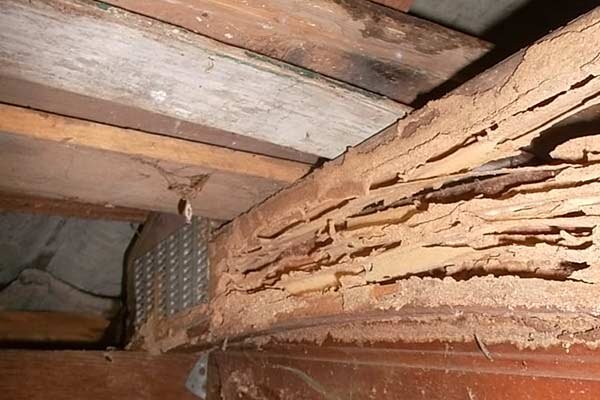
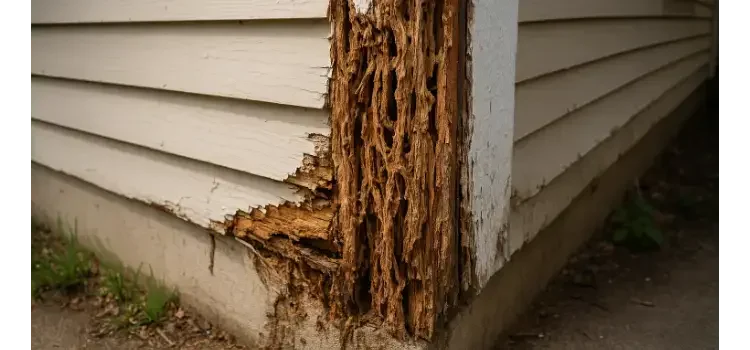
Damaged wood with a hollow sound: Structural wood damaged by termites is hollowed from the inside while retaining a thin exterior shell. Tapping suspected wood with a screwdriver handle produces a hollow, papery sound rather than the solid thud of intact wood.
Blisters or bubbling in wood surfaces: Termite feeding just below the surface can cause painted or finished wood to blister or bubble, resembling water damage.
Frass: Drywood termites (less common in Missouri but present) leave behind fecal pellets called frass that resemble fine sawdust or sand. Finding small piles of frass near wood trim, window frames, or baseboards indicates active feeding.
Sagging floors or doors that stick: Structural damage from termites — particularly in floor joists and subfloor systems — can manifest as floors that feel spongy, bounce noticeably when walked on, or develop a visible sag. Doors and windows that suddenly stick or no longer align correctly can indicate termite-related framing damage.
Professional Termite Inspection — The Baseline Assessment
At the first sign of any of the above indicators — or when purchasing a home in Missouri — engage a licensed pest control professional for a full termite inspection. In Missouri, pest control technicians who perform termite inspections must be licensed by the Missouri Department of Agriculture.
Cost of a professional termite inspection in St. Louis: $75 to $150 for a standard single-family home inspection. The inspection covers all accessible areas: crawl space or basement, all wood in contact with or near soil, visible structural members, exterior foundation perimeter, and interior finish work in areas of concern.
The inspection report: A licensed inspector provides a written Wood Destroying Organism (WDO) report — also called a termite letter — that documents any evidence of termite activity, any evidence of termite damage, any evidence of other wood-destroying organisms (wood rot, powder post beetles, carpenter ants), and any conditions conducive to future infestation.
This report is required in most Missouri home sales. Lenders for conventional, FHA, and VA mortgages in Missouri almost universally require a clear WDO report as a condition of loan approval, making termite inspection a mandatory part of the real estate transaction process.
Assessing the Severity — The Four Damage Levels
Not all termite damage is equal. Understanding the severity determines the cost and urgency of remediation.
Level 1 — Surface Activity, No Structural Damage
Active termite mud tubes are present, possibly with live termites, but structural wood members examined during inspection show no penetration or evidence of feeding. The colony has not yet reached or breached the structure.
What this costs: $500 to $2,000 for chemical or bait system treatment to eliminate the colony. No structural repair required.
The urgency: High. Surface activity without structural damage means you caught it early. Treat immediately to prevent progression.
Level 2 — Minor Structural Damage
Evidence of termite feeding in accessible structural members — floor joists, sole plates, sill plates — with damage limited to isolated sections that have not compromised structural integrity. Wood is damaged but not fully hollowed or compromised.
What this costs: $1,500 to $5,000 for treatment plus limited structural repair — sistering damaged joists, replacing isolated damaged sections of sill plate or sole plate.
Level 3 — Moderate Structural Damage
Multiple structural members significantly damaged, with compromised integrity requiring repair before the structure is safe. Floor systems bouncy or sagging. Evidence of damage spreading into wall framing. Extensive treatment required.
What this costs: $5,000 to $25,000 for treatment plus structural repair, depending on scope and accessibility.
Level 4 — Severe Structural Damage
Extensive damage to primary structural systems — load-bearing members, floor system, potentially wall framing. Damage may require engineered repair specifications. In the most severe cases, partial demolition to access and replace damaged framing.
What this costs: $20,000 to $80,000+. At Level 4, the cost of repair can approach or exceed the home’s value in some St. Louis markets, and a sell-as-is decision becomes economically rational.
Does Homeowners Insurance Cover Termite Damage?
This is the question every homeowner with a termite problem asks first, and the answer is almost universally no.
Why Standard Homeowners Insurance Excludes Termites
Standard homeowners insurance (HO-3) explicitly excludes damage from insects, vermin, birds, and rodents. The rationale used by insurers: termite infestations are a foreseeable result of deferred maintenance, not a sudden and accidental event of the type that property insurance is designed to cover.
The language in most Missouri HO-3 policies states exclusions for damage caused by “insects, birds, rodents, or other animals” — a blanket exclusion that applies regardless of how extensive the termite damage is.
There is no homeowners insurance endorsement available in the standard market that covers termite damage. Unlike flood insurance or earthquake coverage — which can be added through separate policies — there is no insurance product that covers the structural damage caused by termite infestations.
The Limited Exception — Collapse Claims
There is one narrow circumstance where termite damage may trigger a homeowners insurance payment: if termite damage causes a sudden, actual structural collapse of part of the building.
Some HO-3 policies include coverage for “collapse” caused by hidden decay, hidden insect damage, or the weight of people/property, when the collapse is sudden and produces visible loss of structural integrity. If a termite-damaged floor collapses into the basement, a policy with this collapse provision may cover the resulting damage.
The caveats: The collapse must be sudden and actual — not gradual deterioration. The insurer will investigate whether the damage was visible or could have been discovered through reasonable inspection. Many claims on this basis are disputed and denied. Do not rely on this exception without reviewing your specific policy language and consulting an attorney if a claim is denied.
Termite Bonds and Warranties — The Actual Protection Available
Termite bonds (pest control service agreements) are not insurance products but serve a similar protective function for ongoing termite risk:
Annual inspection and treatment agreements: A termite company provides annual inspections and retreatment if termite activity is discovered, for a fixed annual fee. Annual cost: $150 to $400 for standard St. Louis homes.
Repair bonds: Some termite companies offer bonds that include coverage for structural damage caused by termites during the period of the bond — provided the property was under continuous bond coverage. Repair bonds are more expensive ($300 to $800+ per year) but provide the closest available analog to insurance for termite damage.
Home warranty products: Standard home warranty products do not cover termite damage or pre-existing pest infestations.
Remediation Options — How to Kill the Colony and Fix the Damage
Step 1: Eliminate the Colony — Treatment Methods
Treatment must happen before structural repair. Repairing termite-damaged wood without eliminating the colony means the termites continue feeding in or around the repaired area.
Liquid soil barrier treatment (the most common method):
A licensed pest control company trenches around the perimeter of the foundation, applies a termiticide to the soil, and injects the chemical through holes drilled in concrete slabs or adjacent structures. The chemical creates a treated zone that kills termites crossing it and, in some formulations, is transferred through the colony via social contact.
Common termiticides used in St. Louis: Termidor (fipronil) — the industry standard, with demonstrated colony elimination in 3 months in most applications. Altriset, Premise (imidacloprid), and Phantom (chlorfenapyr) are alternatives with varying efficacy profiles.
Cost: $500 to $2,500 for a standard St. Louis home perimeter treatment, depending on linear footage and accessibility.
Effectiveness: Termidor-based liquid treatments have approximately 90%+ efficacy rates in controlled studies for Eastern subterranean termites.
Bait stations (Sentricon, Trelona):
Bait stations are installed around the perimeter of the home at intervals, containing a cellulose matrix laced with an insect growth regulator. Workers discover the bait, recruit other workers, and share the bait throughout the colony, eventually eliminating it.
Cost: $800 to $2,500 for initial installation; $200 to $400 per year for ongoing monitoring and bait replenishment.
Timeline: Slower than liquid treatment — colony elimination typically takes 3 to 12 months. Better for homes where soil injection is difficult (solid concrete surrounds, proximity to water features).
Fumigation (tenting):
Whole-structure fumigation with sulfuryl fluoride (Vikane) is used primarily for drywood termite infestations — less common in Missouri — but may be used for extensive subterranean infestations in severe cases. The structure is enclosed in a tent and fumigant is introduced for 24 to 72 hours.
Cost: $1,500 to $4,000 for a standard St. Louis home.
Limitation: Fumigation kills termites in the structure but does not treat the soil colony. A post-fumigation soil treatment is typically required to prevent re-infestation.
Step 2: Address the Conducive Conditions
Eliminating the colony without addressing what attracted it means a new colony will eventually follow the same path.
Eliminate wood-to-soil contact: Any wood in direct contact with soil adjacent to the foundation must be cut back or isolated. Porch steps and columns, deck ledger boards, wood trim extending to grade — all should be elevated or replaced with non-cellulose materials.
Correct drainage and moisture issues: Gutters that direct water toward the foundation, grading that holds water against the house, downspout discharge within 5 feet of the foundation — all are remediation targets. These are often $200 to $2,000 improvements that dramatically reduce the moisture conditions sustaining termite colonies.
Remove organic debris: Wood scraps, tree stumps, buried form boards, and other cellulose debris near the foundation provide supplemental food sources and nesting opportunities. Remove them.
Crawl space moisture control: For St. Louis homes with crawl spaces, vapor barriers and ventilation are essential moisture management tools. A properly functioning crawl space with a 6-mil polyethylene vapor barrier and adequate cross-ventilation dramatically reduces the moisture that sustains termite colonies.
Step 3: Structural Repair
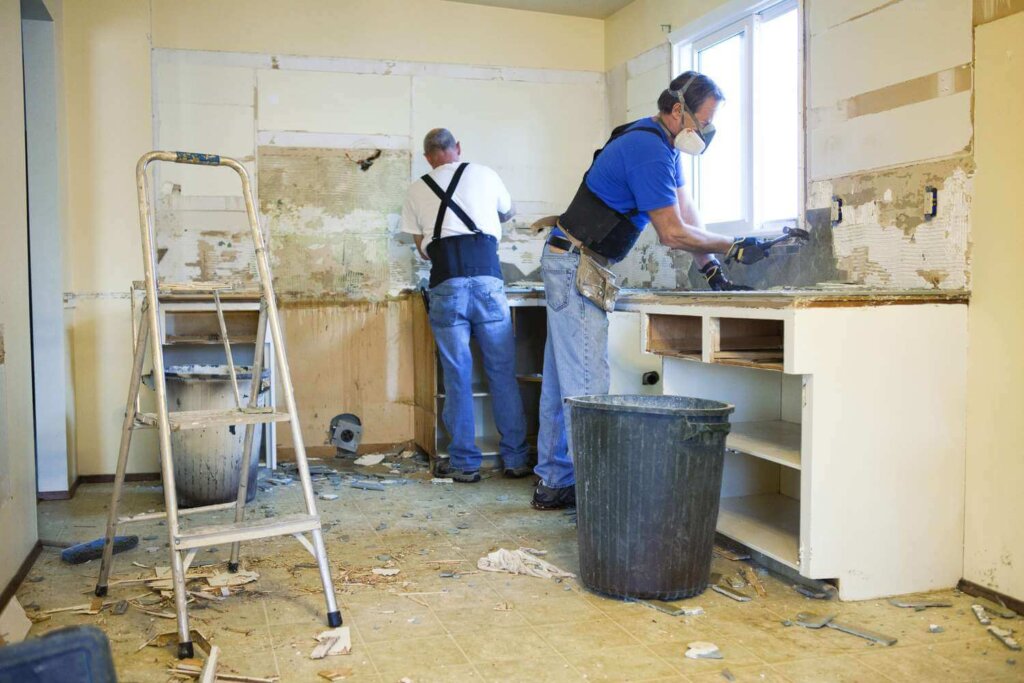
Structural repair must be performed by a licensed contractor and, for significant damage, may require a structural engineer’s assessment to ensure the proposed repair method restores adequate structural capacity.
Common repair methods by location:
Floor joists: Sistering (attaching a new full-length joist alongside the damaged one), or full replacement of isolated damaged joists. Sistering cost: $150 to $350 per joist. Full joist replacement requires subfloor removal and is more expensive.
Sill plate and sole plate: The sill plate (the board resting directly on the foundation wall) and sole plate (the bottom plate of wall framing) are the most commonly termite-damaged structural members in Missouri homes because they are closest to soil. Replacement requires temporarily supporting the framing above, removing the damaged plate, and installing new pressure-treated lumber. Cost: $500 to $3,000 per affected section depending on length and accessibility.
Posts and beams: Support posts and beams in basements and crawl spaces that have sustained termite damage require careful assessment — these are load-bearing elements. Sistering or full replacement with engineered lumber or steel may be required. Cost: $800 to $5,000+ per element.
Subfloor replacement: When subfloor panels are damaged, replacement after joist repair is required. Cost: $3 to $8 per square foot installed.
The permit question: Significant structural repair in St. Louis County and St. Louis City requires building permits and inspection. Unpermitted structural repair creates future disclosure obligations and potential lender issues in a subsequent sale. Do the work right, pull the permit.
The Cost of Termite Treatment and Repair — Real Numbers
What St. Louis Homeowners Actually Spend
Based on Missouri pest control industry data and contractor cost data specific to the St. Louis market:
| Scope | Treatment Cost | Repair Cost | Total Range |
| Level 1 (surface, no damage) | $500–$2,000 | $0 | $500–$2,000 |
| Level 2 (minor structural) | $1,000–$2,500 | $1,500–$5,000 | $2,500–$7,500 |
| Level 3 (moderate structural) | $1,500–$3,000 | $8,000–$25,000 | $9,500–$28,000 |
| Level 4 (severe structural) | $2,000–$4,000 | $20,000–$80,000+ | $22,000–$84,000+ |
The national averages for context: The average cost of termite treatment nationally is $558 for spot treatment and $1,400 for whole-home treatment. The average cost of termite repair nationally is $3,000 for minor damage and $20,000+ for extensive structural damage.
Prevention — How to Protect Your St. Louis Home
The Annual Inspection Habit
The single most cost-effective termite prevention tool is an annual professional home inspection. At $75 to $150 per inspection, an annual inspection regime that catches activity at Level 1 prevents the $30,000 Level 3 repair that develops when a colony goes undetected for 5 years. Every St. Louis homeowner — particularly in the older housing stock that dominates the city and inner-ring suburbs — should schedule an annual termite inspection.
Preventive Chemical Treatment
For high-risk St. Louis properties — older homes, homes with crawl spaces, homes adjacent to wooded areas or near existing infestations — preventive liquid soil treatment before any infestation is detected is worth considering. At $500 to $1,500 for an initial perimeter treatment and $150 to $400 annually for a maintenance bond, preventive treatment costs significantly less than reactive treatment after damage has occurred.
Physical Barriers During Construction or Renovation
When a St. Louis home undergoes significant renovation that opens access to the foundation or framing, physical termite barriers — stainless steel mesh, sand barriers, or chemically treated soil — can be incorporated into the construction that provide long-term protection without ongoing chemical maintenance. This is standard practice in high-termite-pressure areas and worth specifying in renovation contracts for older St. Louis homes.
Moisture Management — The Year-Round Maintenance Priority
Termite colonies do not establish themselves in dry environments. The most durable long-term termite prevention strategy is eliminating the moisture conditions that sustain colonies near the foundation:
- Clean gutters at least twice annually
- Ensure downspouts discharge at least 5 feet from the foundation
- Maintain positive drainage grading away from the home on all sides
- Fix any plumbing leaks under the home promptly
- Ensure crawl space or basement ventilation is functional
Selling a Home With Termite Damage — Your Options
This is where many St. Louis homeowners with termite problems eventually arrive: the decision about whether to repair before selling or sell as-is. Understanding the realistic options helps you make the right call for your specific situation.
Option 1: Treat and Repair, Then List Traditionally
If the damage is Level 1 or Level 2 and the total remediation cost is under $7,500, treating and repairing before listing typically makes financial sense. A property that comes with a current clear WDO report and documented professional treatment will perform better in the traditional listing market than a property disclosed with known active termite activity or unrepaired damage.
The disclosure obligation: Missouri law requires sellers to complete a Seller’s Disclosure Statement that includes questions about pest infestations and structural damage. Known termite damage and history of termite treatment must be disclosed. Missouri sellers who conceal known termite damage create significant post-closing legal liability.
Option 2: Disclose and Price Accordingly, List Traditionally
For Level 2 damage that has been treated but not yet repaired, listing with full disclosure and a price reduction reflecting the remediation cost is a viable strategy. A $200,000 home with $8,000 in documented termite repair needs lists effectively at $188,000 to $192,000 — reflecting the repair cost plus a small discount for the buyer’s hassle.
The challenge: many buyers using FHA or VA financing cannot purchase a home with known unrepaired termite damage. FHA and VA appraisers are trained to look for evidence of wood-destroying organisms, and a WDO report showing active or unrepaired termite damage will create loan conditions that must be satisfied before the loan can fund. This limits the buyer pool to cash buyers and conventional buyers — reducing competition and potentially limiting the sale price.
Option 3: Sell As-Is to Cash Offer Man
For homeowners facing Level 3 or Level 4 termite damage — or any level of damage combined with other complicating factors (deferred maintenance, financial distress, estate property, limited time) — selling the property as-is to Cash Offer Man is frequently the most financially rational and logistically simplest option.
What Cash Offer Man does with termite-damaged homes:
We assess the damage accurately. We price the treatment and repair cost into our offer. We close in as little as 14 days without requiring the seller to treat, repair, disclose, negotiate, or manage the process.
The seller does not need to hire a pest control company. Does not need to coordinate structural repair contractors. Does not need to manage the listing process with a home that will fail FHA and VA appraisals. Does not need to spend months in carrying costs waiting for a buyer who can handle the condition.
The real financial comparison for a St. Louis seller with Level 3 termite damage:
On a home with a $195,000 market value and $18,000 in documented termite damage:
Traditional listing path:
- Cost to treat: $2,000
- Cost to repair: $16,000
- Carrying costs during repair (3 months): $4,500
- Listing agent commission: $10,725 (5.5%)
- Net proceeds: $195,000 − $2,000 − $16,000 − $4,500 − $10,725 = $161,775
Cash Offer Man path:
- Cash offer: $158,000 (market value less repair cost and selling costs)
- No treatment required
- No repair required
- No carrying costs (14-day close)
- No commission
- Net proceeds: $158,000
The gap between the traditional and cash sale paths is approximately $3,775 — but the traditional path requires $18,000 in upfront capital, 3 to 4 months of contractor management, and the risk that the repair reveals additional issues. For many homeowners in a termite situation, that gap is not worth the capital, time, and complexity of the repair path.
For homeowners who do not have $18,000 to invest in remediation — which is frequently the case in estate situations, distressed ownership, and older properties where owners are on fixed incomes — the cash sale is not just more convenient. It is the only viable path.
Summary: Termite Damage Data at a Glance
| Metric | Data |
| Annual termite property damage (U.S.) | $5 billion (NPMA) |
| Primary species in St. Louis | Eastern subterranean (R. flavipes) |
| Typical colony size | 60,000–1,000,000+ workers |
| Wood consumed per day (mature colony) | ~5 grams |
| Average years active before detection | 3–7 years |
| Cost of professional termite inspection | $75–$150 |
| Missouri termite treatment (liquid perimeter) | $500–$2,500 |
| Missouri termite treatment (bait system) | $800–$2,500 + annual |
| Level 2 total remediation range | $2,500–$7,500 |
| Level 3 total remediation range | $9,500–$28,000 |
| Level 4 total remediation range | $22,000–$84,000+ |
| Average national termite repair cost | $3,000–$20,000+ |
| Does homeowners insurance cover termites? | No — explicitly excluded |
| Annual termite bond cost (St. Louis) | $150–$400 |
| Repair bond cost (St. Louis) | $300–$800/year |
| Cash Offer Man closing timeline | 14 days |
| FHA/VA WDO report requirement | Yes — clear report required |
Aaron Eller is the founder of Cash Offer Man, a local home buying in North County St. Louis, St. Louis City, and surrounding Missouri communities. Cash Offer Man purchases homes with termite damage, structural issues, and any other condition for cash with closings in as little as 14 days — no treatment or repair required. Visit CashOfferMan.com for a no-obligation offer.
Get An Offer Today, Sell In A Matter Of Days