


What to Do When Your House Floods in St. Louis
By Aaron Eller, Founder — Cash Offer Man | St. Louis, Missouri
April 22, 2026
Your floors are covered in water. The smell is already changing. Your mind is racing and you do not know where to start.
If you are reading this in the middle of a flooding event — or in the chaotic hours immediately after — take a breath. The decisions you make in the next few minutes, hours, and days will have an enormous impact on how much damage your home sustains and how much of it can be repaired. This guide exists to help you make those decisions clearly, safely, and in the right order.
If you are reading this before a flood — trying to understand what you would do, or what you should have done — this guide will give you a realistic, unvarnished picture of the full process from the first moment water enters your home to the final steps of reconstruction or, in some cases, the decision not to rebuild at all.
I am Aaron Eller, founder of Cash Offer Man, a local home buying company here in St. Louis. We have purchased flood-damaged homes across this city and surrounding communities. We know what water damage looks like at every level of severity. We know the St. Louis flooding landscape intimately — the neighborhoods that flood repeatedly, the creek corridors that back up in heavy rain, the basement water intrusion that plagues so many of our older housing stock. And we know what it costs, financially and emotionally, to deal with flood damage.
This is the guide I wish every St. Louis homeowner had.
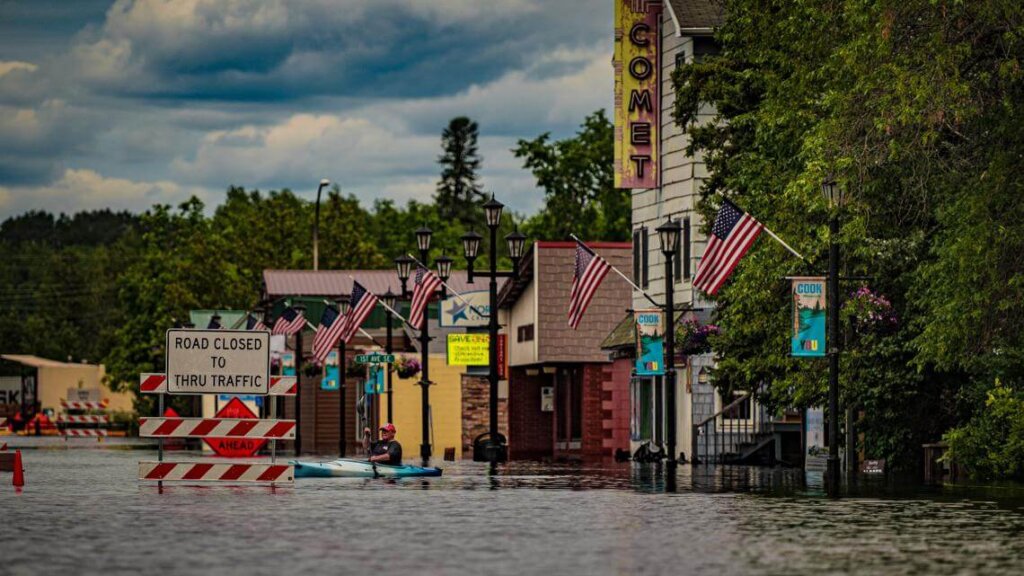
Why St. Louis Floods — How To Protect Your Home
Before we get into what to do, you need to understand the specific flooding context of this city, because St. Louis is one of the most flood-prone major metropolitan areas in the United States — and not just because of the Mississippi River.
St. Louis’ Floods Over the Years
St. Louis County’s own emergency management documentation states the obvious truth: flooding is the nation’s most common natural disaster, and the St. Louis area is no stranger to it. Between 1996 and the end of 2024, the St. Louis area recorded 123 documented flood events. Of those, 78% were flash floods — the most dangerous category, characterized by rapid onset and high water velocities that give residents little time to respond.
June is the most active flooding month, accounting for 28% of all flood events on record. May through July — the primary flood season — accounts for 63% of all historical flooding in the area. But St. Louis does not limit its flooding to summer. In November 2024, a catastrophic rainfall event broke records that had stood since 1921, with Lambert International Airport recording 3.89 inches of rain in a single day — shattering the old record of 1.62 inches set in 1956. Areas of St. Louis County recorded storm totals exceeding 9 inches in 36 hours. Two people died. Interstate 55 was shut down. Dozens of vehicles were submerged.
The average St. Louis home has a 26% chance of experiencing flooding over a 30-year period. That is one in four homes. If you are in a low-lying area near the Meramec River, River Des Peres, Gravois Creek, Deer Creek, or Maline Creek — creek systems that run through densely developed St. Louis neighborhoods — your flood risk is significantly higher.
The Types of Flooding St. Louis Homeowners Face
Understanding which type of flooding you are dealing with affects every decision you make about safety, cleanup, and insurance.
Flash Flooding from Heavy Rain: The most common scenario in St. Louis. Intense rainfall overwhelms drainage systems and creek channels faster than anyone can prepare. Water enters from the ground, from runoff flowing toward your home, through basement walls, and through any low-lying entry point. This type of flooding typically involves “gray water” — water that has mixed with soil, lawn chemicals, oil from driveways and streets, and mild contaminants.
River and Creek Flooding: The Meramec River regularly threatens communities in Arnold, Fenton, and South County. Gravois Creek backs up into South City neighborhoods. In major flooding events, these waterways can deliver “black water” — water contaminated with sewage, bacteria, agricultural runoff, and other serious hazards that require much more intensive remediation protocols.
Basement Water Intrusion: An extremely common problem in St. Louis’s older housing stock — homes built with brick foundations, stone blocks, or old concrete that was never properly waterproofed. Water seeps through foundation walls, floor cracks, and sump pump failures. This is typically gray water but can be seriously damaging.
Sewer Backup: The Metropolitan St. Louis Sewer District (MSD) maintains an aging combined sewer system that serves much of St. Louis City and portions of the county. In heavy rain events, combined sewer systems can overwhelm and push sewage back up through basement floor drains. This is black water — a hazardous situation requiring professional remediation, not DIY cleanup.
Inland Flooding from Saturated Ground: After extended periods of heavy rain, the ground becomes saturated and water that would normally absorb into the soil has nowhere to go. It pools against foundations, enters through low points, and can cause significant damage even in homes not typically considered flood-prone.
In 2024, floods caused more than $8 billion in damage to homes and businesses nationwide according to FEMA — and $3.8 billion of that occurred in communities not even classified as high-risk flood zones. Critically, standard homeowners insurance does not cover flood damage. A single inch of floodwater can cause approximately $25,000 in property damage. Many St. Louis homeowners discover this distinction at the worst possible moment.
First Thing To Do When Your House Floods
The moment you realize your home is flooding, your instinct is to grab things, to save belongings, to do something. Override that instinct until you have done the following safety checks, because water in a home creates hazards that can kill.
Step 1: Electricity Is Your First Priority
Before you wade into standing water, before you go to the basement to investigate, before you do anything else — determine whether the electrical system in your home presents a danger.
Water and electricity are a lethal combination. If standing water has reached electrical outlets, appliances, or the electrical panel, and power is still running to those circuits, the water in your home may be electrically charged. People have died wading through what appeared to be harmless shin-deep water in their own basements.
If you can safely reach your electrical panel without crossing through standing water, switch off the main breaker. If you cannot reach your panel without walking through standing water, call your electric utility — Ameren Missouri in most of St. Louis — for an emergency shutoff before entering the flooded area.
If you are unsure whether the water could be electrically charged, treat it as if it is. Do not enter until a professional has confirmed it is safe.
Step 2: Identify the Water Source — Can You Stop It?
If the flooding is coming from a burst pipe, a failed appliance supply line, or another internal source, locate your main water shutoff valve and turn it off immediately. This is typically located near the water meter — in St. Louis homes, often in the basement near the front wall of the house or in a utility closet.
If the flooding is external — rain, rising groundwater, creek overflow — you cannot stop the source, but you can sometimes slow the intrusion. Sandbags against doorways and basement windows, towels rolled against door thresholds, and anything that slows water’s path into the house buys time and reduces total damage.
If the flooding is from a sewer backup — identifiable by the presence of sewage, solid waste, or extremely foul odor — do not use any drains, toilets, or water fixtures in your home until the backup has cleared. Using them will push more sewage into your living space.
Step 3: Evaluate Structural Safety Before Entering
Floodwater compromises structural integrity in ways that are not always visible. If the flooding has been significant — several inches or more — look for visible signs of structural compromise before fully entering any area:
- Bowing or bulging walls
- Doors or windows that no longer open or close properly (indicating frame distortion)
- Cracks that appeared suddenly in walls, floors, or the foundation
- Any visible foundation movement or settlement
- Sagging ceilings that could be holding water weight
If you see any of these signs, evacuate and contact a structural engineer or your local building department before re-entering. This applies especially to basements that have flooded — if you have a finished basement with water pressure on the walls, FEMA specifically recommends removing water gradually, not all at once, to prevent the sudden pressure differential from collapsing basement walls.
FEMA’s guidance on flooded basements is important: if the basement is flooded due to external water pressure, remove water at a rate of no more than 1 foot per 24 hours to prevent the risk of structural collapse as the internal and external water pressure equalizes.
Step 4: Assess Personal Safety
Floodwater is never clean, regardless of what type you are dealing with. Even gray water that came from a heavy rain carries bacteria, mold spores, pesticides, fertilizers, and other contaminants picked up as it traveled across lawns, driveways, and streets. Black water from sewage backup or major river flooding is genuinely hazardous to human health.
Before beginning any cleanup, equip yourself appropriately:
- Rubber boots or waterproof work boots
- Waterproof gloves (heavy rubber or nitrile)
- N95 or P100 respirator mask if the water has a sewage smell or if mold is suspected
- Safety glasses or goggles
- Waterproof coveralls or clothing you will discard after contact with black water
Step 5: Document Everything Before You Touch Anything
This single step saves St. Louis homeowners thousands of dollars in insurance claims, and it takes only minutes. Before you move a single piece of furniture, before you begin any cleanup, take thorough photo and video documentation of every affected area.
Use your phone to create a complete visual record: the waterline on walls, damaged belongings, damaged flooring, affected appliances, damaged structural elements, the water meter (showing any significant surge if it has one), and the exterior damage if applicable.
This documentation is your evidence for:
- Homeowners insurance claims (for pipe bursts, appliance failures)
- Flood insurance claims through NFIP if you have a policy
- FEMA disaster assistance if a federal disaster declaration applies to your area
- The SBA low-interest disaster loan program available after declared disasters
Do not skip this step in the urgency to begin cleanup. The documentation takes 20 minutes. A missed insurance claim can cost you tens of thousands of dollars.

Who to Call When Your House Floods
Here is a fact that changes how you should think about every hour of the first day: mold begins developing within 24 to 48 hours of moisture exposure. This is not a warning to create urgency — it is a physiological reality about how mold spores, which are always present in the air, colonize wet organic materials. Once mold gets established in drywall, subfloor, insulation, and wood framing, your remediation problem multiplies dramatically in both scope and cost.
The clock starts the moment water enters your home. Everything you do in the first 24 hours is about buying time against that clock.
Priority Action: Call Your Insurance Company Immediately
Before you start moving furniture or renting equipment, call your insurance provider to report the damage. This triggers the claims process and begins the documentation chain that affects your payout. Insurance adjusters are often backlogged after major flooding events — the sooner your claim is in the queue, the sooner an adjuster arrives.
Ask specifically:
- Is my damage covered under my homeowners policy, or do I need a separate flood claim?
- Do I need an adjuster inspection before beginning cleanup?
- Are restoration services covered, and do I need pre-approval for specific contractors?
Standard homeowners insurance typically covers damage from burst pipes, appliance failures, and sudden water intrusion from inside the home. It does not cover flood damage from external sources — heavy rain, rising rivers, or surface water. Flood damage requires a separate NFIP flood insurance policy or private flood insurance. This distinction matters enormously because it determines whether you have any insurance coverage at all for the damage you are looking at.
If you live in a federally declared disaster area, register for FEMA assistance at DisasterAssistance.gov or call 1-800-621-FEMA. In 2025, the maximum FEMA Housing Assistance grant was $43,600 — though average actual payouts between 2019 and 2023 were much lower, averaging $3,208 per household. FEMA assistance supplements, it does not replace, flood insurance.
Water Extraction: Getting Standing Water Out
Once documentation is complete and the space has been confirmed safe, begin removing standing water. The method depends on the volume:
Minimal standing water (under 1 inch): Wet/dry vacuums (shop vacs) can handle this effectively. Mops, towels, and squeegees are also useful for pushing water toward a drain or out of the space.
Moderate standing water (1 to 6 inches): Submersible sump pumps or trash pumps, available for rent at equipment rental companies like Home Depot or local rental shops, handle this volume efficiently. Discharge the water away from your foundation — pointing the discharge hose toward the street or storm drain, not back toward the house.
Significant standing water (6 inches or more): Professional water extraction is strongly recommended. Professional restoration companies use high-powered truck-mounted extraction units that remove water far faster and more completely than anything a homeowner can rent. If you are dealing with significant flooding, call a restoration company while you are still documenting damage. Many operate 24/7 for exactly this reason.
In St. Louis, water damage restoration companies servicing the metro include names like ServiceMaster, Paul Davis Restoration, SERVPRO, and numerous locally owned firms. When choosing, look for IICRC (Institute of Inspection Cleaning and Restoration Certification) certification — the industry standard for water damage remediation.
Important for flooded basements: Remember FEMA’s guidance on gradual removal — if your basement flooded from external water pressure, remove no more than 1 foot of water per 24 hours to prevent structural collapse.
Remove What Can Be Saved — Protect What Cannot
As water is extracted, begin removing water-damaged contents that can potentially be salvaged:
- Move wet furniture, rugs, and soft goods to a dry location — a shaded area outside, a dry garage, a dry section of the house
- Remove wet clothing and textiles immediately; they can be washed and dried if handled promptly
- Pull up and roll back wet rugs and carpets for drying; carpet padding almost never survives significant flooding and should typically be discarded
- Elevate furniture off wet floors using aluminum foil squares or wood blocks under legs to slow the water absorption and protect hardwood floors underneath
Remove wet items that cannot be salvaged and should be discarded: carpet padding, particleboard furniture that has become waterlogged (it swells and disintegrates), items soaked with black water or sewage that cannot be adequately disinfected, and food that has come into contact with floodwater.
Begin Drying Immediately
Research consistently shows that starting drying within the first 24 hours and completing it within 3 to 4 days dramatically reduces or eliminates mold risk. This window is not a comfortable guideline — it is the practical boundary between a manageable remediation project and one that expands into mold treatment across your entire structure.
Drying tools and methods:
- Industrial dehumidifiers: These are not the $200 Home Depot units. Professional-grade dehumidifiers remove significantly more moisture from the air per day. Rental is available through equipment rental companies; professional restoration companies deploy them as part of their standard process.
- Air movers (box fans on steroids): High-velocity air movers direct high airflow across wet surfaces to accelerate evaporation. These are also available for rent and are the primary drying tool professionals use.
- Open windows and doors: In warm, dry weather, maximizing natural airflow accelerates drying significantly. In humid summer conditions — common in St. Louis — natural airflow may bring in more moisture than it removes. Check the outdoor humidity before opening everything.
- Heat: Warm air holds more moisture than cool air, which allows dehumidifiers to work more effectively. Maintaining temperatures in the mid-70s accelerates the drying process.
A professional drying setup typically involves placing dehumidifiers and air movers in a structured pattern through every affected room, running them continuously, and monitoring moisture levels daily with professional moisture meters. The equipment typically runs for 4 to 7 days, with technicians returning daily to check readings and adjust placement.
Standard household fans are not sufficient. They move air but do not significantly reduce the moisture content of that air — they just create the appearance of activity while mold develops in the materials they are blowing across.

Take This Action When Your Basement Floods
With standing water removed and drying equipment running, the next phase is a careful assessment of what has been damaged, what can be saved, and what must come out.
The Hidden Damage Problem
Water does not stay where it lands. It travels along framing members, wicks up drywall, seeps under flooring, saturates insulation, and pools in cavities you cannot see. What looks like damage to one room may actually extend to two or three adjacent rooms through paths that are invisible to the naked eye.
Professional restoration companies use thermal imaging cameras and calibrated moisture meters to map the true extent of water damage — finding wet areas inside walls, under floors, and in ceiling cavities that have no visible signs of moisture from the surface. This is why professional assessment is strongly recommended even if you intend to manage much of the cleanup yourself. A professional moisture survey tells you exactly what needs to come out, preventing you from either leaving wet materials that will grow mold or demolishing materials that were unaffected.
What Usually Must Come Out
The general principle: porous materials that have been fully saturated by gray or black water will not dry adequately in place and must be removed to allow drying and prevent mold.
Drywall: Drywall is gypsum board between two layers of paper — an ideal surface for mold growth once saturated. Affected drywall must typically be cut out to 12 inches above the visible waterline, because water wicks upward in drywall beyond the visible stain. The framing behind it can usually be dried in place if drying is begun promptly.
Carpet and Padding: Carpet that has been significantly wetted with gray or black water should typically be removed entirely. The padding beneath it almost always needs to go — it holds water like a sponge and cannot be adequately dried in place. Some carpet can be professionally cleaned and reinstalled if the flooding was clean water and it is addressed very quickly; your restoration professional can advise.
Insulation: Fiberglass batt insulation inside walls and in crawl spaces holds water and must be removed after significant flooding. It cannot be dried in place and becomes a persistent moisture reservoir that feeds mold growth.
Hardwood Flooring: Solid hardwood floors that have been saturated may cup, buckle, and warp as they dry. Some can be sanded and refinished after thorough drying; others cannot be saved. Laminate flooring almost never survives significant flooding — the core swells and delaminates. This is an area where professional assessment of your specific flooring is essential.
Subfloor: Plywood and OSB subfloor absorbs significant water. If it swells or delaminates, it must be replaced. Even if it appears intact, professional moisture readings should confirm it has returned to acceptable moisture levels (typically below 16% for wood) before new flooring is installed over it.
Cabinets: Kitchen and bathroom cabinets are almost always made of particleboard or MDF cores that swell and fail when wet. They are rarely salvageable after significant flooding.
Working Safely During Demolition
Wear your protective gear throughout the demolition phase. Drywall dust combined with mold spores is a respiratory hazard. If you see any visible mold — typically black, green, or fuzzy growth — stop and call a mold remediation professional before continuing. Disturbing mold during demolition without containment spreads spores throughout the home and creates a much larger problem than the original growth area.
For areas affected by sewage or black water, professional remediation is not optional — it is necessary. The bacteria and pathogens present in sewage require professional-grade disinfection protocols and often require the replacement of all porous materials regardless of apparent dryness.
Professional Drying Verification and Beginning Reconstruction
Confirming the Home Is Dry
Before any reconstruction can begin — before a single sheet of new drywall goes up, before new flooring is laid — the home must be verified as completely dry to professional standards. This means moisture readings in all framing members and structural components below 16% moisture content for wood, and relative humidity in the space within normal ranges (typically below 55% RH).
Insurance companies often require a Certificate of Dryness before approving reconstruction payments. This certificate is issued by your restoration company and documents the moisture readings confirming that drying is complete. Do not skip this step or rush past it — installing new drywall over framing that is still elevated in moisture content locks in the moisture and creates ideal mold growth conditions inside your walls, where you will not discover the problem until months later.
A simple restoration project affecting one or two rooms typically takes 3 to 5 days to fully dry. A kitchen and bath impact can take 4 to 8 weeks from initial flood to completed restoration, accounting for the complexity of trades involved. Whole-home flooding can take 90 days or more to fully remediate and reconstruct.
Insurance Adjuster Visit — What to Expect
Your insurance adjuster will visit the property to document damage and determine the scope of coverage. To prepare:
- Have your documentation photographs and videos organized and accessible
- Maintain a written log of all expenses — professional services engaged, materials purchased, temporary accommodations
- Have restoration contractor estimates ready if possible
- Be present for the inspection and walk the adjuster through every affected area
If you disagree with the adjuster’s damage assessment or the settlement offered, you have the right to request a re-inspection, engage a public adjuster (who works on your behalf for a percentage of the settlement), or invoke the appraisal process available under most policies. Do not accept a settlement that you believe is insufficient without exploring your options.
The Reconstruction Timeline and Costs
Once the home is verified dry, reconstruction begins. What you face depends entirely on the scope of damage, but here are realistic benchmarks:
Minor flooding (one room, no structural issues): Drywall replacement, flooring replacement, painting — 2 to 4 weeks of active work, approximately $5,000 to $15,000.
Moderate flooding (basement or multiple rooms, standard damage): Framing inspection and treatment, drywall throughout affected areas, all new flooring, potentially cabinet replacement, mechanical system inspections — 4 to 8 weeks, approximately $20,000 to $50,000.
Significant flooding (whole-home or structural damage): Full structural assessment, extensive drywall and flooring replacement throughout, potential foundation work, full mechanical systems evaluation and potential replacement, reconstruction of finished spaces — 8 to 16 weeks, potentially $50,000 to $150,000 or more.
These are averages. St. Louis’s aging housing stock — much of it built before 1970 with original plumbing, electrical, and mechanical systems — often reveals additional issues when walls come open. A flood that exposes knob-and-tube wiring that must be brought to code before walls can be closed adds significant cost and time. A foundation issue revealed by the flood that was masked by a finished basement does the same.

Stop The Mold Problem — Water in Basement
Mold deserves its own section because it is the single most significant long-term consequence of inadequately addressed flood damage, and it is the issue we most frequently see in homes where families tried to remediate themselves without professional support.
Mold begins growing on drywall as little as 24 hours after moisture exposure. It starts below the surface — in the paper facing of the drywall — and becomes visible on the surface within 2 to 3 weeks of growth starting. By the time you can see mold, it has already been growing for weeks in places you cannot see.
Mold in a home is not just an aesthetic problem. Mycotoxins released by certain mold species are associated with respiratory disease, neurological symptoms, and serious health consequences for vulnerable individuals including children, the elderly, and anyone with respiratory conditions. In St. Louis, where summer humidity creates persistently elevated ambient moisture levels, mold established in a flood-damaged home can spread rapidly throughout the structure.
The practical consequences for your home’s value and sellability are equally serious. A home with active mold — or even a history of undisclosed mold — faces significant challenges in a traditional real estate sale. Buyers’ inspectors test for mold. Lenders may refuse to finance homes with active mold. Disclosure obligations require you to reveal known mold history in Missouri.
Professional mold remediation, when mold has established in a flood-damaged home, adds significant cost and complexity to the restoration project. It typically involves:
- Containment of affected areas with negative air pressure barriers to prevent spore spread
- Physical removal of all mold-affected materials
- HEPA vacuuming of all surfaces
- Antimicrobial treatment of structural framing
- Air filtration with HEPA units during and after removal
- Post-remediation clearance testing by an independent industrial hygienist
This is not a bleach-and-paint situation. Surface treatment of mold that has penetrated into structural materials does not eliminate the problem — it masks it temporarily while the mold continues to grow inside the structure.
After the Repair — Protecting Your Home From the Next Flood
Once you have repaired your home, you have an opportunity to make improvements that reduce your risk in the next flood. In St. Louis, there will be another flood.
Sump Pump Maintenance and Backup Systems: Most St. Louis homes with basements have sump pumps. Your sump pump should be tested annually by filling the pit with water and confirming it runs. A battery backup sump pump — a separate unit that activates when the primary pump fails or during power outages — is one of the best investments a St. Louis basement owner can make. Power outages and heavy rain occur simultaneously during the exact storms that overwhelm sump systems.
Flood Insurance: If you do not have it, get it. The National Flood Insurance Program (NFIP) provides up to $250,000 in building coverage and $100,000 in contents coverage through participating insurers. The national average NFIP premium is approximately $926 per year — a fraction of the cost of a single flooding event. Note that NFIP policies have a 30-day waiting period before coverage takes effect, so you cannot buy it when a storm is approaching. Buy it now.
French Drains and Grading: Water flows toward your foundation if the ground slopes toward your home. Correcting the grading around your foundation — ensuring the ground slopes away from the house at least 6 inches over the first 10 feet — is one of the most cost-effective flood mitigation steps available. French drains can redirect surface water away from the foundation on properties where regrading alone is insufficient.
Waterproofing Basement Walls: Interior drainage systems with weeping tile and sump pit connections, combined with interior wall waterproofing membranes, can dramatically reduce the amount of water that makes it into a St. Louis basement during high-water-table events. This is not inexpensive ($5,000 to $15,000 for a full system), but it is far less expensive than repeated flood remediation.
Window Well Covers: Basement window wells fill with water during heavy rain and become entry points for significant flooding. Transparent plastic covers over window wells are inexpensive and highly effective.
Check Valves on Floor Drains: For basement floor drains connected to the sewer system, a check valve (also called a backflow preventer) prevents sewage from backing up into your basement through the drain during combined sewer overflow events. This is one of the most important and underused flood mitigation tools for St. Louis City homeowners specifically, given the age of the combined sewer system.
Document Your New Normal: After restoration, take detailed photographs of your repaired home — especially opened and repaired areas — for your records. Create a home maintenance log that includes the flood event, the remediation steps taken, and the contractors used. This documentation protects you in future insurance claims and real estate disclosures.
When Repair Is Not the Right Answer — What to Do When the Damage Is Too Much
Not every flood-damaged home should be repaired. This is a hard truth, but it is an important one — and St. Louis homeowners face it more often than many people outside this city realize.
There are situations where the honest financial and practical assessment of a flooded home points toward selling rather than repairing:
When the damage exceeds the home’s value. In some St. Louis neighborhoods — particularly in areas with lower home values or homes that had pre-existing conditions — the cost to properly remediate and restore a severely flooded home can approach or exceed the home’s market value. Spending $80,000 to restore a home worth $90,000 that will likely flood again is not a financially sound decision for many families.
When the home has been repeatedly flooded. FEMA’s repetitive flood loss data identifies properties that have been flooded multiple times. These properties are often in locations where the flooding risk is structural — they will flood again, and again. If your home has flooded twice in ten years, the question is not just “how do I fix this flood?” but “why am I going to stay in a property that will flood again?”
When you lack flood insurance and cannot fund repairs. The average FEMA disaster grant is approximately $3,208 per household — enough to cover minimal emergency repairs but nowhere near sufficient for major restoration. Without flood insurance, without significant personal savings, and without a home equity loan (which may not be available on a severely damaged property), many families simply do not have access to the capital required for full restoration.
When the flood exposed other significant problems. A flood that opens walls sometimes reveals decades of hidden problems — severe foundation issues, abandoned mechanical systems, lead paint conditions requiring abatement, asbestos-containing materials requiring professional removal, or structural deterioration that was masked by finished surfaces. When a flood becomes the discovery mechanism for a problem that was always there, the true cost of making the home right can dwarf the flood remediation cost alone.
When the emotional toll of repair and continued ownership is more than the family can bear. This is a legitimate and real factor that does not get acknowledged enough. Some families, faced with the prospect of a three-month restoration process on a home that has flooded before and will likely flood again, make the rational and courageous decision that it is time to move on. There is no shame in that decision. It is sometimes the wisest one available.
If you find yourself in any of these situations — if you are a St. Louis homeowner with a flood-damaged property and you are not sure repair is the right path — there is another option.
Cash Offer Man Buys Flood-Damaged Homes in St. Louis
At Cash Offer Man, we purchase flood-damaged homes throughout St. Louis City, St. Louis County, and surrounding communities — in any condition, at any stage of the damage, whether you have begun remediation or the house is exactly as the flood left it.
We have walked through flooded basements, mold-affected drywall, damaged foundations, and homes with standing water still present at the time of our assessment. We know what we are looking at, we know what it costs to address, and we make offers that honestly reflect both the current condition and the real market for properties in the St. Louis area.
Here is what working with Cash Offer Man looks like when your home has flood damage:
You call us. We come to you — in whatever condition the house is in. You do not need to remediate, repair, or clean anything before we visit. You do not need to empty belongings or address the damage in any way. We come to the property as it stands, assess what we see, and give you honest feedback about what we think the home is worth and what a fair offer looks like.
We make you a written cash offer within 24 hours. No contingencies. No financing to fall through. No appraisals to dispute. A firm number that you can count on.
You take what you want. Leave the rest. If there are belongings, furniture, or items you want to keep, take them. Whatever you leave in the home when we close is our responsibility from that point forward. You do not need to organize a cleanout, coordinate dumpsters, or manage the disposal of water-damaged contents.
We close on your timeline. If you need to close in two weeks because you are paying for temporary housing and need to end your carrying costs, we can work toward that. If you need more time to sort through belongings or find your next living situation, we accommodate that too.
No commissions, no fees, no surprises. The number we present is the number you walk away with, minus standard title fees. No real estate agent commission. No repairs required. No hidden costs.
For homeowners whose insurance has fallen short, whose repair costs exceed what makes financial sense, or who have simply been through enough and want a clean, certain path forward — Cash Offer Man is that path.
We are St. Louis people. We buy St. Louis homes. We renovate them and put them back into use as quality housing in the communities we are part of. Every home we purchase and restore is a small investment in the future of this city — and every family we help through a difficult moment is a reminder of why this work matters.
If your home has flooded — whether it happened yesterday or six months ago — give us a call. There is no obligation. There is no pressure. There is just a conversation with someone who knows this market, knows flood damage, and genuinely wants to help you find the best path forward for your specific situation.
Quick Reference: Your Flood Response Timeline
Immediately (First 30 Minutes)
- Determine electrical safety — kill the main breaker if safe to do so
- Shut off water source if applicable
- Evacuate if structural damage or sewage backup is present
- Call 911 if anyone is in danger
First 2 Hours
- Document all damage — photos and video before touching anything
- Call your homeowners insurance company
- Register for FEMA assistance if a disaster declaration exists (DisasterAssistance.gov)
- Begin removing standing water if safe
First 24 Hours
- Get drying equipment running (dehumidifiers, air movers)
- Remove wet contents that can be salvaged
- Remove wet contents that cannot (carpet padding, waterlogged particleboard)
- Contact a professional restoration company if damage is significant
Days 2 Through 7
- Professional moisture assessment of all affected areas
- Controlled demolition of damaged materials (drywall, insulation, flooring)
- Continue aggressive drying
- Meet with insurance adjuster
Days 7 Through 30
- Verify complete drying with moisture meter confirmation
- Obtain Certificate of Dryness
- Begin reconstruction with licensed contractors
- Final inspection and insurance documentation
After Restoration
- Install sump pump battery backup
- Purchase or verify flood insurance
- Address grading, drainage, and waterproofing issues
- Document your restored home thoroughly
Aaron Eller is the founder of Cash Offer Man, a local home buying company serving St. Louis City, St. Louis County, and surrounding Missouri communities. Cash Offer Man purchases homes in any condition — including flood-damaged properties — for cash, with closings in as little as 14 days. For a no-obligation offer or consultation about your flood-damaged St. Louis property, visit www.CashOfferMan.com.
Get An Offer Today, Sell In A Matter Of Days