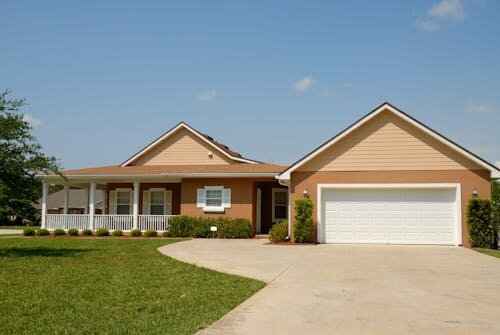


Slab Homes vs. Basements: What Every St. Louis Homeowner Needs to Know
By Aaron Eller, Founder — Cash Offer Man | St. Louis, Missouri
June 1, 2026
In most of the United States, the question of whether a home has a basement is simply a matter of preference. In St. Louis, it is a matter of expectation — and those expectations are so deeply embedded in the local buyer psychology that they affect resale value, days on market, and the competitive positioning of properties in ways that buyers and sellers in other markets simply do not experience.
Walk into an open house in Mehlville, Hazelwood, or Ferguson and the buyers touring the property will ask about the basement as naturally as they ask about the kitchen. It is assumed. When a St. Louis listing notes “no basement,” a meaningful percentage of buyers self-eliminate before scheduling a showing. This is not irrational — it reflects climate reality, functional utility, and generations of building tradition that have made the full basement the standard against which all other foundation types are measured in this market.
I am Aaron Eller, founder of Cash Offer Man. I have bought homes with every foundation type in the St. Louis market — deep full basements, half basements, crawl spaces, and slabs. I know what each one means for value, for maintenance, for livability, and for resale. This article gives you the complete picture.
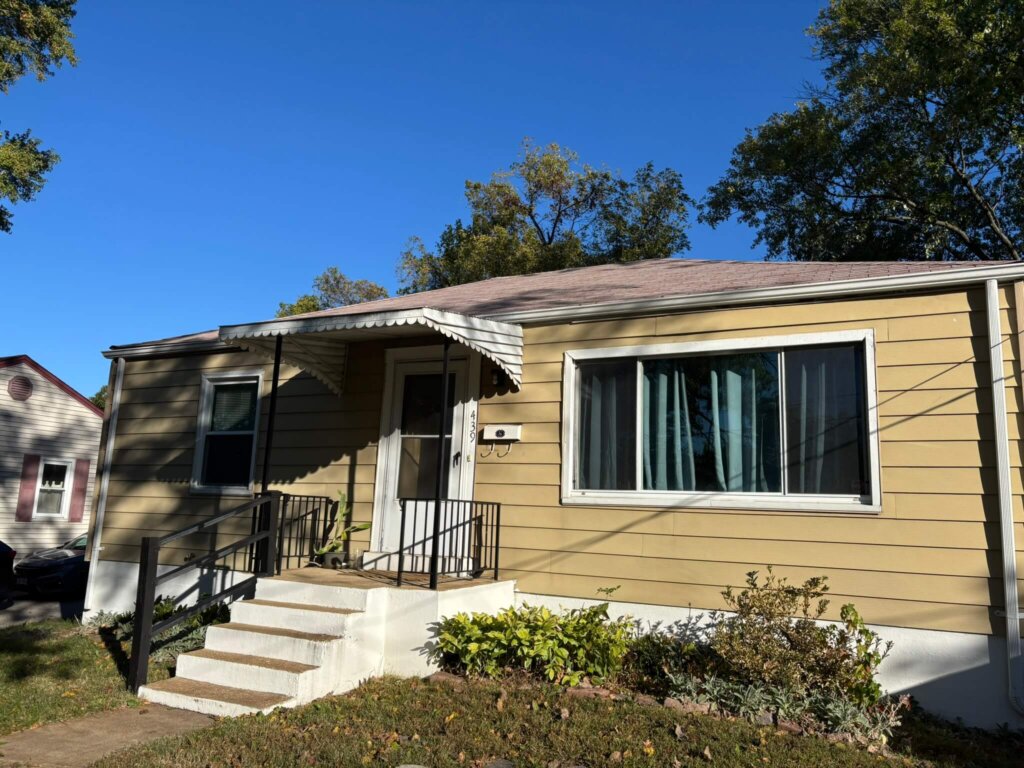
The Three Foundation Types — Defined
Before comparing them, understanding exactly what each type is:
Full Basement
A full basement is a below-grade living or utility space with a minimum ceiling height (typically 7 to 9 feet in modern construction, 6.5 to 7 feet in older St. Louis construction) that extends beneath the full footprint of the home above. The foundation walls form the perimeter of the basement, typically extending 8 to 10 feet below grade in St. Louis construction.
Full basements come in two primary versions:
Unfinished basement: The concrete or block walls and floor are exposed. The space is used for mechanical systems (HVAC, water heater, laundry), storage, and general utility. In St. Louis, the unfinished basement is the standard configuration for most post-war housing stock.
Finished basement: The space has been converted to living area through framing, drywall, flooring, and sometimes full bathroom and kitchen installations. A properly finished basement adds square footage to the home’s total living area — though the valuation of below-grade finished space versus above-grade space differs (discussed below).
Crawl Space
A crawl space is a below-floor cavity that is not deep enough for full standing — typically 18 inches to 4 feet in height — that sits beneath the home’s main floor. Like a basement, it creates separation between the living floor and the ground, but without the usable space a basement provides.
Crawl spaces are enclosed by perimeter foundation walls and are accessed through a small hatch or exterior access door. Their primary purpose is to house mechanical systems and provide access for plumbing, electrical, and structural maintenance.
The critical variable: conditioned vs. unconditioned crawl spaces. An encapsulated, conditioned crawl space with a vapor barrier and insulation performs very differently from an open, unconditioned crawl space that is simply a dirt-floored cavity beneath the house. The latter creates significant moisture, pest, and air quality issues; the former can be managed effectively.
Slab Foundation
A slab foundation is a single, continuous pour of reinforced concrete at or slightly above grade level, on which the entire home sits directly. There is no below-grade space — the concrete slab is both the foundation and the ground floor of the home.
Slab construction types:
Conventional slab: Concrete of uniform thickness (typically 4 to 6 inches) poured over a prepared sub-base of gravel or sand, with the edges thickened to form the foundation perimeter. Reinforcing steel (rebar or wire mesh) runs through the slab.
Post-tension slab: High-strength steel tendons run through the concrete and are tensioned after curing, which increases the slab’s strength and resistance to cracking. Common in areas with expansive clay soils — including parts of Missouri — where soil movement would crack conventional slabs.
Monolithic slab: The slab and foundation perimeter (footing) are poured in a single continuous pour. Common in new construction for speed and simplicity.
Why Builders Choose Slab vs. Basement — The Economics
The Cost Differential
This is the primary reason slab construction exists: it is substantially cheaper than excavating and constructing a full basement.
Cost comparison for a 1,400 square foot St. Louis home (2026 costs):
| Foundation Type | Construction Cost | Additional Cost vs. Slab |
| Slab | $8,000–$16,000 | — |
| Crawl space | $12,000–$22,000 | $4,000–$6,000 |
| Full basement (unfinished) | $25,000–$55,000 | $17,000–$39,000 |
A full basement adds $17,000 to $39,000 in construction cost relative to a slab. For a production builder constructing hundreds of homes per year, this cost differential represents a significant pricing advantage or margin opportunity. In markets where buyers do not specifically demand basements — and in markets where soil and climate conditions make slab construction straightforward — builders choose slabs.
Soil and Climate Drive the Decision
Builder preference is not the only factor. Soil and climate conditions in specific markets make one foundation type dramatically more practical than others.
Where slabs dominate and why:
Arizona: Extremely low annual rainfall (Phoenix averages 8 inches per year), minimal frost depth (freezing temperatures are rare), rocky desert soil that does not heave or shift seasonally. Basement excavation through rocky desert substrate is expensive and unnecessary. The low humidity climate means no below-grade moisture management challenges. Slabs are the obvious choice — cheap, practical, and climate-appropriate.
Florida: High water table throughout most of the state means that excavating a basement immediately runs into groundwater. Florida’s average water table is often within 2 to 3 feet of the surface — a basement would be perpetually flooded. Slab construction sits above the water table without creating a groundwater management problem. Additionally, Florida’s mild winter temperatures mean the freeze-thaw cycle that drives basement demand in colder climates is absent.
Texas coastal areas: High humidity, salt air corrosion risks, and frequent hurricane threats make above-grade construction and pier-and-beam systems more common than basements. Soil conditions vary widely across Texas — some inland areas have basements, but coastal construction is almost universally slab.
California: Earthquake risk drives specific foundation engineering requirements. While seismically engineered basements are built in California, the combination of construction cost, regulatory requirements for seismic design, and mild winter temperatures in most of the state makes basements less common than in the Midwest.
Why St. Louis Has So Many Basements
St. Louis sits at the intersection of every climate and soil condition that makes basements not just common but functionally essential:
Frost depth: Missouri’s frost line — the depth to which the ground freezes during winter — is approximately 24 to 28 inches in the St. Louis metro area. Any foundation footing must be placed below the frost line to prevent frost heave from lifting and cracking the foundation. In a climate like Arizona, a 4-inch slab sitting on grade is adequate because the soil never freezes and heaves. In Missouri, footings must go at least 24 to 28 inches below grade by code. Once you are excavating 28 inches anyway, the marginal cost of going an additional 6 to 7 feet to create a full basement is significantly lower than the baseline excavation cost.
The tornado reality: Missouri is squarely in tornado alley. The May 2025 EF3 tornado that struck St. Louis — one of the deadliest to hit the city in 66 years — was a visceral reminder of why underground shelter matters. A basement is the most effective tornado refuge available in residential construction. In a state that averages approximately 40 tornadoes annually and that sits within the peak risk corridor for significant tornado activity, the basement is not a luxury — it is the room where your family goes when the sirens sound.
Soil conditions and freeze-thaw cycle: St. Louis’s clay soil undergoes significant seasonal expansion and contraction. Foundation footings that are below the frost line and below the zone of maximum seasonal movement perform better and more predictably than footings at or near grade. Deeper construction = more stable foundation.
The utility value: St. Louis’s climate — with summers reaching the upper 90s with high humidity and winters dropping to the teens — creates meaningful demand for the below-grade mechanical space that a basement provides. HVAC equipment, water heaters, laundry equipment, and storage all benefit from the temperature-moderated environment of a basement. In Phoenix, where a home might have no HVAC at all (air conditioning only, minimal heating needs), the mechanical basement is irrelevant. In St. Louis, the basement is the natural home for the mechanical systems that make the house livable year-round.
Generational building tradition: By the post-World War II era, the full basement was so embedded in St. Louis residential construction that it became simply the expected standard. Every subdivision built through the 1970s included basements as a matter of course. Homebuyers who grew up in basement homes expected their next home to have one. Builders who deviated from this standard found less demand for their product. The tradition became self-reinforcing.
The Pros and Cons of Each Foundation Type
Full Basement — Pros
The tornado shelter. In St. Louis, this is not a nice-to-have. An interior basement room — particularly one away from windows and exterior walls — is the most effective residential tornado shelter available. After the May 2025 tornado, the families who were uninjured in the hardest-hit neighborhoods were almost universally the ones who made it to their basements.
Added living space potential. A 1,400 square foot ranch with an unfinished basement has 1,400 square feet of above-grade living space and 1,400 square feet of potential living space below. A properly finished basement can add a family room, a bedroom, a bathroom, a home office, or a full in-law suite to the home’s functional space. The cost per square foot of finished basement space is dramatically lower than the cost per square foot of a home addition.
Mechanical and storage space. HVAC equipment, water heaters, laundry, holiday decorations, seasonal gear, tools, camping equipment — all of the accumulated possessions of modern life that need space have a natural home in a basement. A slab home has to either accommodate this within the living footprint or build accessory storage.
Temperature moderation. A basement maintains relatively consistent temperatures year-round — cooler in summer, warmer in winter — which reduces the thermal load on the home’s HVAC system and provides a naturally comfortable space during Missouri’s temperature extremes.
Equity potential. Basement finishing is one of the most favorable cost-to-value renovations available in the St. Louis market. The marginal cost of finishing an existing basement (typically $20,000 to $50,000 depending on scope) is far lower than the cost of adding the equivalent above-grade square footage through an addition ($100,000 to $200,000+).
Full Basement — Cons
Water intrusion risk. Any below-grade space is subject to water infiltration from hydrostatic pressure, poor drainage, or sump pump failure. St. Louis’s 40 inches of annual rainfall and the clay soil that retains moisture make basement water management an active, ongoing responsibility. Sump pumps, battery backups, French drains, proper grading — these are maintenance requirements that slab homeowners never face.
Radon risk. Radon — a naturally occurring radioactive gas that seeps from soil into enclosed spaces — is a significant concern in below-grade spaces. Missouri is a high-radon state, and St. Louis County homes with basements have elevated radon exposure potential. Radon testing and mitigation (if levels exceed EPA action levels) adds cost and management responsibility to basement ownership.
Maintenance and waterproofing. The basement perimeter — tuckpointing on exterior brick, waterproofing membranes, drainage tile systems, sump pits — requires periodic maintenance attention that a slab foundation does not.
Termite access. Basements provide termites with direct access to structural wood. Slab foundations, by contrast, eliminate the below-grade wood-to-soil contact pathways that Eastern subterranean termites exploit. A properly sealed slab with no wood-to-soil contact at the perimeter has significantly lower termite vulnerability than a basement home in most scenarios.
Crawl Space — Pros and Cons
Pros: Provides below-floor utility access for plumbing, electrical, and structural systems. Lower construction cost than a full basement. More easily adapted to sloped lots than a slab.
Cons: Provides no livable space. Moisture, pest, and air quality management is more complex than a slab but provides less functional return than a basement. An unconditioned crawl space with bare dirt floor and no vapor barrier is one of the worst moisture management configurations in residential construction — the source of mold, rot, and poor indoor air quality in homes throughout the country.
The encapsulation solution: An encapsulated crawl space — sealed with a thick vapor barrier, conditioned with a dehumidifier, and insulated along the perimeter walls — performs dramatically better than a traditional vented crawl space. The cost of encapsulation in St. Louis: $3,000 to $8,000 depending on size and existing conditions. Many homes with encapsulated crawl spaces see improvements in energy efficiency and indoor air quality that partially justify the investment beyond simple moisture management.
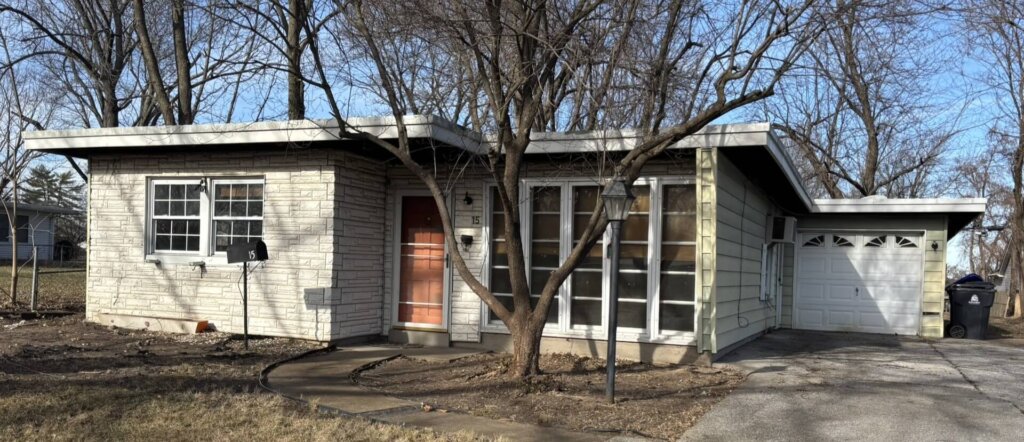
Slab Foundation — Pros
Lower initial cost. The construction cost advantage is real and significant in markets where builders pass it to buyers through lower purchase prices.
No below-grade water management. A properly constructed slab has no basement water risk. No sump pump to fail during a storm, no hydrostatic bowing walls, no below-grade water intrusion.
Structurally simple. A slab without basement plumbing, electrical, or mechanical systems is among the simplest residential foundation types to maintain.
Lower radon exposure. A slab home has far less direct below-grade soil exposure than a basement, which reduces radon infiltration potential (though radon can still enter through slab penetrations and cracks).
Lower termite pathway. A properly sealed slab with no wood-to-soil contact significantly reduces subterranean termite access to the structure.
Slab Foundation — Cons
No tornado shelter. This is the most significant practical disadvantage of slab construction in Missouri. A slab home in a tornado zone requires the occupants to shelter in an interior bathroom or closet — the best available option in a slab home, but far less protective than a below-grade space. The physics are straightforward: below grade, you are below the wind.
Plumbing is inaccessible. In a slab home, the drain and supply plumbing that serves the above-grade fixtures runs through or under the slab. Accessing or repairing buried plumbing requires either jackhammering through the slab or tunneling under it — a process that costs $3,000 to $15,000 per repair and leaves visible repair evidence in the finished floor. In a basement home, plumbing is fully accessible below the first floor.
HVAC in the living space. Without a mechanical room below grade, HVAC equipment lives in closets, attics, or exterior enclosures — taking space from the livable footprint and creating different maintenance and efficiency profiles than basement-mounted systems.
Slab crack repairs are invasive. When a slab cracks — from post-tension failure, soil movement, or plumbing leaks — the repair requires accessing the slab’s interior, which typically means significant disruption to the finished floor above.
No storage or additional space. The space a basement provides — for storage, recreation, mechanical equipment, or future living area — does not exist. What you see above grade is the complete square footage of the home. Period.
St. Louis Resale Value — What the Lack of a Basement Actually Costs You
This is the question that matters most for St. Louis buyers and sellers making specific decisions about specific properties.
The Buyer Psychology in St. Louis
The St. Louis buyer’s expectation of a basement is so deeply embedded that it functions as a market filter before the showing even happens. When a St. Louis buyer’s agent sets up MLS search criteria, the presence of a basement is routinely a required field — not a preference, a requirement. Properties that do not meet this threshold are filtered out of consideration entirely.
The buyers who self-eliminate based on the absence of a basement are not being irrational. They grew up in basement homes. They expect tornado shelter. They want laundry in the basement. They need storage for the 30 years of accumulated possessions that a house with no basement cannot accommodate without either adding accessory structures or consuming living space.
The buyers who are comfortable with slab homes in St. Louis are a specific subset of the total buyer pool:
- First-time buyers who have never experienced basement living
- Buyers relocating from slab-construction markets (Sun Belt refugees)
- Empty nesters who want low-maintenance living and have no remaining need for storage or tornado shelter
- Buyers for whom price is the overriding consideration and the slab home is priced significantly below comparable basement homes
The Quantified Value Difference
What does the absence of a basement actually cost a St. Louis seller at the point of sale?
The industry estimate in St. Louis is that a home without a basement sells for 10% to 15% less than a directly comparable home with a basement in the same neighborhood, all other things equal. On a $250,000 comparable, the slab home sells for approximately $212,500 to $225,000.
The days-on-market difference: Slab homes in St. Louis County markets where basements are the norm sit on the market longer. In a spring market where basement homes go pending in 7 to 12 days, a comparable slab home may sit 25 to 45 days. This extended marketing period generates carrying costs and psychological pressure on the seller that often produces price reductions that compound the initial discount.
The buyer pool difference: Perhaps the most significant resale impact is the reduction in buyer pool size. A property that is filtered out of search results by 40% to 60% of the active buyer pool receives fewer showings, generates less competitive pressure, and sells at a lower price to a narrower group of buyers. In a market where buyer competition drives prices above list, being excluded from the consideration set of half the buyer pool is a material disadvantage.
The St. Louis neighborhoods where this matters most:
In established St. Louis County municipalities — Mehlville, Affton, Florissant, Hazelwood, Overland, Ferguson, Kirkwood, Webster Groves — the basement expectation is effectively universal. A slab home in these communities is immediately perceived as non-standard and priced accordingly.
In newer St. Charles County developments — Wentzville, Lake Saint Louis, O’Fallon — the basement expectation is still strong but somewhat less universal, as the newer construction stock includes more builder-designed homes where slab options occasionally appear. Even here, a home with a basement commands a premium over an otherwise identical slab home.
New Construction Slab Homes in St. Louis — A Builder’s Compromise
Some St. Louis-area production builders have introduced slab-foundation home plans in their more affordable price tier — bringing the entry price below the basement-equipped alternatives in the same community. This strategy works as a price point entry because the 10% to 15% slab discount effectively creates a lower-priced option within a community’s price range.
The buyer’s consideration: A new slab home priced at $235,000 in a community where comparable basement homes are at $260,000 presents a genuine value decision. The buyer saves $25,000 at purchase but accepts the resale discount when they eventually sell. Whether this trade-off makes sense depends on their anticipated holding period, their storage and lifestyle needs, and their tornado risk tolerance.
Crawl Space vs. Basement in St. Louis — The Half-Measure
Crawl spaces appear most commonly in St. Louis in two scenarios: older homes on sloped lots where a full basement was cost-prohibitive on one side of the grade change, and in some 1950s-era construction where a half-basement/half-crawl space configuration was used.
A home that is half basement and half crawl space — a common configuration in St. Louis’s hillier communities — is not equivalent to a full basement home. The crawl space portion provides none of the tornado shelter, storage, or expansion potential of a basement. Buyers evaluating these homes should understand which portion of the footprint has functional basement access and what is beneath the remaining portion.
The crawl space resale impact in St. Louis: A home with a full crawl space (no basement) sits between a slab home and a basement home in buyer appeal. The discount relative to a basement home is typically 5% to 10% — smaller than the slab discount because the crawl space at least provides mechanical access and some moisture management. But the absence of usable below-grade space is still a meaningful limitation in the St. Louis buyer’s evaluation.
What This Means if You Are Buying or Selling in St. Louis
For Buyers
If you are buying in St. Louis and you are considering a slab home, price it correctly against the comparable basement homes and be honest with yourself about three questions:
Do you need tornado shelter? If you have children, if you live in a high-tornado-risk corridor, or if severe weather anxiety is a factor in your quality of life — do not buy a slab home in Missouri. The peace of mind that comes with being able to get your family below grade when the sirens go off is worth the price premium for a basement home.
Will you miss the storage and utility space? A basement home provides 800 to 1,500 square feet of non-living space for storage, laundry, mechanicals, and eventual finishing potential. A slab home does not. If you have accumulated possessions, if you want laundry not in the living space, or if you plan to finish additional living area in the future — the basement is functionally important, not just psychologically.
What is your exit plan? If you plan to sell in 5 to 7 years, you are accepting the 10% to 15% discount on a slab home at the point of your eventual sale. Know this going in.
For Sellers
If you own a St. Louis home without a basement, honest pricing is the strategy. Trying to market a slab home in St. Louis at basement-home prices produces long days on market, multiple price reductions, and a final sale price below where you would have landed with correct initial pricing. Price the discount in from the beginning, attract the buyers who are comfortable with slab construction at the right price, and close faster with fewer frustrations.
Cash Offer Man buys slab homes, crawl space homes, and basement homes throughout the St. Louis metro. We understand the value differences between foundation types, we price them accurately, and we close without the extended marketing period that a non-basement home in a basement market typically requires.
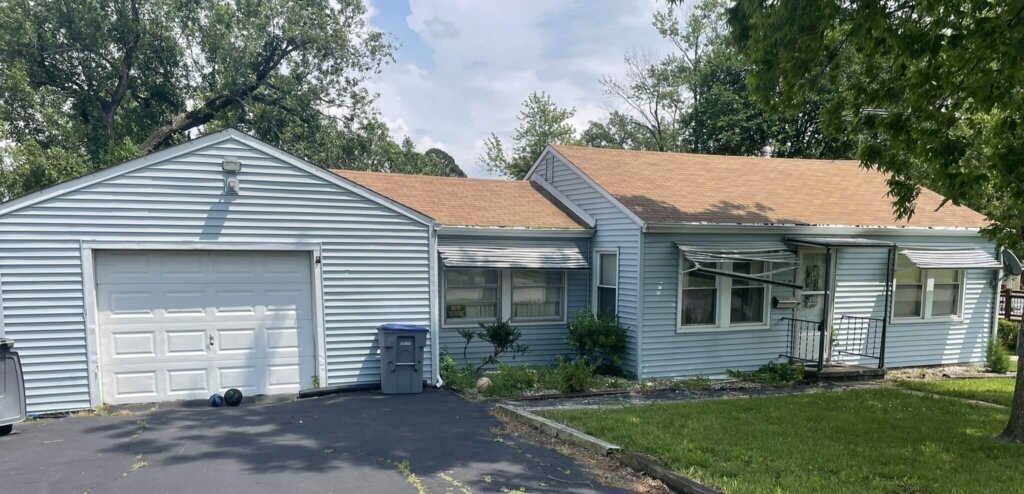
Summary: Foundation Types at a Glance for St. Louis Buyers and Sellers
| Factor | Full Basement | Crawl Space | Slab |
| Construction cost vs. slab | $17,000–$39,000 more | $4,000–$6,000 more | Baseline |
| Tornado shelter | Excellent | None | None |
| Storage/utility space | 800–1,500 sq ft | Utility only | None |
| Expansion potential | High (finishing) | None | None |
| Water management required | Yes (sump, drainage) | Yes (encapsulation) | Minimal |
| Radon risk | Higher | Moderate | Lower |
| Termite risk | Higher (wood near soil) | Moderate | Lower |
| Plumbing access | Full | Good | Limited/invasive |
| St. Louis buyer appeal | Standard/expected | Acceptable | Significant resistance |
| Resale discount vs. basement | — | 5–10% | 10–15% |
| Days on market impact | Standard | Slight increase | Significant increase |
| Best climate for | Missouri/Midwest | Variable | Arizona, Florida |
| Frost depth requirement | Drives basement depth | Adequate | Inadequate alone in MO |
Aaron Eller is the founder of Cash Offer Man, a local home buying company serving St. Louis City and County, St. Chalres County and surrounding Missouri communities. Cash Offer Man purchases homes with any foundation type — full basement, crawl space, or slab — for cash with closings in as little as 14 days. Visit CashOfferMan.com for a no-obligation offer.
Get An Offer Today, Sell In A Matter Of Days