

How to Buy Your First Rental Property in St. Louis
By Aaron Eller, Founder — Cash Offer Man | St. Louis, Missouri
May 7, 2026
Real estate investing changed my life. I do not say that as a sales pitch — I say it because it is literally true. Cash Offer Man exists because I understood, at some point early in my adult life, that the people who build lasting wealth in America do not do it exclusively through a paycheck. They do it by acquiring assets that work for them while they sleep. Real estate is the most accessible, most proven, and most forgiving wealth-building vehicle available to ordinary people with ordinary incomes — and St. Louis is one of the best markets in the country to start.
I am Aaron Eller, founder of Cash Offer Man. I have bought, renovated, and sold dozens of properties throughout St. Louis City, St. Louis County, and the surrounding communities. I know this market’s numbers intimately — the acquisition prices, the rental rates, the vacancy rates, the property management costs, the maintenance realities, and the appreciation trajectory in specific neighborhoods. I also know the problems. The bad tenants. The evictions. The 2 a.m. calls about broken furnaces. The property manager who was not managing. None of that should be hidden from someone considering their first rental property, because the people who go in with honest expectations build durable portfolios, and the people who go in expecting passive income with no friction usually sell their one investment property within two years in frustration.
This article covers everything — the case for investing, the case against, how to finance it, the specific St. Louis real estate market numbers, the strategies including the BRRRR method, and the problems you will encounter and how to handle them.

Why You Should Invest in Real Estate
Before we talk about how, let’s establish why — with data, not ideology.
Wealth Building Through Leverage Is Unlike Any Other Asset Class
When you buy a $180,000 rental property in St. Louis with a 20% down payment of $36,000, you control a $180,000 asset with $36,000. Your tenants — through their rent payments — are paying down your mortgage while you hold an appreciating asset. No other investment vehicle provides this combination of leverage, income, appreciation, and tax advantages to ordinary investors without institutional access.
Compare this to the stock market: to control $180,000 in stocks, you need $180,000. Real estate lets you control five times the asset value for the same capital outlay.
The Four Returns of Real Estate
Real estate investment in St. Louis generates returns from four simultaneous sources:
Cash flow: The monthly income remaining after all expenses — mortgage, taxes, insurance, maintenance, and management — are paid. A well-purchased St. Louis rental generates $150 to $400 per month in positive cash flow in the current market.
Appreciation: St. Louis home values have appreciated at an average of 5.3% annually over the past five years according to Missouri Association of Realtors data. On a $180,000 property, 5.3% annual appreciation equals $9,540 in equity growth per year — wealth building that requires no active effort from you.
Mortgage paydown: Every month your tenant’s rent payment makes your mortgage payment, the loan balance decreases. On a 30-year fixed mortgage at 7% on a $144,000 loan ($180,000 minus 20% down), your tenant reduces your principal balance by approximately $350 in the first year, accelerating to $500+ per month by year 10 as the amortization curve shifts.
Tax advantages: The IRS allows real estate investors to deduct mortgage interest, property taxes, insurance, maintenance costs, property management fees, and depreciation from rental income. Depreciation — a paper loss that does not require actual cash outflow — allows many investors to show a tax loss on paper while generating positive cash flow in reality. This is unique to real estate among common investment vehicles.
St. Louis-Specific Case for Investment
St. Louis is, by any honest metric, one of the best markets in America for entry-level real estate investment:
- Price-to-rent ratios are favorable. The ratio of purchase price to annual rent in St. Louis is significantly more favorable than coastal markets. In San Francisco, the price-to-rent ratio is approximately 35 (meaning you pay 35 years of annual rent to purchase a comparable property). In St. Louis, that ratio is approximately 14 to 18 — meaning properties are cheap relative to the rents they generate.
- Entry costs are manageable. The median home price in North and North-Central St. Louis County communities — the primary entry-level investment market — runs $140,000 to $185,000. A 20% down payment of $28,000 to $37,000 is achievable for a working professional with a few years of disciplined saving.
- Rental demand is structural. St. Louis’s renter population is large and stable, driven by the major employment anchors: Washington University Medical Center, BJC Healthcare, Centene Corporation, Boeing’s defense operations, and the large regional financial and professional services sector. These employers generate a continuous supply of renters who need quality housing.
Why You Should NOT Invest in Real Estate
The honest version of this conversation includes the case against, because not everyone who wants to invest in rental real estate should do it right now, at this scale, or in this way.
You Are Not Actually Passive
The most dangerous misconception about rental real estate is that it is passive income. It is not passive. Not at the beginning, not in a problem situation, and often not even with professional management in place. A rental property requires active attention to acquisition, to tenant selection, to maintenance decisions, to management oversight, and to the financial tracking that determines whether you are actually making money or simply churning cash.
If you are not willing to engage with a problem tenant situation, to make judgment calls about maintenance spending, or to be informed enough to evaluate whether your property manager is doing their job — rental real estate will be a source of stress rather than wealth.
You Need Liquidity Buffer
Real estate is an illiquid asset. If the stock market drops and you need cash, you can sell a position in minutes. If your rental property is vacant for three months and the furnace fails, you need cash now — not in 60 days when a property sale might close. Every new rental property investor should maintain a minimum of 6 months of mortgage payments in liquid reserves before acquiring their first property. This is not optional. Investors who buy without adequate reserves end up in distress when the inevitable unexpected expense arrives.
High Personal Debt Is a Disqualifier
If your personal debt-to-income ratio is already high — car payments, student loans, and existing obligations pushing you above 40% DTI — adding a rental property mortgage may be mathematically impossible with conventional financing and financially unwise even if creative financing makes it technically possible. Get your personal balance sheet in order before taking on investment debt.
You Are Not Ready for the Management Reality
If the thought of an eviction process, a tenant who stops paying rent, a flooded basement, or a discrimination complaint from a rejected applicant produces a response of “I can’t deal with that” — you are not ready. These things happen to every landlord. The successful ones handle them systematically and emotionally calmly. The unsuccessful ones either ignore them (creating larger problems) or panic-sell their property.

What You Need Before You Buy Your First Rental Property
Financial Prerequisites
Credit score: Minimum 620 for investment property financing with most conventional lenders; 680+ for the best rates. Investment property rates are typically 0.5% to 0.75% higher than primary residence rates for the same borrower profile.
Down payment: Conventional investment property loans require a minimum 15% to 25% down payment — higher than the primary residence minimum. FHA loans (discussed below) require only 3.5% down but have occupancy requirements. On a $175,000 St. Louis investment property, plan on $26,250 to $43,750 in down payment.
Liquid reserves: Most conventional lenders require 6 months of PITI (principal, interest, taxes, and insurance) in reserves after closing. On a $140,000 loan at 7%, 6 months of PITI is approximately $7,500. This is in addition to your down payment and closing costs.
Stable income and employment: Lenders want to see 24 months of stable employment history. Self-employed investors need 24 months of tax returns showing sufficient income.
Knowledge Prerequisites
Know your market. Before making any offer, you should be able to look at a property address in Hazelwood, Florissant, or Ferguson and know within $15,000 what it is worth and what it would rent for. This knowledge comes from studying comparable sales and rental listings for 60 to 90 days before you make your first offer.
Know the numbers. Before you buy, run the cash flow analysis on every property you evaluate. The analysis framework is described in detail below.
Know the laws. Missouri landlord-tenant law (RSMo Chapter 441) governs your relationship with tenants. St. Louis City and St. Louis County have additional local landlord regulations. Know them before you have a tenant.
Types of Rental Properties — What to Buy First
Single-Family Homes
The most common entry point for St. Louis first-time rental investors. Single-family homes are easy to finance, easy to manage (one tenant, one unit), and easy to sell when you want to exit — they qualify for the full range of buyer financing, which maximizes your buyer pool.
St. Louis single-family investment profile:
- Price range (entry-level investment): $120,000 to $190,000 in North County (Hazelwood, Florissant, Ferguson); $150,000 to $220,000 in South County (Mehlville, Affton); $130,000 to $175,000 in many North City neighborhoods with renovation potential
- Average monthly rent (3BR/1BA): $1,100 to $1,450 in North County; $1,200 to $1,600 in South County
- Vacancy rate: Average 5% to 8% in stable St. Louis County rental markets
Best suited for: First-time investors who want simplicity, traditional financing, and maximum exit flexibility.
Small Multi-Family (2–4 Units)
Duplexes, triplexes, and fourplexes provide multiple income streams from a single acquisition, reducing the impact of any one vacancy. A duplex where one unit is vacant still generates rent from the other.
St. Louis multi-family investment profile:
- Price range (duplex/two-family flat): $150,000 to $280,000 for St. Louis City two-family flats, depending on neighborhood and condition; $180,000 to $260,000 for South County duplexes
- Average monthly rent (2BR unit in a duplex): $850 to $1,150 per unit in South City; $750 to $1,000 per unit in North County
Key advantage: 1- to 4-unit properties qualify for FHA financing with owner-occupancy, enabling the house-hacking strategy described below.
Buy and Hold vs. Short-Term Rental (STR/Airbnb)
Short-term rentals generate higher gross rents than long-term rentals in favorable locations — a well-managed Soulard or Tower Grove South property can generate $2,500 to $4,000 per month on STR platforms versus $1,400 to $1,700 on a long-term lease.
However, STRs require active management (turnover cleaning, guest communication, maintenance between stays), carry higher vacancy risk in off-peak periods, are subject to local regulation (St. Louis City requires STR permits and has specific zoning restrictions), and require significantly more operating attention than a long-term rental.
For a first-time investor, the simplicity of a long-term lease — one tenant, one lease, one rent check per month — is almost always the correct starting point.
How to Find Investment Properties: On-Market vs. Off-Market
On-Market Properties — The MLS and Consumer Portals
On-market properties (listed on the MLS and syndicated to Zillow, Realtor.com, and Redfin) are the most accessible starting point for first-time investors and represent the full range of available inventory. The advantages: price transparency (you can see what comparable properties have sold for), ease of access (your buyer’s agent can schedule showings immediately), and financing flexibility (sellers of MLS-listed properties expect conventional and FHA buyers).
The competition reality: In St. Louis’s current market, the most desirable entry-level investment properties in North and South County attract multiple offers. Competing as a financing buyer against other investors — some of whom may be cash buyers — requires either a highly competitive offer structure or the ability to move very quickly on newly listed properties.
The on-market investor advantage: Unlike primary residence buyers, investors are not emotionally attached to specific properties. You can evaluate 50 properties on Zillow in a morning, run quick cash flow estimates, and focus your attention only on the properties that pencil out at current prices. This analytical discipline gives sophisticated investors an edge over emotionally driven buyers who overpay for properties they fall in love with.
Off-Market Properties — Where the Best Deals Are Found
Off-market properties — homes not listed on the MLS — are where investors find the best acquisition prices in St. Louis. The trade-off is that finding them requires more effort, more time, and more investment in relationship-building than clicking through Zillow. We like certain neighborhoods in St. Louis that are best to buy rental proeprties like North County areas where you can get a good deal but not worry about your house being broken into.
Direct mail campaigns: Sending postcards or letters to homeowners in target neighborhoods — specifically targeting long-tenured owners, delinquent tax properties, and vacant properties — generates motivated seller leads. Response rates are low (typically 0.5% to 2%) but the sellers who respond are motivated, and motivated sellers are where below-market acquisition prices come from.
Driving for dollars: Physically driving target neighborhoods, noting properties with visible deferred maintenance, overgrown landscaping, or vacancy signs, then researching ownership through the county assessor and reaching out directly. Time-intensive but highly targeted.
Relationships with wholesalers: Real estate wholesalers find distressed properties, put them under contract at below-market prices, and sell their contract position to investors for an assignment fee ($2,000 to $8,000 typically). Building relationships with active St. Louis wholesalers provides a consistent pipeline of off-market deals without the direct marketing cost. Find them through local real estate investment clubs (REIA groups) and BiggerPockets forums.
Cash Offer Man network: My company’s network of St. Louis homeowners, agents, and investors generates off-market opportunities regularly. Investors who want access to off-market St. Louis properties should establish relationships with active local buyers like Cash Offer Man who see deal flow before it hits the market.

Financing Your First Rental Property
Conventional Investment Property Loan
The standard approach. A conventional loan from a bank or mortgage company, based on the property’s value and your personal income and credit profile.
Key parameters:
- Down payment: 15% to 25% (most lenders require 20% to 25% for the best rates on investment properties)
- Credit score minimum: 620; best rates at 720+
- Rate premium over primary residence: 0.5% to 0.75% currently
- Debt-to-income limit: 43% to 45% including the new mortgage
- Reserve requirement: 6 months PITI post-closing
On a $175,000 St. Louis investment property:
- 20% down payment: $35,000
- Loan amount: $140,000
- Rate at 7.5% (investment property rate): Monthly PI = $979
- Add taxes ($183/month), insurance ($100/month): Total PITI = $1,262/month
- With $1,350/month rent: Monthly cash flow before maintenance = $88
FHA Loan — The House Hacking Strategy
FHA loans require only 3.5% down, but they come with a critical restriction: the borrower must intend to occupy the property as their primary residence. This seems to exclude rental investing — until you understand house hacking.
House hacking: Purchase a 1-to-4-unit property with FHA financing. Occupy one unit as your primary residence. Rent the other unit(s). FHA explicitly permits this — you are fulfilling the owner-occupancy requirement while generating rental income from the other units.
The house hacking numbers in St. Louis:
A St. Louis City two-family flat purchased for $220,000 with 3.5% FHA down:
- Down payment: $7,700
- Loan amount: $212,300
- Monthly PITI (at 7.25% including FHA MIP): approximately $1,680
- Rent from the other unit (2BR): $1,050/month
- Your effective housing cost: $630/month
You are living in a two-family flat in St. Louis for $630/month — significantly less than most apartments in the same neighborhoods — while building equity in a $220,000 asset with $7,700 down. After one year (FHA’s required occupancy period), you can move out, convert both units to rental, and repeat with a new FHA purchase. If you want a lower interest rate you can do a mortgage rate buydown at closing to lower your interest expense.
The repeat FHA strategy: FHA allows you to have only one FHA loan at a time as your primary residence. But after occupying the first property for the required period and moving into a new primary residence with a new FHA loan, the original property becomes a pure rental. This strategy, executed over several years, can build a portfolio of 3 to 5 properties with minimal initial capital.
Home Equity Line of Credit (HELOC)
If you already own a primary residence with significant equity, a HELOC provides access to that equity without refinancing the underlying mortgage. HELOC funds can be used for investment property down payments, renovation costs, or property acquisition.
Current HELOC parameters in St. Louis:
- Most lenders allow up to 85% CLTV (combined loan-to-value) for a HELOC
- Rates are variable, currently in the 8.5% to 9.5% range
- Draw periods are typically 10 years, repayment period 20 years
Using a HELOC for investment: If your $300,000 primary residence has an $100,000 mortgage, you may be able to access a HELOC of up to $155,000 (85% of $300,000 = $255,000 minus $100,000 balance). This provides the down payment for one or two investment acquisitions without touching savings.
The risk: A HELOC is secured by your primary residence. If rental income fails and you cannot service the HELOC, your home is at risk. Use HELOC leverage conservatively and always maintain reserves.
Hard Money Loans — For Distressed Acquisition and Renovation
Hard money loans are short-term, asset-based loans from private lenders that are used primarily for fix-and-flip and BRRRR strategy acquisitions. They are not long-term rental financing — they are bridge financing designed to be paid off through refinancing or sale within 6 to 18 months.
Hard money characteristics:
- Rates: 10% to 14% annually in the current St. Louis market
- Points: 1 to 3 points origination fee (1 point = 1% of loan amount)
- Term: 6 to 18 months
- LTV: Typically 65% to 75% of ARV (after-repair value)
- Speed: Can fund in 5 to 10 days
- Qualification: Based primarily on the deal’s numbers, not the borrower’s income or credit score
Hard money enables investors to acquire and renovate distressed properties that would not qualify for conventional financing in their current condition. The high cost of hard money capital makes it appropriate only for projects with sufficient spread between acquisition cost, renovation cost, and exit value.
The BRRRR Method — Buying Rental Property With $0 of Your Own Money
BRRRR stands for Buy, Renovate, Rent, Refinance, Repeat. It is the strategy that allows sophisticated investors to build rental portfolios with minimal ongoing capital deployment — and it is the foundation of how many serious St. Louis real estate investors have built their portfolios.
How the BRRRR Method Works Step by Step
Step 1: Buy a Distressed Property Below Market Value
The BRRRR only works if you buy right. The acquisition price must be low enough that after renovation, the property’s appraised value significantly exceeds your total investment (purchase + renovation). In St. Louis, this means targeting properties in the $70,000 to $130,000 range that have an ARV of $160,000 to $200,000 after renovation.
Sources: off-market direct mail, wholesalers, tax delinquent properties, probate sales, and yes — Cash Offer Man is sometimes a source of deal flow for investors in our network.
The rule of 70: A common BRRRR acquisition guideline is to pay no more than 70% of ARV minus renovation costs. On a property with a $175,000 ARV and a $45,000 renovation budget: 70% of $175,000 = $122,500 minus $45,000 = maximum purchase price of $77,500.
Step 2: Renovate to Rental-Ready Standard
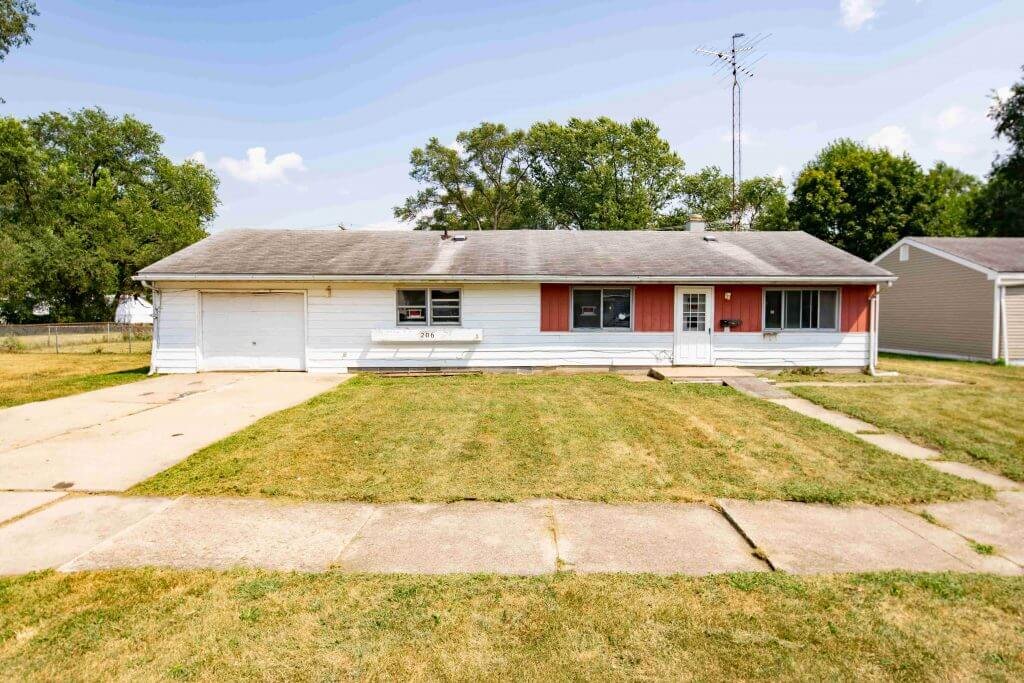
Rental renovation is different from a flip renovation or an owner-occupant renovation. You are not trying to create a showpiece — you are trying to create a durable, functional, attractive rental that commands top rent in its market without using materials that are either under-specified (creating maintenance problems) or over-specified (adding cost without corresponding rent premium). Having good contractors makes the renovation a lot easier and can save you time and money, you want to start building your crew of the best in the city as you buy more houses.
Rental renovation priorities in St. Louis:
- Functional mechanical systems (HVAC, water heater, electrical, plumbing)
- Sound roof and envelope (no water intrusion)
- Clean, neutral interior paint
- Durable flooring (LVP in living areas, tile in baths and kitchen)
- Functional kitchen with clean appliances
- Updated bathrooms (vanity, toilet, tile — not luxury, but clean and modern)
A rental renovation in St. Louis that hits these priorities can be accomplished for $25,000 to $50,000 depending on the starting condition and scope. This is the renovation budget we work from at Cash Offer Man.
Step 3: Rent the Property
Lease the renovated property to a qualified tenant before the refinance. Most refinance lenders want to see that the property is rented and generating income — it strengthens the appraisal and documents the income the property produces.
Tenant qualification standards:
- Income of 3x the monthly rent (for a $1,200/month property: minimum $3,600/month gross income)
- Credit score minimum 580 to 620
- No prior evictions within the past 3 years
- Positive landlord reference from most recent rental
Step 4: Refinance
After renovation and stabilization (typically 6 to 12 months), refinance the property with a conventional investment property loan. The appraisal — based on the renovated condition and comparable sales — establishes the new value. The lender will typically provide 70% to 75% of the appraised value in a cash-out refinance.
The BRRRR refinance in numbers:
| Item | Amount |
| Acquisition price (distressed) | $82,000 |
| Renovation cost | $43,000 |
| Hard money loan (at 70% of ARV, $175K ARV) | $122,500 |
| Down payment / out of pocket | $2,500 (closing costs only) |
| Post-renovation appraised value | $175,000 |
| Cash-out refinance at 75% LTV | $131,250 |
| Pay off hard money loan | ($122,500) |
| Cash returned to investor | $8,750 |
In this scenario, the investor acquired and renovated a $175,000 rental property, deployed $2,500 of their own money in closing costs, and recovered $8,750 at refinance — walking away with a rental property and $6,250 in profit from the equity creation, ready to deploy to the next deal.
This is the BRRRR method working correctly. It requires buying at the right price, executing the renovation efficiently, and getting the refinance at the appraised value. When all three components work, you build a rental portfolio with minimal capital recycled from deal to deal.
The risk: The refinance must appraise high enough to pay off the acquisition and renovation costs at 70% to 75% LTV. If your renovation runs over budget, if the market softens, or if comparable sales in the neighborhood do not support your ARV projection, the refinance may not fully recover your invested capital. Conservatism in your ARV estimate and renovation budget is essential.
The St. Louis Numbers — What Real Cash Flow Looks Like
Average Property Analysis: North County (Hazelwood/Florissant)
Scenario: 3BR/1BA brick ranch, 1,100 sq ft, purchased for $155,000 with 20% down conventional financing.
| Item | Monthly |
| Gross rent | $1,300 |
| Expenses | |
| Mortgage PI (7.25%, $124,000 loan) | ($846) |
| Property taxes ($2,100/yr) | ($175) |
| Insurance ($1,080/yr) | ($90) |
| Vacancy allowance (6%) | ($78) |
| Maintenance reserve (8% of rent) | ($104) |
| Property management (8% of rent) | ($104) |
| Total expenses | ($1,397) |
| Monthly cash flow | ($97) |
At $155,000 purchase price with professional management, this North County property is slightly cash flow negative — not unusual in the current rate environment. The wealth building is happening through equity paydown ($350/month) and appreciation (5.3% on $155,000 = $689/month equivalent). The total return is strongly positive even with minimal cash flow.
To improve cash flow: Lower purchase price (below $140,000), higher rent property, self-management (saves $104/month), or lower down payment strategy.
Average Property Analysis: Self-Managed at Lower Price Point
Scenario: Same property purchased for $135,000 with 20% down, self-managed.
| Item | Monthly |
| Gross rent | $1,250 |
| Expenses | |
| Mortgage PI (7.25%, $108,000 loan) | ($737) |
| Property taxes ($1,800/yr) | ($150) |
| Insurance ($960/yr) | ($80) |
| Vacancy allowance (6%) | ($75) |
| Maintenance reserve (8% of rent) | ($100) |
| Total expenses | ($1,142) |
| Monthly cash flow | $108 |
Self-managed at a lower purchase price: $108/month cash flow plus equity paydown and appreciation. This is a more typical first rental property profile for a hands-on St. Louis investor.
The Appreciation Reality
St. Louis home values have averaged 5.3% annual appreciation over the past five years. On a $155,000 rental property held for 10 years:
- Year 1 value: $155,000
- Year 5 value: $200,500 (at 5.3% compounded)
- Year 10 value: $258,800 (at 5.3% compounded)
That is $103,800 in equity growth over 10 years from appreciation alone — on a $31,000 down payment investment. Combined with mortgage paydown (approximately $60,000 over 10 years on a $124,000 loan), your total equity position at year 10 is approximately $184,000 on a $31,000 initial investment. This is what leveraged real estate investing actually looks like over time.
Average Maintenance Costs
Budgeting 8% to 12% of gross annual rent for maintenance is the standard industry guideline and it is accurate in St. Louis’s older housing stock. On a $1,300/month rental: $1,248 to $1,872 per year.
The maintenance reality in St. Louis’s pre-1970 housing stock:
In the first three years of ownership, if you purchased a property that was not fully renovated, expect above-average maintenance costs as deferred items surface. Budget 15% to 20% of gross rent in years 1 through 3 until you have stabilized the mechanical systems. After stabilization, 8% to 10% is a realistic ongoing budget.
Capital expenditure reserves (separate from routine maintenance): Budget an additional 5% of gross rent for capital expenditures — eventual roof replacement, HVAC replacement, water heater replacement. These costs arrive infrequently but are large when they do. A $10,000 HVAC replacement on a property generating $15,600/year in gross rent represents 64% of one year’s income. Capital reserves prevent this from being a crisis.
Property Management — The Decision That Defines Your Experience
Self-Management vs. Professional Management
Self-management advantages:
- Save 8% to 10% of gross monthly rent (approximately $100 to $140/month on a typical St. Louis rental)
- Direct control over tenant selection, maintenance vendor choices, and lease enforcement
- Faster response to issues — no communication lag through a management company
- Better understanding of your own asset
Self-management disadvantages:
- You are on call 24/7 for emergencies
- Tenant issues become your personal issues — legally, emotionally, and practically
- If you live far from the property or have a demanding primary job, self-management is not realistic
- Missouri landlord-tenant law compliance requires knowledge you must acquire before a dispute arises
Professional management advantages:
- Completely hands-off after tenant placement
- Professional managers handle maintenance coordination, rent collection, lease enforcement, and eviction filing
- Less emotional — a property manager who calls a bad tenant situation “just business” is better than a landlord who takes it personally
- Required for out-of-state investors
Professional management costs in St. Louis:
- Management fee: 8% to 10% of collected rent
- Leasing fee: 50% to 100% of one month’s rent for placing a new tenant
- Maintenance coordination fee: Some managers charge 10% to 15% on top of maintenance invoices
- Eviction coordination fee: $150 to $350 for managing the eviction process
The total cost of professional management in St. Louis: On a $1,300/month rental with one tenant turnover per year, professional management costs approximately $250 to $400/month all-in when leasing fees are amortized.
Finding and Vetting a Property Manager
Ask for references from three current clients with properties similar to yours. Visit the properties they manage — look at condition, landscaping maintenance, and general appearance. Ask specifically about their eviction policy and timeline. A property manager who hesitates before initiating eviction proceedings on non-paying tenants is costing you money.
Check their license. Missouri property managers must hold a Missouri real estate license if they are collecting rent and managing properties for others. Verify at pr.mo.gov.
The Hard Problems — Tenants, Evictions, and What to Do
Tenant Screening — The Most Important Decision You Make
The most expensive thing a St. Louis landlord does is place a bad tenant. An eviction in Missouri costs $3,000 to $7,000 in legal fees, lost rent during the eviction process (typically 2 to 4 months), and repairs after the eviction. A single bad tenant in a $1,300/month property can erase 12 to 18 months of positive cash flow.
The screening process:
Credit check: Use a professional screening service (RentSpree, TransUnion SmartMove, or similar). Look for prior evictions in the rental history, collections accounts from landlords, and overall debt management pattern. A 580 credit score with no prior evictions is a better tenant profile than a 640 with two prior evictions.
Income verification: Request the last 3 pay stubs and last 3 bank statements. Verify the employer by calling the HR department directly. Do not rely on documents alone — income documentation is one of the most commonly falsified items in rental applications.
Prior landlord references: Call the most recent landlord. Ask: Did they pay on time consistently? Did they provide proper notice before moving? Did they leave the property in acceptable condition? Would you rent to them again?
Criminal background check: Missouri law permits landlords to consider criminal history in tenant screening, but HUD guidance requires a case-by-case analysis that considers the nature of the offense, how long ago it occurred, and the tenant’s record since. Blanket prohibitions on any criminal history have been found discriminatory. Focus on recent, serious offenses — violent felonies, drug manufacturing convictions, and sex offender registry status are legitimate screening factors.
Evictions in Missouri — The Process and the Timeline
Missouri eviction law (RSMo Chapter 535) governs the landlord’s right to remove a non-paying or lease-violating tenant. Missouri is considered a relatively landlord-friendly state compared to Illinois, but the process still takes time and costs money.
The Missouri eviction timeline:
| Step | Timeline |
| Written notice to pay or quit | 5 days minimum for non-payment |
| File unlawful detainer action in circuit court | Day 6+ |
| Court date scheduled | 7 to 21 days after filing |
| Court hearing and judgment | Court date |
| Writ of possession issued | 2 to 5 days after judgment |
| Sheriff executes writ (tenant removed) | 7 to 14 days after writ |
| Total minimum timeline | 3 to 6 weeks |
In practice, including time to realize non-payment, send notices, and file — expect 6 to 10 weeks from the first missed payment to keys in hand. During this time, you are receiving no rent while the mortgage, taxes, and insurance continue.
The cost of a St. Louis eviction:
- Filing fees: $100 to $175
- Attorney fees (if represented): $800 to $2,500 depending on complexity
- Lost rent (2 to 4 months): $2,600 to $5,200
- Repairs after occupant vacates: $500 to $5,000+ depending on damage
- Total cost: $3,000 to $8,000 per eviction
This is why tenant screening is not optional and why accepting a marginal applicant “because the unit has been vacant for three weeks” is a decision that frequently costs more than the three weeks of vacancy you were trying to avoid.
Using an eviction attorney: For your first eviction, use an attorney. Missouri eviction law has specific procedural requirements — serving notice correctly, filing in the right court, presenting proper documentation — and a procedural error can restart the process, adding weeks and additional cost. Several St. Louis attorneys specialize in landlord-tenant law and charge fixed fees for standard evictions ($500 to $1,000).
Problem Tenants Short of Eviction
Not every problem tenant needs to be evicted. Understanding the range of tenant issues and appropriate responses prevents landlords from either ignoring problems until they escalate or over-reacting to minor friction.
Late payment: A tenant who pays late but pays is not worth an eviction unless the pattern is chronic and escalating. Issue a formal pay-or-quit notice the day rent is overdue. Charge the late fee specified in the lease. Document every late payment in writing. If the pattern continues for three consecutive months, begin the conversation about whether the tenancy makes sense to continue.
Lease violations: Unauthorized occupants, pets in violation of lease terms, and property condition violations should be addressed with written cure notices that give the tenant a defined timeframe to remedy the violation. Document with photographs. If the violation is uncured, eviction proceedings may be appropriate.
Property damage: Address the damage at lease end through the security deposit process. Missouri requires landlords to return the security deposit or provide an itemized list of deductions within 30 days of the tenant vacating (RSMo 535.300). Failure to provide the itemized deduction list within 30 days forfeits your right to retain the deposit — even for legitimate damages.
Building Your Portfolio Beyond the First Property
The first rental property is the hardest. It requires the most learning, the most emotional adjustment, and the most manual effort. The second and third properties leverage everything you built on the first — the relationships, the knowledge, the processes, the vendor network.
The investors in St. Louis who have built 10-, 15-, and 20-property portfolios did not do it by saving more money. They did it by:
- Using the equity in their first property (through cash-out refinance or HELOC) to fund the second acquisition
- Recycling renovation capital through the BRRRR method
- Systematizing management so each additional property requires less active time
- Reinvesting cash flow and tax savings rather than spending them
The St. Louis market rewards this patient, systematic approach with above-average price-to-rent ratios, meaningful appreciation, strong rental demand, and entry prices that remain accessible to investors who are not millionaires.
Summary: St. Louis Rental Investment Numbers at a Glance
| Metric | St. Louis Data |
| Median investment property price (entry-level) | $130,000–$185,000 |
| Average 3BR monthly rent (North County) | $1,100–$1,450 |
| Average 3BR monthly rent (South County) | $1,200–$1,600 |
| Average annual appreciation (5-year avg) | 5.3% |
| Price-to-rent ratio | 14–18x |
| Conventional investment loan rate premium | +0.5–0.75% over primary |
| Minimum down payment (conventional) | 15–25% |
| FHA down payment (owner-occupied 2–4 unit) | 3.5% |
| Hard money rate range | 10–14% |
| Property management cost | 8–10% of collected rent |
| Maintenance reserve (stabilized) | 8–10% of gross rent |
| Capital expenditure reserve | 5% of gross rent |
| Missouri eviction timeline | 3–10 weeks |
| Average eviction cost | $3,000–$8,000 |
| BRRRR equity creation target | 25–30% spread over all-in cost |
Aaron Eller is the founder of Cash Offer Man, a local home buying company serving St. Louis City, St. Louis County, and surrounding Missouri communities. Cash Offer Man purchases homes throughout the St. Louis area for cash, creating off-market acquisition opportunities for investors in our network. For information about available properties or to discuss investment strategy in St. Louis, visit CashOfferMan.com.
Get An Offer Today, Sell In A Matter Of Days