
Best & Worst Neighborhoods to Buy and Sell in St. Louis Right Now
By Aaron Eller, Founder — Cash Offer Man | St. Louis, Missouri
May 3, 2026
St. Louis is not one real estate market. It is dozens of them, stacked on top of each other, separated sometimes by nothing more than a single street or a zip code line — and the difference between the right neighborhood and the wrong one can mean the difference between a home that doubles in value over a decade and one that loses ground while you hold it.
I have walked through properties in nearly every corner of this city. As the founder of Cash Offer Man, I have bought homes in South City bungalows and North County ranches, in Victorian rowhouses and mid-century splits, in tornado-damaged North City blocks and premium suburban cul-de-sacs. What I have learned is that St. Louis rewards local knowledge more than almost any other market in America. This city’s neighborhoods are so distinct — in history, character, demographics, safety, and trajectory — that generic advice is nearly useless. What you need is honest, specific, local analysis.
That is what this article is.
I am going to walk you through the best neighborhoods to buy in right now — places where the combination of value, trajectory, lifestyle quality, and market timing creates a compelling case for investment. Then I am going to walk through the neighborhoods where selling makes sense. And finally, I am going to give you an honest look at the areas where both buyers and sellers need to think carefully before acting.
The data I am drawing from includes current Redfin market statistics through early 2026, SLMPD crime data, census and demographic information, local appreciation history, and years of my own on-the-ground experience in this market. Let’s get into it.
The St. Louis Market Context: What the Numbers Say Right Now
Before we go neighborhood by neighborhood, a brief overview of where the overall market stands. St. Louis City home prices were up 8.2% year-over-year in February 2026, with a median sale price of $224,000 — a number that remains approximately 48% below the national average. St. Louis County clocked 3.8% appreciation over the same period with a median of $250,000. Homes across the city are averaging 47 days on market, up slightly from 42 days the prior year, reflecting a slight moderation from peak conditions but still a healthy pace.
Zillow projects approximately 2% additional appreciation in the St. Louis metro through the end of 2026 — modest but positive, and sustainable. The rental market is also strong, with St. Louis among the top 15 metros nationally for rent growth, up 3.6% year-over-year. With a median home price still 48% below the national average, buyers who missed the run-up on coasts are increasingly treating St. Louis as a serious destination — and the data is beginning to reflect that inbound interest.
The overarching picture heading into 2026 is a market that has moved from the frenzied conditions of 2021 and 2022 into something more deliberate and sustainable. Buyers have more breathing room than they did during the pandemic peak. Sellers in the right neighborhoods can still command strong prices and fast closes. And for investors, the fundamentals — affordability, appreciation trajectory, and rental demand — remain among the best in the Midwest.
Now, the neighborhoods.
Best Neighborhoods to Buy Right Now
1. Tower Grove South — South City’s Enduring Gem
Current Median Price: $230,000 to $274,000 Days on Market: 20 to 35 days Appreciation Trajectory: Strong long-term, price softened slightly in 2025 but demand remains steady Safety: Moderate urban crime profile — comparable to other active urban neighborhoods nationally Demographics: Young professionals, families, artists, educators; diverse and community-oriented
If you could design a St. Louis neighborhood from scratch for first-time buyers and long-term investors, it might look a lot like Tower Grove South. This community, anchored by one of the most beautiful urban parks in America, offers historic brick homes at prices that remain genuinely accessible, surrounded by some of the best walkable commercial life in the entire city.
Tower Grove Park itself deserves its own introduction. Established in 1868 by Henry Shaw — the English botanist who also founded the Missouri Botanical Garden just blocks away — Tower Grove Park spans 289 acres of Victorian-era greenery right in the heart of South City. It is larger than many of St. Louis’s entire suburban communities and is a genuine urban oasis. The park hosts the Tower Grove Farmers Market every Saturday from May through October, a beloved St. Louis institution that draws thousands of residents for locally grown produce, artisan foods, and live music. It has pavilions modeled after European architecture, a botanical trial garden, tennis courts, open fields, and in summer, a free concert series that has been drawing crowds for decades.
Living near Tower Grove Park means this is your backyard. It is a walkable, dog-friendly, community-oriented space that functions as the social and physical heart of the surrounding neighborhoods. Homes facing or adjacent to the park carry a premium, and rightfully so.
Beyond the park, Tower Grove South is bordered by South Grand Avenue to the east — one of St. Louis’s most celebrated dining corridors. Restaurants like Pho Grand (some of the best Vietnamese food in the Midwest), iThai, the Mud House coffee shop, and dozens of others line South Grand in a stretch that feels genuinely urban and alive. The Missouri Botanical Garden, a world-class attraction open since 1859 and one of the oldest and most respected botanical institutions on earth, is a five-minute walk from homes in the neighborhood’s western reaches.
The housing stock is classic South City: compact brick bungalows and two-flats built primarily in the 1910s through 1930s, with 9-foot ceilings, original hardwood floors, and the kind of architectural character that new construction cannot replicate at any price. These homes require maintenance — they are old — but they are structurally sound, and the bones are exceptional.
Why buy here now: Tower Grove South saw some price softening in 2025 as inventory loosened slightly, creating a window for buyers who were priced out a year ago. The long-term appreciation here has been extraordinary — prices rose 71% over the five years ending in 2017 and have continued to climb since. The combination of iconic park access, world-class dining, a walkable urban lifestyle, and home prices still in the $230,000 to $274,000 range makes this one of the best value propositions in the entire metro.
What to watch out for: Urban crime exists in Tower Grove South — car break-ins and property crime are real, and buyers should research specific blocks before purchasing. Some blocks are significantly safer than others. The city school district requires navigation — many families use magnet programs or private schools.
2. Maplewood — The Inner-Ring Sweet Spot
Current Median Price: $300,000 to $336,000 Days on Market: 15 to 25 days in competitive segments Appreciation Trajectory: Consistently strong; one of the most in-demand inner-ring suburbs Safety: Significantly safer than city neighborhoods; solid suburban safety profile Demographics: Young families, professionals, craft beer enthusiasts; highly educated; moderate diversity
Maplewood sits just over the St. Louis City line in St. Louis County, and it has become the gold standard of what people mean when they talk about “urban character with suburban stability.” If Tower Grove South is the quintessential city neighborhood, Maplewood is the quintessential inner-ring suburb — and it may be the best-valued community in the entire St. Louis metro right now.
Downtown Maplewood along Manchester Road is the commercial heart of the community and one of the most genuinely interesting retail and dining strips in the region. Earthbound Beer is a nationally recognized craft brewery that helped put Maplewood on the map for a generation of St. Louis transplants and young professionals. Side Project Brewing — widely considered one of the best sour and farmhouse ale producers in the entire country — operates out of Maplewood and has developed a following that draws buyers from across the country. Urban Chestnut Brewing’s taproom, coffee shops like Sump Coffee, and independent restaurants complement the commercial landscape in a way that feels organic rather than manufactured.
The housing stock in Maplewood is primarily mid-century ranch homes and older craftsman-style houses on modest but livable lots. These are genuine family homes with basements, garages, and yards — not the dense urban rowhouses of South City. The city’s school district is highly regarded, which is a significant draw for families with children and a key driver of property values.
Maplewood’s safety profile is dramatically better than any of the city neighborhoods discussed in this article. The combination of active commercial life, community engagement, and suburban infrastructure makes it a place where residents feel genuinely safe.
Why buy here now: Maplewood is consistently described by buyers’ agents as one of the fastest-moving markets in the metro. Homes here routinely go pending in under two weeks for well-priced listings. The median price of approximately $336,000 is above the city average but below Kirkwood or Webster Groves, making it an excellent value for buyers seeking the Kirkwood-Webster lifestyle without the Kirkwood-Webster premium. The trajectory here has been strongly positive for years and there is no credible reason to expect that to change.
What to watch out for: Maplewood’s lots are smaller than farther-out suburbs — buyers who need significant yard space may find the trade-offs challenging. Parking can be tight in the more walkable core blocks. And prices have risen significantly over the past five years, so buyers expecting a bargain will be disappointed.
3. Soulard — History, Community, and Unmatched Character
Current Median Price: $200,000 to $382,000 (wide range reflecting diverse property types) Days on Market: 20 to 40 days depending on price point Appreciation Trajectory: Strong historical appreciation; ongoing gentrification continues Safety: Soulard has moderate urban crime; concentrated in specific blocks Demographics: Mix of longtime residents, young professionals, retirees; predominantly white; active bar and dining community
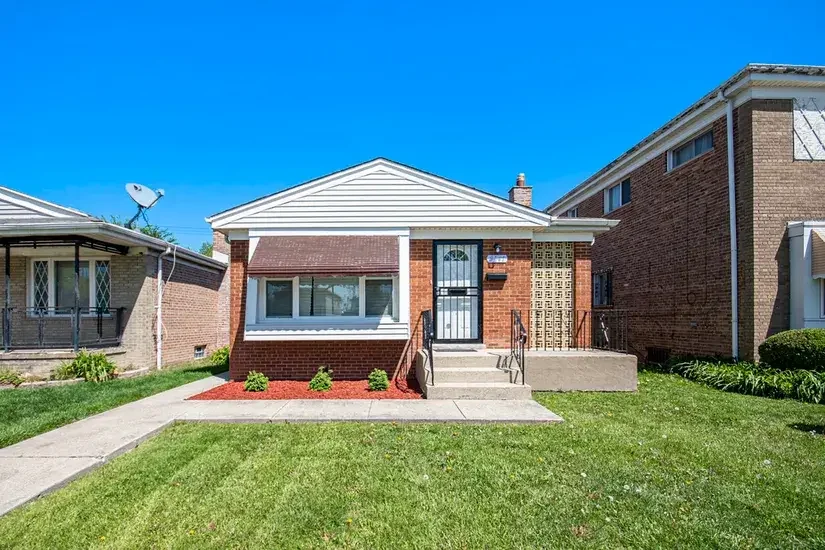
Soulard is one of those neighborhoods that gets into your blood. It is the oldest neighborhood in St. Louis City, and it feels like it — in the best possible way. The Soulard Farmers Market has been operating since 1779, making it one of the oldest public markets in the country, and on a Saturday morning it remains one of the most genuinely alive public spaces in the city, packed with vendors selling everything from fresh produce and meat to flowers and prepared foods.
The neighborhood’s name comes from Antoine Soulard, a French surveyor who played a significant role in early St. Louis’s development, and the French roots are visible throughout the built environment. Flounder houses — a uniquely St. Louis architectural form with a distinctive half-roof designed to leave room for a future second story — line many of the streets. Brick rowhouses and two-story townhouses dominate the landscape, with brick details and cornices that speak to the neighborhood’s 19th-century prosperity.
Soulard is famous — perhaps most famous — for its Mardi Gras celebration. The Soulard Mardi Gras is the second-largest in the United States behind New Orleans, drawing hundreds of thousands of people to the neighborhood’s bars, restaurants, and streets each February. This is both an enormous community asset and, for some buyers, a consideration: the neighborhood has a genuine party culture, particularly on weekends, that is part of its charm for some and a deterrent for others. Anheuser-Busch’s iconic brewery campus — still producing beer in Soulard as it has since 1852 — is a landmark that defines the neighborhood’s identity and contributes to its Mardi Gras centrality.
The real estate market here is genuinely diverse. Entry-level rowhouses can be found starting around $200,000, while renovated showpiece homes on the best blocks approach and exceed $400,000. The range reflects the neighborhood’s ongoing gentrification — a process that has been unfolding for decades and continues to push values upward in pockets while others remain accessible.
Why buy here now: Soulard offers something genuinely rare — living history at accessible price points. The ongoing investment in the neighborhood, the Anheuser-Busch campus’s ongoing presence, and the city’s overall improvement in crime stats are all tailwinds. Entry-level buyers can still find properties in the $200,000 to $250,000 range that are likely to appreciate meaningfully over a five- to ten-year hold.
What to watch out for: Noise is a real consideration — weekend nights in Soulard can be lively in ways that not everyone finds comfortable. Some blocks have safety concerns that others do not. Research specific streets before buying.
4. Lafayette Square — Victorian Elegance and Genuine Community
Current Median Price: $405,000 (February 2026, per Redfin); individual homes range $425,000 to $725,000 Days on Market: 21 to 31 days Redfin Compete Score: 82 out of 100 Safety: Moderate by city standards; one of the safer central city neighborhoods Demographics: Affluent professionals, historic preservation enthusiasts; highly community-organized
Lafayette Square is the neighborhood that makes people believe in cities again. Anchored by Lafayette Park — established in 1836, making it the oldest park west of the Mississippi River and St. Louis’s oldest public green space — the neighborhood is a showcase of Victorian architecture preserved with extraordinary care.
The homes here are Second Empire style, built primarily in the decades following the Civil War when Lafayette Square was the address of choice for St. Louis’s elite: mayors, business magnates, railroad barons. The “Painted Ladies” — colorful Victorian homes facing Lafayette Park with their ornate cornices, arched windows, and decorative ironwork — are among the most photographed residential architecture in Missouri. What makes them extraordinary is that the exteriors are rigidly protected by the city’s historic district standards while interiors have been modernized to contemporary standards. As one longtime neighborhood realtor described it: “Inside, it could be like a New York brownstone with lots of architectural detail, or completely modern and streamlined — you don’t know because everyone’s exteriors conform to Second Empire Victorian.”
The neighborhood was devastated by a tornado in 1896 and again fell into decline through the mid-20th century, before one of the most successful neighborhood preservation efforts in American history reversed its fortunes beginning in the 1970s. Lafayette Square became the city’s first historic district and has since attracted generations of buyers who chose urban character over suburban convenience. That choice has been financially rewarded: per-square-foot prices in Lafayette Square are among the highest in St. Louis City.
Community life here is active and organized. The Lafayette Square Restoration Committee manages the neighborhood’s events calendar, including a beloved garden tour, holiday events, and regular park programming. The combination of architectural beauty, community investment, and a genuinely urban walkable environment makes Lafayette Square one of the most desirable addresses in the city.
Why buy here now: Lafayette Square is the most stable of St. Louis’s premium city neighborhoods — a mature market with demonstrated long-term appreciation, a deeply invested community, and architecture that cannot be replicated anywhere. Buyers here are buying both a home and a piece of American architectural history.
What to watch out for: This is not a starter-buyer market. Prices start at approximately $425,000 and run to $725,000 for larger properties. The smaller inventory — only 10 to 15 homes sold per month — means timing can be challenging. Historic district restrictions add compliance considerations for exterior work.
5. Kirkwood — The Complete Suburb, At a Price
Current Median Price: Approximately $400,000 and climbing (29% year-over-year appreciation as of late 2025) Days on Market: 15 to 20 days for move-in ready homes; some going pending in under a week Safety: Excellent suburban safety profile Demographics: Families with children, professionals; predominantly white; strongly community-oriented Kirkwood Redfin Compete Score: Among the highest in the metro
Kirkwood is the community that St. Louis suburb enthusiasts hold up as the gold standard, and the data supports the reputation. With its own functioning downtown centered on the Amtrak station at Kirkwood Road and Argent Street, a thriving farmers market, nationally recognized restaurants, excellent public schools (Kirkwood R-7 School District), and a community identity so strong it functioned as a complete standalone town for 170 years before the metro expanded around it, Kirkwood delivers something that most suburbs can only approximate: genuine town character.
The historical roots run deep. Kirkwood was incorporated in 1853 as one of the first planned suburbs in America — designed specifically as a railroad community for St. Louis commuters, it was built around the Missouri Pacific Railroad stop and developed with an intentionality that is still visible in the grid of streets and the density of the downtown core. Walking through downtown Kirkwood today, you can see the original vision still functioning: a coffee shop, a bookstore, a hardware store, restaurants and bars with local ownership, and the Amtrak platform a half-block from the main commercial strip.
Real estate in Kirkwood has been one of the strongest performing markets in all of Missouri. Home prices grew 29% year-over-year as of late 2025 — the highest appreciation rate in the state. That extraordinary run-up has pushed prices above $400,000 for most move-in ready single-family homes, with premium properties approaching $600,000 and above.
Why buy here now (if you can afford it): Kirkwood’s appreciation trajectory reflects a market with genuine structural advantages — excellent schools, complete suburban infrastructure, limited land for new development, and consistent in-demand demographics. Long-term buyers in Kirkwood have been consistently rewarded.
Why it may not be right for you: The entry price has moved significantly higher than just a few years ago. Buyers who expected to find Kirkwood at 2020 prices will be disappointed. Hot homes here can still generate multiple competing offers, meaning you need an experienced agent and competitive terms to win.
Best Neighborhoods to Sell Right Now
Kirkwood and Webster Groves — Seller’s Markets with Deep Buyer Pools
If you own a home in Kirkwood or Webster Groves and you are thinking about selling, you are in one of the most favorable selling environments in the metro. The combination of exceptional school districts, community character, and limited inventory means that well-presented, well-priced homes consistently attract multiple competing offers. Webster Groves homes have been running at median prices around $452,000 with days on market of 5 to 25 days — meaning qualified sellers in these communities can expect relatively quick, competitively priced transactions.
The key word is “well-priced.” Even in these strong markets, overpricing creates stale inventory. Price at or just below current comparable sales and the demand takes care of the rest.
Maplewood and Crestwood — Fast-Moving Mid-Range Inventory
For sellers in the $300,000 to $400,000 range, Maplewood and Crestwood represent the sweet spot of the current St. Louis market. These communities attract the largest pool of qualified buyers — people who want urban character and school quality without the Kirkwood premium. Crestwood homes have been going pending in as few as four days for the hottest listings, with multiple offers above asking price. Maplewood similarly moves quickly for prepared sellers.
If you own in either of these communities and your home is in reasonable condition, this is an excellent time to sell. The buyer pool is deep, rates — while higher than their February 2026 low — are still attracting motivated buyers, and inventory is tight enough that prepared sellers hold the advantage.
South City (Tower Grove, Shaw, Benton Park) — Increasing Demand, Still Accessible Prices
For sellers in South City neighborhoods, the trajectory is favorable. These neighborhoods have been among the most consistently appreciating in the city over the past decade, and the buyer pool continues to expand as awareness of the value proposition grows. Sellers of renovated homes in excellent condition can command premium prices and quick sales. Sellers of unrenovated or dated properties have a strong cash buyer market — including Cash Offer Man — as an alternative to the traditional listing process.
Worst Neighborhoods to Buy Right Now (And What Could Change Them)
Wells-Goodfellow, Fountain Park, and College Hill — North City’s Hardest Markets
The neighborhoods discussed in detail in my article on St. Louis crime — Wells-Goodfellow, Fountain Park, College Hill, Hyde Park, and the Jeff-Vander-Lou corridor — are the most challenging markets in the city for traditional buyers and sellers right now, for reasons that go beyond crime statistics alone.
The vacancy problem in these neighborhoods is structural. In Wells-Goodfellow, Greater Ville, Jeff-Vander-Lou, and Walnut Park, nearly or more than half of all parcels are vacant — a legacy of 75 years of population loss, with St. Louis having shed roughly 60% of its residents since 1950. This vacancy is both a cause and an effect of the crime and disinvestment cycle: vacant buildings attract criminal activity, which discourages investment, which leads to more vacancy.
The May 2025 tornado made this significantly worse. The storm damaged more than 5,000 structures across its 23-mile path, with the most severe damage concentrated in exactly these North City neighborhoods — Fountain Park, Greater Ville, Kingsway East, and the O’Fallon corridor. An estimated 500 to 600 of the 1,000 homes needing demolition were already vacant before the tornado. As of early 2026, most of these properties remain in limbo as the city works through FEMA reimbursement disputes and recovery planning.
What could change these neighborhoods: The PlanSTL revitalization plan adopted by the St. Louis Planning Commission in December 2025, targeting the Ville, Greater Ville, and Kingsway East, is the most substantive planning framework North City has seen in decades. The plan was developed with input from more than 3,000 community members over 18 months and envisions strategic reinvestment, not just post-tornado repair.
The St. Louis Zoo’s announced expansion north of the city, new community investment frameworks, and the slow but real improvement in crime stats — homicides fell 22% in the first half of 2025 compared to 2024 — all create a basis for cautious optimism about long-term trajectory. But “long-term” is the operative phrase. These neighborhoods are not currently viable for traditional buyers who need a liquid, appreciating asset in a reasonable timeframe. For patient investors willing to hold a decade or more, participate actively in neighborhood improvement, and accept the associated risks, there may be value in positions taken now before recovery takes hold. But that is investor territory, not first-time buyer territory.
Downtown St. Louis — Structural Challenges Without a Clear Catalyst
Downtown St. Louis presents a different kind of challenge from North City. The crime profile here is not primarily violent — it is property crime, particularly theft and smash-and-grab — but it is consistent and contributes to a perception problem that affects retail and office demand. The vacancy rate in Downtown commercial real estate has been persistently high since the pandemic, with major office tenants departing and retail activity failing to recover to pre-pandemic levels.
For residential buyers, Downtown has the appeal of loft-style condos in converted historic buildings at prices that can be significantly below comparable urban housing in other markets. But the combination of elevated property crime, an uneven retail environment, an underperforming school district, and questions about the long-term trajectory of Downtown office demand make it a complex market for buyers who need a home that will be easy to resell in five to seven years.
What could change Downtown: The St. Louis City SC soccer club’s arrival — and the subsequent development energy around CityPark stadium — has been a genuine positive for the northern edge of Downtown and the surrounding neighborhoods. The proposed NFL stadium development could be a significant catalyst if it proceeds. And the city’s improving crime trajectory is a meaningful tailwind. Downtown is a neighborhood to watch rather than one to avoid entirely — but buyers here need to go in with eyes open about the specific risks.
Neighborhoods to Watch — Emerging Value in 2026
Ferguson — The Comeback Continues
I have written about Ferguson’s remarkable 19%+ year-over-year price appreciation as of late 2025 — one of the top five fastest-appreciating communities in all of Missouri. The median home price here remains around $109,000 to $145,000, creating access points for buyers who want to participate in what looks increasingly like a genuine and sustained recovery.
Ferguson has a complicated recent history that most people know, and property values bear the scars of that history — along with the opportunity it creates for buyers who believe in the community’s trajectory. For cash investors and renovation buyers, Ferguson presents some of the most interesting risk-adjusted opportunities in the entire metro. Properties can be acquired at prices that were unimaginable in comparable St. Louis communities, and the appreciation from 2022 to 2025 suggests that the market is beginning to recognize value that has long been overlooked.
Old North St. Louis — The Most Compelling Revitalization Story in the City
Old North St. Louis is a neighborhood that could be a case study in what community-driven urban revitalization looks like when it actually works. Situated just north of the old city center, Old North has been the subject of sustained neighborhood investment led by organizations like Rise Community Development, which has been restoring vacant buildings and attracting new residents to the neighborhood for nearly two decades.
The results are visible and striking: blocks that were dominated by abandoned properties a decade ago now have renovated homes occupied by young families who chose Old North deliberately. The Crown Square development, a mixed-use project anchored by a community hub, has added commercial vitality. The neighborhood is genuinely bifurcated — some blocks are beautiful, renovated, and community-oriented, while others remain challenged — but the direction of travel is more clearly positive here than anywhere else in North City.
Median home values here run approximately $119,000 — extremely low by any standard, but trending upward as the revitalization gains momentum. For buyers willing to engage with the community and invest in renovation, Old North is the most compelling long-term value story in the city.
The Future of St. Louis Real Estate: Where Trends Are Heading
The St. Louis real estate market heading into the late 2020s is shaped by several converging forces that will determine which neighborhoods win and which continue to struggle.
The affordability migration continues. Buyers from Los Angeles, Washington D.C., Chicago, and New York are arriving in St. Louis at rates that are visible in search data — Los Angeles homebuyers represent the single largest out-of-market search cohort on Redfin for St. Louis listings. As the affordability crisis on the coasts intensifies, St. Louis’s median home price at 48% below the national average becomes a more compelling draw. Communities with urban amenities and walkable character — Tower Grove South, Maplewood, Soulard, Lafayette Square — are the primary beneficiaries of this migration.
Interest rates and the lock-in effect. The ongoing reality of mortgage rates near or above 6.5% is keeping some potential sellers in place, maintaining inventory constraints in popular neighborhoods. If rates meaningfully decline — a scenario that both Fannie Mae and the Mortgage Bankers Association projected before the Iran War disrupted the spring 2026 outlook — a wave of pent-up seller supply could enter the market, moderating prices in currently tight neighborhoods. This is the single most important variable to watch for buyers considering waiting versus acting now.
North City’s recovery is real but slow. The combination of the PlanSTL initiative, improving crime statistics, ongoing investment by institutions like Washington University and BJC HealthCare along the I-64 corridor, and the steady work of community development organizations is creating genuine positive pressure in North City. But recovery takes decades, not years. Buyers who want certainty over the next five years should focus south of Delmar. Buyers with a 10-to-20-year horizon and a tolerance for complexity may find the best long-term values north of it.
The Cortex and tech corridor effect is expanding. The Cortex Innovation Community in Midtown — a 200-acre innovation hub anchored by Washington University and Saint Louis University that has attracted companies like Microsoft and Square — has been driving demand in the Central West End and adjacent neighborhoods for several years. As Cortex continues to attract employers and workers, the neighborhoods within commuting distance of this employment center will see continued price pressure. The Central West End, with median prices hovering around $433,000, is already reflecting this; adjacent neighborhoods like Forest Park Southeast, Shaw, and the Grove corridor are the next tier to benefit.
Suburban St. Charles County remains a growth story. Wentzville continues to be one of the fastest-growing communities in Missouri, with new construction and relatively accessible prices attracting families priced out of closer-in suburbs. For buyers who prioritize new construction, good schools, and space over urban character, the outer ring of St. Charles County remains one of the strongest value propositions in the metro — though commute time to central employment corridors is a real trade-off that buyers need to assess honestly.
A Final Word: What All of This Means for Buyers and Sellers
The St. Louis real estate market in 2026 rewards people who do their homework. Generic advice — “it’s a good time to buy” or “sellers have the advantage” — breaks down the moment you zoom in to the neighborhood level. Tower Grove South is not the same market as Wells-Goodfellow. Kirkwood is not the same market as Ferguson. Lafayette Square is not the same market as Fairground Neighborhood.
The best neighborhoods to buy right now — Tower Grove South, Maplewood, Soulard, Lafayette Square, and Kirkwood — share a common thread: genuine community character, demonstrable appreciation history, and a buyer pool that is broad and motivated enough to support healthy prices. They also happen to be the neighborhoods I find most compelling as places to actually live — neighborhoods where the coffee shops are independent, the parks are walked, and neighbors know each other’s names.
The neighborhoods where selling makes sense right now are concentrated in the same central corridor and the inner-ring suburbs, where buyer demand remains strong enough to support competitive pricing even in a market that has moderated from its pandemic peak.
For homeowners in the challenged neighborhoods — whether struggling with crime, vacancy, tornado damage, or a property in a condition that the traditional market cannot accommodate — Cash Offer Man is here. We buy homes in every neighborhood in this city, at every price point, in every condition. We have walked every street I have described in this article, and we understand what a fair offer looks like based on what we actually see. If you own a property in St. Louis and you want to know what it is worth today — honestly, without pressure, with local knowledge behind the number — give us a call.
St. Louis is a city worth understanding. It is also, for the patient and the knowledgeable, a city worth investing in.
Aaron Eller is the founder of Cash Offer Man, a local home buying company serving St. Louis City, St. Louis County, and surrounding Missouri communities. For a no-obligation cash offer on any St. Louis property, visit CashOfferMan.com. Check out some of our other articles for St. Louis homeowners like how tax liens are rising across the state or how to find good contractors in St. Louis.
Get An Offer Today, Sell In A Matter Of Days