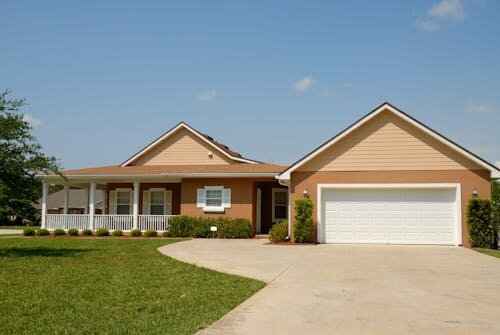


Can I Get a Mortgage on a Mobile Home?
By Aaron Eller, Founder — Cash Offer Man | St. Louis, Missouri
Mobile homes are one of the most misunderstood housing categories in American real estate — and nowhere is that misunderstanding more expensive than in the financing conversation. Millions of Americans live in manufactured and mobile homes, and millions more are considering them as an affordable entry point into homeownership. The question they all eventually ask is the same: can I get a real mortgage on this?
The answer is genuinely complicated. It depends on when the home was built, how it is titled, whether it sits on land you own or lease, what its wind zone rating is, how it is attached to the foundation, and which loan program you are applying through. Get the right combination of those variables and yes, you can get a conventional or FHA mortgage. Get the wrong combination and you are limited to a personal property loan — a product that looks like a mortgage but costs dramatically more and builds equity far more slowly.
I am Aaron Eller, founder of Cash Offer Man, a local home buying company in St. Louis. I buy and sell homes throughout the St. Louis metro and I encounter manufactured and mobile home transactions regularly. This article gives you the complete picture — every definition, every loan type, every lender requirement, and every variable that determines what financing you can actually get.
Is a Mobile Home Personal Property or Real Property?
This is the foundational question — the one that determines everything else about how a mobile home is financed, taxed, and ultimately sold.
The Classification That Changes Everything
In American law, property falls into two fundamental categories:
Real property: Land and anything permanently attached to it. Real property is financed through mortgages, sold through deeds, and covered by title insurance. It appreciates in value (generally) and builds equity through paydown and market appreciation.
Personal property: Everything else — vehicles, equipment, furniture, and anything movable. Personal property is financed through personal property loans (often called chattel loans), titled through a certificate of title similar to a vehicle title, and generally depreciates in value.
A mobile or manufactured home can be either real property or personal property depending on a specific set of conditions — and the classification has profound financial consequences for the homeowner.
When Is a Mobile Home Real Property?
A manufactured home becomes real property — and therefore mortgage-eligible through standard programs — when all of the following conditions are met:
The owner owns the land. A home on a rented lot in a mobile home park is personal property regardless of any other factor. You must own the land on which the home sits to convert to real property status.
The home is affixed to a permanent foundation. The home must be on a permanent foundation meeting HUD standards — typically a continuous concrete perimeter foundation or piers with anchoring systems — and must have the running gear (wheels, axles, and towing hitch) removed.
The title has been surrendered. In Missouri, converting a manufactured home to real property requires surrendering the personal property title (similar to a vehicle title) to the Missouri Department of Revenue and recording a Certificate of Real Property Conversion with the county recorder of deeds. This administrative process formally reclassifies the home from personal property to real property and allows a deed — rather than a certificate of title — to be used in the sale and financing.
The home is taxed as real property. Once converted, the home and land are assessed and taxed together as a single parcel by the county assessor.
When Is a Mobile Home Personal Property?
If any of the following is true, the home is personal property:
- It sits on leased land (a mobile home park lot)
- The title has not been surrendered
- It lacks a permanent foundation with the running gear removed
- The land and home have not been formally combined as a single parcel
Personal property manufactured homes are financed through chattel loans — higher-rate, shorter-term, personal property lending that functions more like an auto loan than a mortgage. The consequences of this classification are significant and are addressed in detail below.
Mobile Home vs. Manufactured Home vs. Modular Home — What Is the Difference?
These three terms are used interchangeably in common conversation and are treated as distinct categories by lenders, the federal government, and the tax system. The distinctions matter enormously for financing.
Mobile Homes — The Pre-1976 Era
Technically, “mobile home” is the correct term only for homes built before June 15, 1976 — the date on which HUD’s Manufactured Home Construction and Safety Standards (commonly called the “HUD code”) took effect.
Pre-1976 mobile homes were built without federal safety standards. They varied enormously in construction quality, thermal performance, fire safety, and structural integrity. They were not subject to wind zone ratings, energy standards, or the thermal and fire protection requirements that HUD implemented in 1976.
The financing reality for pre-1976 homes: Virtually no institutional mortgage lender — FHA, VA, Fannie Mae, Freddie Mac, or conventional — will finance a home built before June 15, 1976. This is a hard cutoff with no exceptions in standard loan programs. Pre-1976 homes are limited to cash purchases, personal property chattel loans (if any lender will originate one), or seller financing.
The identification method: HUD-code manufactured homes built after June 15, 1976 must have a HUD certification label — a small metal plate, sometimes called a “HUD tag” — affixed to the exterior of each section of the home. This plate includes the HUD code number, the manufacturing date, the state where the home was produced, and the wind zone rating. A home without a HUD tag is presumptively pre-1976 and not mortgage-eligible.
Manufactured Homes — Post-1976 HUD Code
The correct federal term for factory-built homes constructed after June 15, 1976 is “manufactured home.” These homes are built entirely in a factory, transported to the site on a steel frame with wheels (which may subsequently be removed), and assembled on-site.
The HUD code standards that manufactured homes must meet:
- Structural performance requirements
- Fire safety standards (interconnected smoke alarms, flame-spread ratings for interior finishes)
- Energy efficiency standards (insulation, windows, HVAC)
- Plumbing, electrical, and mechanical standards
- Wind zone ratings (discussed in detail below)
The single-wide vs. double-wide distinction:
A single-wide manufactured home is a single factory-built section, typically 14 to 18 feet wide and 52 to 76 feet long. Total square footage typically ranges from 600 to 1,300 square feet. Single-wides are the most challenging manufactured home type to finance — many lenders apply additional restrictions or simply refuse to lend on single-wide units.
A double-wide (or multi-section) manufactured home consists of two or more factory-built sections joined at the site, typically totaling 24 to 32 feet in width and 1,000 to 2,400 square feet. Double-wides are more readily financeable than single-wides and, when properly sited on owned land with a permanent foundation, can qualify for all standard loan programs.
Modular Homes — The Category Most Buyers Misunderstand
A modular home is built in a factory in sections, transported to the site, and assembled — so far identical to a manufactured home. The critical distinction is the regulatory framework:
Manufactured homes: Built to the federal HUD code, which preempts state and local building codes.
Modular homes: Built to the state and local building codes of the jurisdiction where the home will be sited — the same codes that apply to site-built (stick-built) homes. Once assembled on-site, a modular home is legally indistinguishable from a site-built home. It is treated as real property from inception, financed through standard mortgages without manufactured home overlays, and assessed and taxed identically to any stick-built home.
Why this distinction is so significant: A buyer comparing a manufactured home to a modular home of equivalent size and quality will find that the modular home is dramatically easier to finance, more readily accepted by standard lenders, and often has better long-term appreciation characteristics because it is assessed and sold as real property without the stigma and financing limitations that manufactured homes carry.
If you are considering factory-built construction, understanding whether you are looking at a manufactured home or a modular home is one of the first questions to ask and verify.
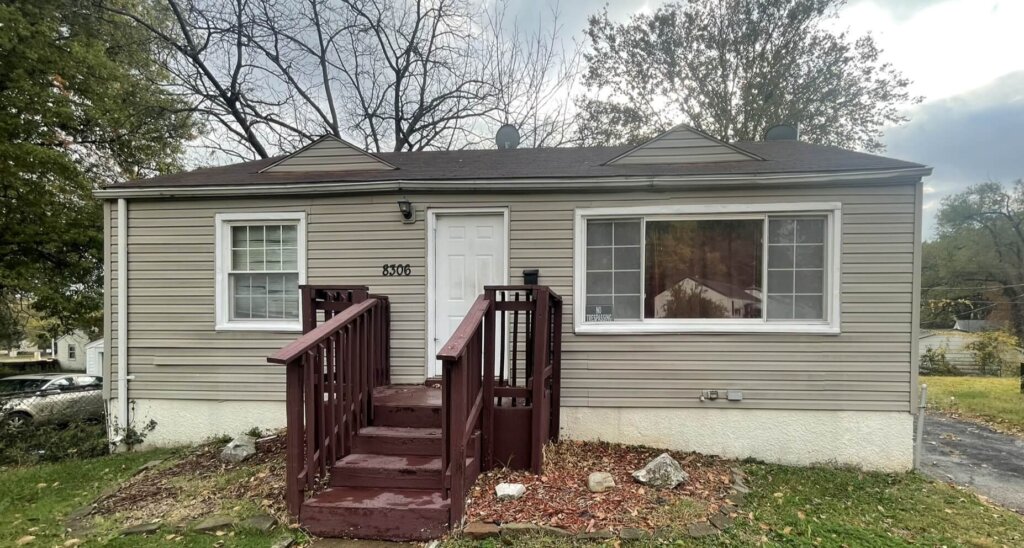
The Wind Zone Rating — The Technical Factor Most Buyers Never Hear About Until It Is Too Late
Wind zone ratings are one of the most specific and most consequential technical requirements in manufactured home lending, and they are the issue that most commonly kills transactions on manufactured homes in certain geographic areas.
What Wind Zones Are
The HUD code divides the United States into three wind zones based on historical wind speed data:
Wind Zone I: Most of the continental United States, including Missouri. Maximum wind speed: 70 mph. This is the basic standard.
Wind Zone II: Coastal areas and states with higher wind exposure, including the Gulf Coast, portions of the Southeast, and some mid-Atlantic areas. Maximum wind speed: 100 mph.
Wind Zone III: The highest-risk areas — hurricane zones including coastal areas of Florida, portions of Texas, and other hurricane-vulnerable regions. Maximum wind speed: 110 mph.
Why Wind Zone Ratings Affect Lending in Missouri and Illinois
Here is where Missouri homeowners and buyers encounter a problem that surprises many people: FHA and many conventional lenders require that manufactured homes be rated for the wind zone of the state or region where they are installed — even if the home was originally certified for a lower wind zone.
Missouri is a Wind Zone I state. Most of Illinois is also Wind Zone I. A manufactured home certified to Wind Zone I standards can be legally sited in either state.
However, some lenders have adopted overlays requiring Wind Zone II or even Wind Zone III certification for all manufactured homes they finance, regardless of where the home is located. These overlay requirements exist because higher wind-rated homes are generally more structurally robust and represent lower risk to the lender.
Where to find the wind zone rating: The HUD certification label (the metal plate affixed to the exterior) includes the wind zone designation. A lender or inspector can read this directly from the plate. If the plate is missing or illegible, a HUD data plate inside the home (typically in a cabinet, closet, or electrical panel) also contains the wind zone rating along with other specifications.
The Missouri practical reality: In the St. Louis area, most manufactured homes that were sited in Missouri are Wind Zone I rated. If a lender requires Wind Zone II, a Wind Zone I home will not qualify for that lender’s program regardless of condition, foundation, or title status. Shopping lenders is essential — not all lenders impose wind zone overlays above the HUD minimum.
What Loan Programs Are Available for Manufactured Homes?
FHA Title I and Title II Manufactured Home Loans
The Federal Housing Administration offers two distinct loan programs for manufactured homes:
FHA Title II Loans — The Real Mortgage
Title II loans are standard FHA mortgages extended to manufactured homes that meet specific criteria. These are the loans that provide the most favorable terms and are the primary path to institutional mortgage financing for manufactured home owners.
Title II requirements:
- Home must be built after June 15, 1976 (must have HUD certification label)
- Home must be on a permanent foundation meeting FHA standards (HUD Handbook 4000.1, specifically the Permanent Foundations Guide for Manufactured Housing)
- Owner must own the land (not a leased lot)
- Home must be classified as real property (title surrendered, deed-based)
- Home must be a primary residence
- Minimum loan amount: $40,000 (no practical upper limit within FHA loan limits)
- Minimum credit score: 580 for 3.5% down; 500–579 for 10% down
- Down payment: 3.5% with 580+ score
- FHA MIP applies (same as stick-built FHA loans)
- Double-wide preferred; single-wide more difficult to place
The Title II advantage: Full FHA mortgage terms — 30-year fixed rates, 3.5% down, competitive rates. This is the gold standard for manufactured home financing when all criteria are met. You can always look into a mortgage rate buy down to lower your interest rate and make your monthly payment more affordable.
Average FHA Title II rate premium: Manufactured homes financed through Title II carry rates approximately 0.25% to 0.75% above comparable stick-built FHA loans due to the additional risk the lender perceives in manufactured home collateral.
FHA Title I Loans — Personal Property Lending
Title I loans finance manufactured homes as personal property — for homes on leased land or that do not meet real property criteria. These are NOT mortgages in the conventional sense. They are personal property loans with significantly less favorable terms.
Title I loan limits:
- Manufactured home only: $105,532
- Manufactured home and lot: $180,339
- Lot only (to purchase land for a future manufactured home): $34,677
Title I terms: Maximum 20-year term for a double-wide; maximum 15 years for a single-wide. Rates are typically 2% to 4% higher than comparable real property loans.
Conventional Loans — Fannie Mae and Freddie Mac
Both Fannie Mae and Freddie Mac have manufactured home loan programs, but with specific requirements that limit their availability.
Fannie Mae MH Advantage®:
This is Fannie Mae’s broadest manufactured home program, offering conventional loan terms to manufactured homes that meet additional construction and appearance standards:
- Driveway, carport, or garage required
- Pitched roof (minimum 2:12 pitch)
- Specific exterior features that make the home comparable in appearance to site-built homes
- Permanent foundation required
- Real property classification required
- 3% down payment available (with standard PMI)
- Maximum loan-to-value: 97% (3% down)
- Owner-occupied, primary residence
Homes that do not meet MH Advantage standards but otherwise qualify for conventional financing can still access Fannie Mae standard manufactured home guidelines, but with higher down payment requirements (typically 5% to 20%) and more restrictive LTV ratios.
Freddie Mac CHOICEHome®:
Similar to MH Advantage, Freddie Mac’s CHOICEHome program offers conventional financing for manufactured homes meeting specific appearance and construction standards comparable to site-built homes. Terms are broadly similar to Fannie Mae’s program.
VA Loans for Manufactured Homes
Veterans and active-duty service members with VA entitlement can use VA loans for manufactured homes, but with specific limitations:
VA manufactured home requirements:
- Home must be built after June 15, 1976 (HUD certification label required)
- Home must be on a permanent foundation
- Home must be classified as real property (owned land, title surrendered)
- Home must meet VA’s Minimum Property Requirements (MPRs)
- Must be primary residence
- No down payment required (same as standard VA loans)
- No PMI (VA funding fee applies)
- Minimum credit score: 620 at most VA-approved lenders
The VA limitation on existing manufactured homes: VA is more willing to finance the purchase of a new manufactured home (to be placed on land the veteran owns) than an existing manufactured home that has been previously titled. An existing manufactured home that was previously titled as personal property but subsequently converted to real property can be VA-financed, but the documentation requirements are significant.
Chattel Loans — Personal Property Financing
For manufactured homes that do not qualify for any of the above programs — pre-1976 homes, homes on leased land, homes that have not been converted to real property — chattel loans are the primary institutional financing option.
Chattel loan characteristics:
- Rates: Currently 7.5% to 12.0% for chattel loans, compared to 6.5% to 7.5% for FHA or conventional manufactured home mortgages
- Terms: 10 to 23 years (shorter than a 30-year mortgage)
- Down payment: Typically 5% to 20%
- Qualification: Based on creditworthiness and income, not on property classification
- No title insurance: Chattel loans are not covered by standard title insurance
The total cost comparison:
On a $120,000 manufactured home financed as chattel at 10.0% for 20 years vs. FHA Title II at 7.25% for 30 years:
| Chattel Loan | FHA Title II | |
| Loan amount | $120,000 | $120,000 |
| Rate | 10.0% | 7.25% |
| Term | 20 years | 30 years |
| Monthly payment | $1,158 | $819 |
| Total interest paid | $157,920 | $174,840 |
The FHA loan pays more total interest due to the longer term, but the monthly payment is $339 lower — a significant affordability difference. And the FHA borrower is building equity in real property that appreciates, while the chattel borrower is building equity in personal property with a much more uncertain appreciation trajectory.
Chattel lenders in the manufactured home market: Vanderbilt Mortgage, 21st Mortgage (a Berkshire Hathaway company), Triad Financial Services, and various credit unions and community banks that specialize in manufactured lending. These lenders operate primarily in the chattel space and are the most common source of financing for mobile home parks.
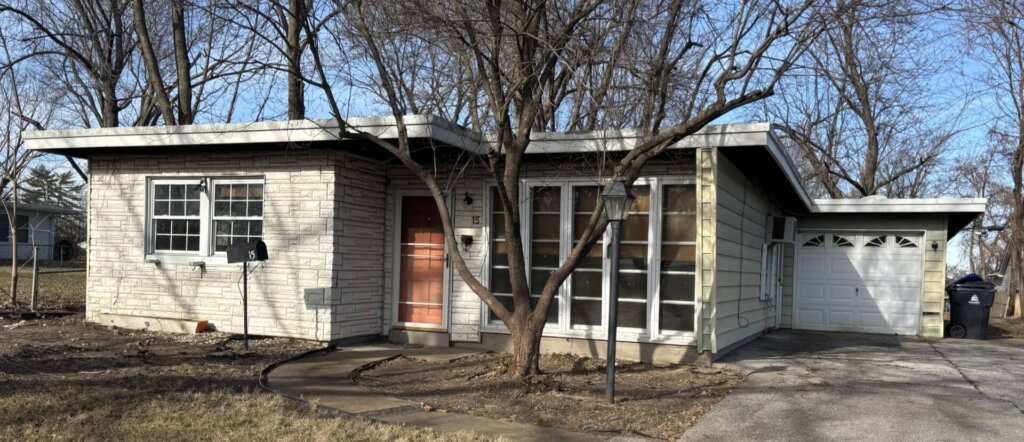
How Do Manufactured Homes Differ From Site-Built Homes in Key Financial Metrics?
Appreciation — The Most Significant Financial Difference
This is the honest conversation that many manufactured home advocates do not want to have, because the data is not flattering.
National data on manufactured home appreciation:
The Federal Housing Finance Agency (FHFA) House Price Index, which tracks home price appreciation by housing type, consistently shows that manufactured homes appreciate at slower rates than site-built homes — particularly when the land is not owned by the homeowner.
- Site-built homes (2013–2023): Average annual appreciation approximately 6.8%
- Manufactured homes on owned land: Average annual appreciation approximately 4.2% — meaningful appreciation, but below site-built
- Manufactured homes on leased land (personal property): Average annual appreciation approximately 1.8% — barely above inflation in many markets, and negative in real terms in some periods
The reason for this disparity: manufactured homes on leased land are priced primarily as personal property (depreciating assets like vehicles) rather than as real estate. When the home must eventually be moved or when the park closes, the cost of relocation or disposal can eliminate whatever equity the homeowner has accumulated.
The St. Louis context: In the St. Louis metro, manufactured homes on owned land in suburban and rural areas can appreciate meaningfully — particularly as surrounding land values increase. However, manufactured homes in mobile home parks on leased lots have historically been very poor investment vehicles in the St. Louis market, where the alternative of an entry-level stick-built home is often accessible through FHA at comparable price points. Real Estate investors do buy mobile homes to have a cheaper option to buy their first rental property and that can lead to higher cash flow, so there are some pros when looking at mobile homes.
Insurance — Higher Premiums and More Limitations
Manufactured homes are more expensive to insure than site-built homes of equivalent value. Reasons:
- Factory construction, even to HUD standards, carries higher fire risk than site-built construction in older units
- Wind and storm damage is more frequent and more severe in manufactured homes versus comparable stick-built construction
- Manufactured homes in parks may have limited fire-resistant separation between units
Average annual insurance cost:
- Site-built home ($200,000 value): $1,200 to $1,800/year
- Manufactured home ($120,000 value): $900 to $1,600/year — similar absolute cost on a lower-value asset, representing a significantly higher percentage of value
Some standard homeowners insurance carriers will not write policies on manufactured homes at all. Specialty manufactured home insurers (American Modern, Foremost Insurance, National Mobile Home Insurance) provide dedicated coverage. For manufactured homes on leased land in parks, many parks require specific coverage types.
Property Taxes — Real Property vs. Personal Property Assessment
Real property manufactured homes (owned land, title surrendered) are assessed and taxed as real property — the same way site-built homes are assessed. In St. Louis County, this means assessment at 19% of market value with the county’s levy rate applied.
Personal property manufactured homes (leased land, titled as personal property) are assessed as personal property in Missouri — typically at a depreciated schedule that reduces the assessed value each year, similar to how vehicle personal property tax works. This may result in lower annual taxes in the early years, but it also confirms the personal property classification that limits financing options.
The Missouri-Specific Framework
Missouri Manufactured Housing Law
Missouri’s manufactured housing law (RSMo Chapter 700) governs the installation, titling, and sale of manufactured homes in Missouri. Key provisions relevant to buyers and sellers:
Installation requirements: Manufactured homes installed in Missouri must comply with the Missouri Manufactured Housing Installation Program (MMHIP) standards, administered by the Missouri Division of Finance. Proper installation — including foundation, anchoring, and utility connection — must be certified by an approved installer.
Title conversion process: Missouri’s process for converting a manufactured home from personal property to real property involves:
- Satisfying all liens on the personal property title
- Completing a Certificate of Real Property Conversion
- Surrendering the title to the Missouri Department of Revenue
- Recording the certificate with the county recorder of deeds where the property is located
This process typically takes 2 to 4 weeks and costs $100 to $400 in recording and filing fees. It is essential before real property mortgage financing can proceed.
Retailer licensing: Missouri requires manufactured home retailers and dealers to be licensed. When purchasing a new manufactured home in Missouri, verify the retailer’s license with the Missouri Division of Finance at finance.mo.gov.
Mobile Home Parks in the St. Louis Area
St. Louis County and the surrounding metro area have numerous manufactured home communities — from well-maintained, investment-grade parks with infrastructure comparable to small subdivision to older, distressed communities with significant vacancy and deferred maintenance.
For buyers considering a manufactured home in a St. Louis area park, critical due diligence items include:
The lease terms: How long is the ground lease? What are the rent escalation terms? What happens to your home if the park closes or is redeveloped? In Missouri, manufactured home park residents have limited protections against closure — state law requires only 180 days notice before a park closure. A $90,000 manufactured home that must be moved at a cost of $5,000 to $15,000 — or demolished if relocation is not practical — because the park closes represents a catastrophic financial event.
The park’s financial health: Is the park owner actively maintaining infrastructure (roads, utilities, common areas)? A distressed park is a risk to your investment even if your individual unit is well-maintained.
The park’s rules and restrictions: Many parks restrict the age, condition, and type of homes that can be placed. A park that restricts homes to 1990 or newer will not allow the placement of an older unit and may give you notice to remove an aging unit.
My Opinion: Is a Manufactured Home a Good Investment in St. Louis?
This question deserves a direct answer based on the data I have presented.
If you own the land: A manufactured home on owned land, properly converted to real property, on a permanent foundation, and financed through FHA Title II or conventional lending, can be a reasonable housing investment in the St. Louis metro. You are building equity in real property. The home can be sold through a standard deed-based transaction. You have access to refinancing as rates change. Appreciation is slower than a comparable stick-built home, but it is positive.
If you are in a park on leased land: I am significantly more cautious about recommending this as an investment strategy in the St. Louis market specifically. The leased land creates permanent personal property classification, which means chattel financing at higher rates, no standard title insurance protection, and uncertain appreciation driven by the value of the personal property rather than the land. More importantly, the park closure risk — while not common — represents a tail risk that can eliminate equity entirely.
The FHA alternative at comparable price points: In the St. Louis metro, FHA-eligible entry-level stick-built and brick homes exist in the $140,000 to $195,000 price range in North County, South County, and many inner-ring suburban communities. A first-time buyer comparing a $110,000 manufactured home on leased land (chattel financed) to a $165,000 FHA-eligible brick ranch in Hazelwood or Mehlville should seriously evaluate the stick-built option. The stick-built home has better appreciation history, real property status, standard mortgage financing, and no park closure risk — and is accessible at the 3.5% FHA down payment that the manufactured home might also require.
Summary: Manufactured Home Financing Requirements at a Glance
| Factor | Requirement for Real Property Mortgage |
| Construction date | Must be after June 15, 1976 (HUD certification label required) |
| HUD tag | Must be present and legible on each section |
| Foundation | Permanent foundation per HUD standards, running gear removed |
| Land ownership | Borrower must own the land (not a park lot lease) |
| Title status | Missouri personal property title must be surrendered |
| Classification | Must be real property (deed-based, not title-based) |
| Wind zone | Must meet lender’s wind zone requirement (typically Zone I for MO) |
| Occupancy | Must be primary residence for FHA/VA |
| Home size | Double-wide preferred; single-wide limited lender availability |
| FHA min. score | 580 for 3.5% down; 500 for 10% down |
| VA min. score | 620 at most lenders |
| Conventional min. | 620; MH Advantage 3% down with qualifying features |
| Chattel loan rate | 7.5–12.0% (personal property only) |
| FHA Title II rate | ~6.5–7.5% (real property) |
| Title insurance | Available for real property; not for chattel |
Aaron Eller is the founder of Cash Offer Man, a local home buying company serving St. Louis City, St. Louis County, and surrounding Missouri communities. Cash Offer Man purchases all types of residential property in any condition for cash, including manufactured and mobile homes. For a no-obligation offer, visit CashOfferMan.com.
Get An Offer Today, Sell In A Matter Of Days