
Is There an Abandoned House Problem in St. Louis?
By Aaron Eller, Founder — Cash Offer Man | St. Louis, Missouri
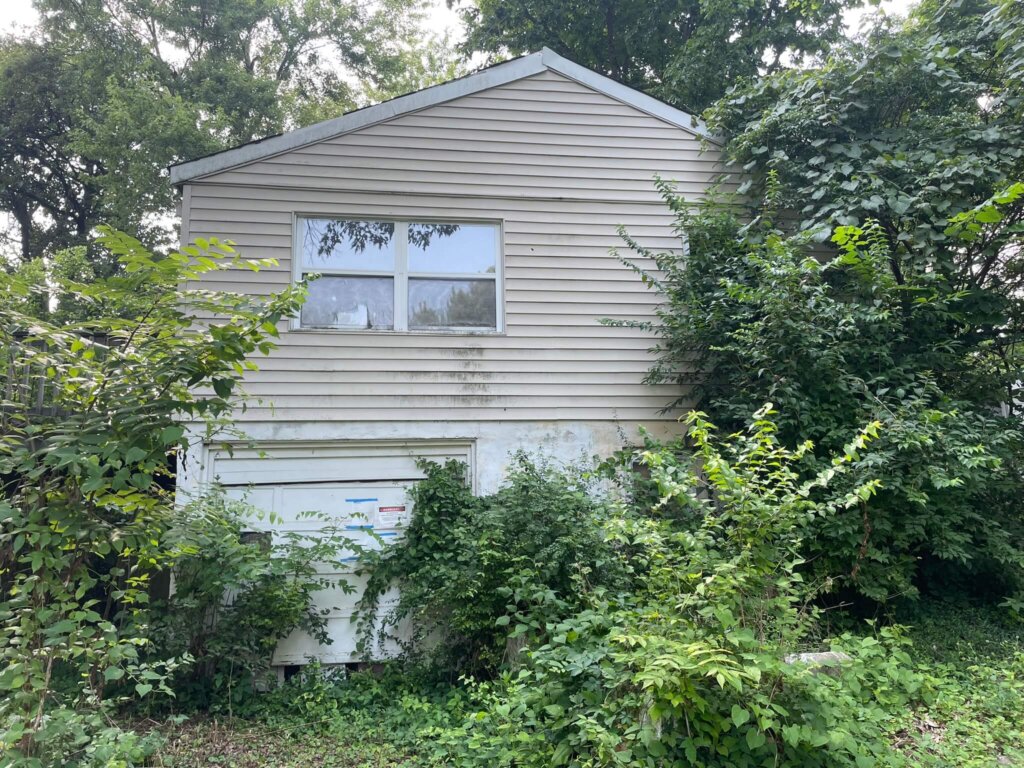
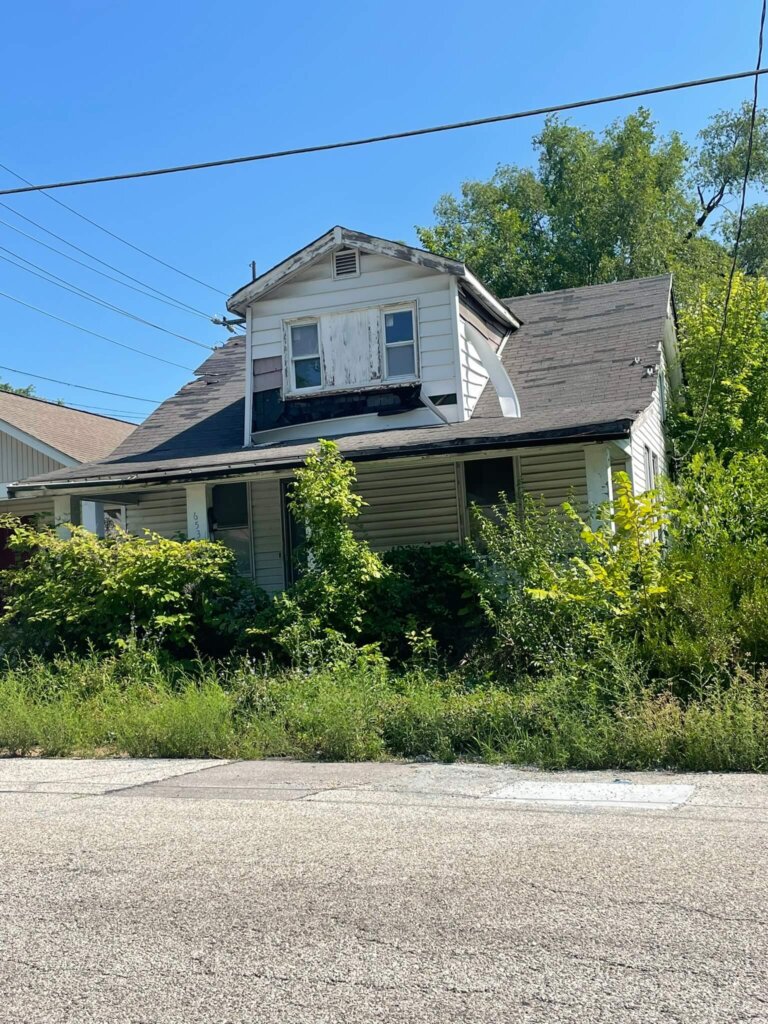
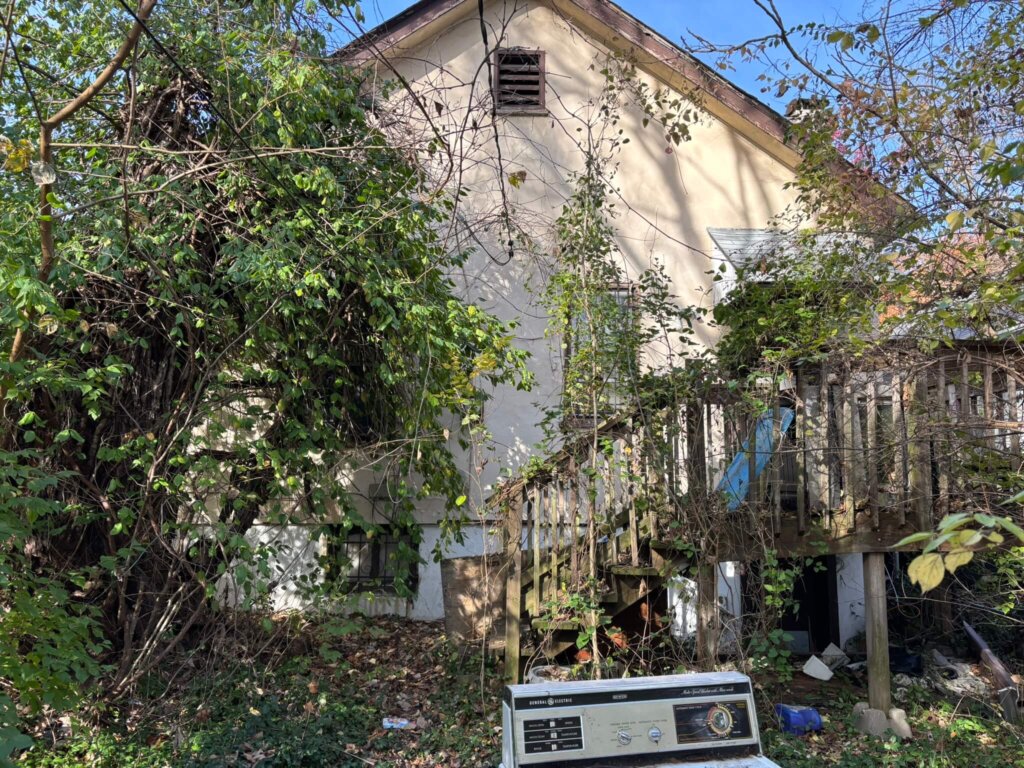
Drive north on any major artery in St. Louis City — West Florissant Avenue, Natural Bridge, Dr. Martin Luther King Drive, North Grand — and you will see it. Row after row of boarded-up windows. Brick buildings with collapsed roofs. Overgrown lots where homes once stood. Chain-link fences around crumbling structures draped in city violation notices that nobody will ever pay. Grass growing from gutters. Front porches slowly pulling away from their houses, as if the buildings themselves are trying to leave.
The abandoned house problem in St. Louis is not a new story. But in 2026, it is a story that is in some ways getting better, and in other ways getting dramatically worse — and the forces at play are complex enough that simple answers do not do it justice.
I am Aaron Eller. I founded Cash Offer Man, a local home buying company that has purchased, renovated, and returned to productive use dozens of properties across St. Louis City, St. Louis County, and surrounding communities. I have walked through properties in the most neglected blocks of North City, the struggling pockets of South City, and the rapidly deteriorating neighborhoods of North County. I have bought boarded-up homes from families who did not know what else to do with them. I have navigated the tornado recovery zone in The Ville. I have done business on Duke Drive in Castle Point when the neighborhood looked like it had been given up entirely.
This article is my honest assessment of the abandoned house problem in St. Louis — where it came from, where it stands today, what is being done about it, what I believe should be done differently, and what Cash Offer Man is doing about it one house at a time.
The Scale of the Problem — The Numbers You Need to Know
Let’s start with the data, because the numbers are staggering enough that they require a moment to absorb.
The City of St. Louis has approximately 129,000 total properties. Of those, roughly 24,000 to 26,000 are currently considered vacant and abandoned — vacant buildings, commercial shells, and empty lots where structures once stood. That is nearly one in five properties in the city sitting empty.
Of those 24,000 vacant parcels, approximately 9,000 are vacant buildings — structures still standing, some of them boarded up, some condemned, some falling down where they stand. The remaining 15,000 are vacant lots, the tombstones of buildings that have already been demolished. The city’s Land Reutilization Authority (LRA), which is St. Louis’s land bank, owns approximately 1,198 of those vacant buildings and 8,100 vacant lots. But the more troubling statistic is this: approximately 7,840 vacant buildings are privately owned — meaning a private person, entity, or out-of-state investor holds title to a deteriorating structure, pays no taxes, maintains nothing, and nobody in city government has the tools or the will to force their hand effectively.
The geographic concentration of vacancy is severe and not evenly distributed. Researchers with the St. Louis Vacancy Collaborative (STLVC) have found that at least 84% of the city’s vacant parcels are located north of Delmar Boulevard. That single data point tells you almost everything about the history that created this problem and the inequity that sustains it.
Ward 13 alone — the Walnut Park area near West Florissant and Genevieve Avenues in North City — contains approximately 2,000 vacant buildings, representing roughly 22% of the city’s total. Since 2019, nearly 600 additional properties in Ward 13 have been added to the vacant building count. This is not a problem that is solving itself. In many specific neighborhoods, it is accelerating.
The good news, if there is any in these statistics, is that the overall count of vacant parcels across the city has declined by approximately 4% to 7% since 2018, according to Vacancy Collaborative tracking. That is real progress, achieved primarily through demolition by the land bank and by individual renovators bringing buildings back online. It is also, in the context of what the problem requires, painfully inadequate progress.
How We Got Here — A History of Deliberate Neglect and Structural Abandonment
The abandoned house problem in St. Louis did not happen by accident. It is the accumulated result of deliberate policy decisions made over 70 years, economic forces that gutted the tax base, and demographic shifts that systematically stripped wealth from the communities most affected. Understanding the history is not just an academic exercise — it is essential for understanding why simple solutions keep failing.
The Peak and the Fall
In 1950, the City of St. Louis was home to approximately 857,000 residents, making it the eighth-largest city in the United States and one of the most significant industrial and commercial centers in the country. Today, the city’s population is approximately 300,000 to 319,000 — a decline of more than 62%, steeper than Detroit, Cleveland, Buffalo, Pittsburgh, or any other so-called Legacy City in America.
That is not a metaphor. That is a city that built housing stock, commercial corridors, churches, schools, and neighborhood infrastructure for 857,000 people — and then watched two-thirds of those people leave. The buildings did not leave with them. They stayed. And they have been deteriorating ever since.
Redlining, Blockbusting, and the Deliberate Underfunding of North City
The mechanism by which the North Side of St. Louis came to bear the overwhelming burden of vacancy is not mysterious, but it is painful. Beginning in the 1930s, the federal Home Owner’s Loan Corporation designated neighborhoods north of Delmar Boulevard as “hazardous” — colored in red on their risk assessment maps — specifically because those neighborhoods were home to predominantly Black residents. This designation, known as redlining, made federally backed mortgages unavailable to families in North City while simultaneously subsidizing the purchase of homes in the surrounding white suburbs.
Between 1934 and 1962, the Federal Housing Administration and the Veterans Administration insured more than $120 billion in home mortgages nationwide. An estimated 98% of those mortgages went to white borrowers. In St. Louis, the redlined neighborhoods north of Delmar received effectively none of that capital. White families used government-subsidized mortgages to build equity in the suburbs. Black families in North City were denied those same tools and could not accumulate the generational wealth needed to maintain aging properties as they deteriorated over decades.
The practice of blockbusting compounded the damage. Beginning in the 1940s and accelerating through the 1960s, real estate speculators would introduce one Black family to a previously all-white block, then use that presence to panic remaining white residents into selling their homes at below-market prices. The speculators would then resell or rent those same properties to Black families at inflated prices and on predatory contract terms that offered no path to ownership. The families lost their investments when they fell behind; the speculators moved on with their profits.
The construction of Interstate highways — I-44, I-55, I-64, I-70 — through the 1950s and 1960s physically demolished thriving Black neighborhoods including Mill Creek Valley (displacing 20,000 residents), Carr Square, and Chestnut Valley. These communities were razed under the banner of “urban renewal” and the displaced residents scattered into an already overcrowded North City housing market.
By the time the Fair Housing Act was passed in 1968, the damage had been done. Decades of denied credit, deteriorating housing stock, and the systematic destruction of neighborhood commercial corridors had created the conditions for mass abandonment. When families could finally leave, many of them did — first white residents, then middle-class Black residents as they gained the means — leaving behind an aging population, aging housing, and a tax base that was insufficient to maintain what remained.
This is not ancient history. Its effects are visible today on every block of North City where boarded windows face boarded windows across an empty lot where a house used to be.
The 2008 Foreclosure Crisis: Another Wave of Abandonment
Just as North City began to show early signs of genuine revitalization in the mid-2000s, the 2008 foreclosure crisis hit. St. Louis’s Black homeowners, who had disproportionately been targeted for subprime and predatory mortgage products, lost their properties in large numbers. Those properties were acquired by investors — many of them out-of-state speculators who bought packages of foreclosed properties sight unseen from financial institutions liquidating their portfolios. Many of those investors had no intention of maintaining or improving the properties. They were waiting for values to rise enough to flip them, or they had simply bought the properties as part of a larger portfolio with no attention to individual assets.
As one St. Louis Magazine investigation found, some of these absentee owners live in Town and Country, Chesterfield, or even California. At one point, the historic Chuck Berry House in the Greater Ville was owned by someone from Utah. These out-of-town speculators own properties they have never visited, in neighborhoods they do not care about, from which they extract zero value — and their presence on the title prevents the city, neighbors, or community organizations from doing anything productive with the building until the property goes through the lengthy tax foreclosure process.
The Landscape Today — North City, South City, and North County
North City: The Epicenter
The neighborhoods north of Delmar Boulevard — Wells-Goodfellow, Greater Ville, Jeff-Vander-Lou, Walnut Park, College Hill, Baden, Hyde Park, O’Fallon, Fairground Neighborhood, and dozens of others — contain the most concentrated vacancy of any urban area in the Midwest. In some neighborhoods like Greater Ville, The Ville, and Walnut Park East, more than half of all parcels are vacant — either empty lots or abandoned buildings.
The pattern on any given block in North City is heartbreaking in its regularity: one or two occupied homes, well-maintained, with cars in the driveway and flowers in the window boxes, surrounded on both sides by boarded-up structures or empty lots. These occupied families are doing everything right. They are paying their taxes, maintaining their properties, and raising their children. They have no control over what happens to the buildings next door. And those buildings — because they attract criminal activity, because they depress surrounding property values and make it impossible to obtain home equity financing, because they create a perception of abandonment that causes potential buyers to look elsewhere — are making the occupied homeowners’ situations steadily worse.
The Vacancy Collaborative’s report from early 2025 was blunt about the institutional response: “Without a shared mission or central authority, vacancy remains everyone’s problem and no one’s priority.” Roughly a dozen city government agencies or departments work on vacancy reduction, with no coordination, no unified data system, and no central authority with the mandate and resources to actually move the needle. The LRA reduced its own inventory of buildings by 62% over the past several years — primarily through demolition — while the number of privately owned vacant buildings increased by nearly 25%. The city is cleaning up its own mess while private negligence multiplies faster than public cleanup can keep up.
The May 2025 Tornado: A Crisis on Top of a Crisis
On May 16, 2025, an EF3 tornado tore through North City along a nearly 23-mile path, damaging more than 5,000 structures and causing an estimated $1.6 billion in property damage. The tornado’s most severe damage was concentrated in exactly the neighborhoods already struggling most with vacancy: Fountain Park, Greater Ville, Kingsway East, The Ville, and the O’Fallon corridor.
When the city assessed the damage in the weeks following the tornado, approximately 1,407 properties inspected were believed to be either definitely or likely vacant — and an estimated 500 to 600 of the 1,000 homes needing demolition were already vacant before the storm touched down. The tornado did not create the vacancy crisis in North City. It dramatically deepened one that already existed, destabilized structures that might have been candidates for renovation, and scattered the limited city staff working on vacancy reduction into emergency response.
The federal FEMA response added insult to injury: the city recently learned that FEMA will not reimburse for the cost of demolishing most vacant buildings in the tornado zone, leaving the future of hundreds of dangerous, storm-damaged structures unresolved. As UMSL researcher Paul Sorenson told St. Louis Public Radio: “You’re going to see an acceleration of vacancy on top of all of these challenges of redlining and spatial racism and out-of-state ownership — and a city that does not have the means and did not have the means before the tornado to properly address it.”
South City: A Different Problem, Same Root Cause
South City’s vacancy profile is distinct from North City’s in character if not entirely in cause. South City has historically maintained stronger neighborhood investment and more stable populations in neighborhoods like Tower Grove, Shaw, Benton Park, and Soulard. But within South City, there are pockets of significant vacancy concentrated in specific corridors — along Gravois Avenue, in Dutchtown, in Carondelet, and in several neighborhoods where aging housing stock meets absentee ownership.
South City’s vacancy is also marked by a higher concentration of boarded-up commercial buildings along arterial streets — former small businesses, corner stores, and storefronts that have been empty for decades. The commercial vacancy in South City creates the visual impression of decline even in neighborhoods where residential occupancy is relatively healthy. It suppresses the development of walkable commercial life and makes attracting new residents and businesses more difficult.
The South City vacancy problem is also more directly connected to the absentee investor phenomenon described in the North City section. St. Louis Magazine’s investigation found numerous examples of South City buildings owned by entities in Clayton, Chesterfield, and out of state — held as speculative assets with no current maintenance and no near-term development plan.
North County: Castle Point and the Suburban Abandonment Crisis
The abandoned house problem does not stop at the city limits. In unincorporated North County communities — particularly in areas like Castle Point, Spanish Lake, Glasgow Village, and Calverton Park — a related but distinctly suburban vacancy crisis has been developing for decades and is now fully in crisis territory.
Castle Point tells the story with particular clarity. Bordered by Lewis and Clark Boulevard on the east, Chambers Road on the south, West Florissant Avenue on the west, and I-270 on the north, Castle Point is a 1950s-era subdivision that was built as working-class suburban housing and whose street names — Duke, Duchess, Empress, Baron, King — speak to the aspirational character of its original development.
Today, the vacancy rate in Castle Point is approximately 20.5%, higher than 88.2% of all U.S. neighborhoods according to NeighborhoodScout data. Roughly 88.5% of homes in Castle Point were built between 1940 and 1969. They are small homes on slab foundations — typically 900 to 1,200 square feet, no basement, built for the returning GI generation. They served their purpose well for 40 years. But by the time they reached 50 years old, the combination of their small size, aging mechanical systems, the decline of the Riverview Gardens School District, the closure of nearby commercial anchors (the Kmart, Schnucks, and other retail that once served the area), and the systematic disinvestment that followed white flight from the area left them stranded.
On two blocks of Baron Drive in Castle Point, there are at least 16 abandoned houses and three vacant lots on streets otherwise lined with small, occupied 1960s homes. A former county worker described boarding up doorways and clearing dumped garbage from these properties repeatedly — including instances where garbage was dumped again within days of being cleared. Nearby residents describe people sleeping and using drugs in vacant houses. Children growing up on blocks where the boarded windows outnumber the occupied homes.
St. Louis County committed $11 million of federal American Rescue Plan Act funds to demolishing or repurposing more than 1,100 problem properties in North and South County. This investment is significant and real. But as Leon Streeter, a county worker with 22 years of experience, acknowledged: it can take years of cutting through red tape to demolish a building, even one that is completely falling apart. And $11 million — as transformative as it is compared to previous efforts — does not begin to address the full scope of what North County’s abandoned housing stock requires.
Seven Real Actions That Would Make a Real Difference
I have spent years buying properties in these neighborhoods, renovating them, and watching the policy discussions from the ground level. I have seen what works and what does not. I have sat in community meetings where promising ideas died in the bureaucratic apparatus of City Hall. I have watched genuine advocates burn out against the indifference of absentee investors and the inadequacy of city fines.
Here are seven specific, actionable things I believe the people in charge of St. Louis City, St. Louis County, and the state of Missouri should do — with my honest analysis of why they are not doing them.
1. Create a Centralized Vacancy Authority with Real Enforcement Power
The recommendation: Consolidate the roughly twelve city agencies and departments currently working on vacancy into a single office — a Vacancy Reduction Authority — with a clear mandate, dedicated funding, a chief officer who reports directly to the mayor, and enforcement tools that go beyond the current nominal fines.
Why it would work: The STLVC’s 2025 report was explicit: “Without a shared mission or central authority, vacancy remains everyone’s problem and no one’s priority.” The current system produces duplication, gaps in service, and no accountability for results. A centralized authority with data-sharing authority, enforcement powers, and a legal team focused specifically on compelling private owners to act would be genuinely transformative.
Why it is not happening: Consolidating authority requires reducing the fiefdoms of existing departments and directors who protect their turf. It requires political will at the mayoral level to overrule bureaucratic resistance. Mayor Cara Spencer has made vacancy a stated priority, but the institutional resistance is real and the political capital required is significant. It is also, frankly, unglamorous work — there are no ribbon cuttings for a vacancy database upgrade.
2. Dramatically Increase Penalties for Absentee Owners Who Fail to Maintain Properties
The recommendation: Increase municipal fines for code violations on vacant properties to the point where they are financially painful — not a routine business expense. Implement a vacancy tax on properties that have been listed on the Vacant Building Registry for more than one year. Make that tax increase with each additional year of inaction. Create a fast-track foreclosure process for properties with multiple unresolved code violations and unpaid taxes.
Why it would work: The current system of nominal fines allows slumlords to simply absorb violations as a cost of holding an asset indefinitely. A vacancy tax that escalates — say, $5,000 per year for a property on the registry for one year, $10,000 for two years, $20,000 for three — would change the financial calculation for absentee owners. Many would sell rather than continue paying. That movement of properties to active owners would do more than any government program.
Why it is not happening: Property rights are sacrosanct in Missouri politics and culture. Any legislation that feels like it is penalizing ownership faces strong opposition from the real estate lobby and libertarian-leaning legislators at the state level. The Missouri legislature has shown little appetite for aggressive vacancy legislation despite the scale of the problem in the state’s two largest cities. The city’s ability to act is also constrained by what state law permits, and state law has not kept pace with the urgency of the crisis.
3. Establish a Dedicated Public-Private Renovation Fund for North City and North County
The recommendation: Partner with the Missouri Housing Development Commission, local banks, and community development financial institutions to establish a dedicated renovation loan fund specifically for properties in the highest-vacancy zip codes. Offer low-interest or forgivable loans to local, St. Louis-based buyers who commit to occupying or renting renovated properties for a minimum of five years.
Why it would work: The single biggest barrier to private investment in properties like those on Baron Drive in Castle Point or on Natural Bridge Avenue in North City is the gap between renovation cost and appraised value. A home that costs $40,000 to acquire and $60,000 to renovate may appraise at $70,000 in a market dragged down by surrounding vacancy — leaving an investor with a $30,000 loss. A low-interest renovation loan that bridges that gap makes the investment viable. Several St. Louis neighborhood organizations have proven this model works at a small scale. It needs to work at city scale.
Why it is not happening: This requires real money — not the small grants that get announced at press conferences, but a fund large enough to catalyze hundreds of renovations simultaneously. It requires banks to underwrite properties in markets their current models say are too risky. And it requires a level of interagency coordination — MHDC, city CDA, county government, private banks, CDFIs — that is genuinely difficult to organize and sustain. The Gateway Neighborhood Fund and similar programs are steps in this direction, but they are too small and too slow.
4. Require the SLMPD and County Police to Actively Report and Track Illegal Activity in Vacant Buildings
The recommendation: Establish a formal protocol requiring police to log and report every instance of illegal activity — drug use, squatting, fire-setting, criminal activity — observed in or emanating from vacant buildings. Connect that log to the vacancy database and trigger automatic escalated enforcement against the property owner when a building accumulates three or more such reports.
Why it would work: Vacant buildings are not passive blight. They are active crime generators. They are used for drug sales, for shelter by people without stable housing, and — tragically — as arson targets, either for insurance fraud or as expressions of neighborhood rage. Police are often reluctant to enter these buildings without cause, and when they do observe activity, there is currently no systematic connection between that observation and code enforcement against the building’s owner. Connecting the dots between criminal activity in a building and escalated legal pressure on the owner would give city attorneys real ammunition to force action.
Why it is not happening: This requires information-sharing between the police department and the building division — two agencies that have historically operated in silos. It requires policy changes at the command level of SLMPD. And in an environment where police-community relations are already sensitive, requiring officers to add documentation steps to their routine calls creates resistance. It is an administrative change that would require genuine buy-in from both the police chief and the building commissioner to implement effectively.
5. Create a “First Right of Refusal” Program for Adjacent Homeowners
The recommendation: When a vacant property goes through tax foreclosure, give the adjacent homeowner first right to purchase the property at the outstanding tax value before it goes to the sheriff’s auction. Provide a small grant to facilitate any necessary stabilization.
Why it would work: Homeowners next to vacant properties are the most motivated and best-positioned to solve the problem. They live there. They watch the deterioration every day. They have a direct financial interest in seeing the property restored. In many cases, they would buy the adjacent lot or building simply to mow it, stabilize it, and prevent it from becoming a drug house or dumping ground. The current system sends properties through an auction process that frequently puts them in the hands of out-of-state speculators who have won the blight lottery and will simply continue the cycle of neglect.
Why it is not happening: The LRA’s auction process generates revenue that the agency depends on for operations. Giving first right of refusal to adjacent homeowners, who will often bid very little, reduces that revenue. There is also genuine bureaucratic complexity in implementing the notification and bidding process for adjacent owners. But these are solvable problems — other cities have done it. St. Louis has not yet found the political will.
6. Aggressively Use Eminent Domain Against Properties That Have Been Vacant for More Than Five Years
The recommendation: Where a private property has been on the Vacant Building Registry for more than five years, has accumulated multiple unresolved code violations, and where the owner has demonstrated no intent to rehabilitate, the city should use eminent domain — with fair market compensation based on the condemned structure’s actual condition, not speculative future value — to acquire the property and convey it to the LRA for disposition to a rehabilitation buyer.
Why it would work: Eminent domain is a powerful tool that St. Louis has historically been reluctant to use against private residential properties, preferring the slow process of tax foreclosure. But a building that has been vacant for five years, generating criminal activity, creating fire risk for adjacent occupied properties, and dragging down surrounding values is not being used for any legitimate private purpose. The public interest in addressing it is clear. Using eminent domain targeted specifically at the worst long-term vacancies — with fair compensation — would break the stalemate that allows absentee owners to hold neighborhoods hostage indefinitely.
Why it is not happening: Eminent domain for private property is politically and legally toxic in Missouri. The Supreme Court’s 2005 Kelo decision, which allowed eminent domain for economic development, generated enormous backlash in Missouri and led to significant legislative restrictions on the practice. Any politician who proposes aggressive use of eminent domain against private property owners — even demonstrably negligent absentee landlords — will face intense opposition. It is one of the third rails of Missouri property law politics.
7. Make Renovation and Occupancy of Vacant Properties in High-Vacancy Zones Tax-Free for Five Years
The recommendation: Create a Missouri state tax exemption — not just a deferral, but an actual exemption — on all property taxes for a period of five years for any residential property in a designated high-vacancy zone that is purchased, substantially renovated, and owner-occupied or long-term rented. Structure the exemption so that it applies from the moment the renovated property receives its certificate of occupancy.
Why it would work: Property taxes in St. Louis City and County are among the highest in Missouri, and they are calculated on the post-renovation assessed value — meaning a homeowner who renovates an abandoned property immediately begins paying taxes on the full value of what they built. This tax structure actively penalizes renovation in distressed markets. A five-year exemption would dramatically change the renovation math, make projects viable that currently do not pencil out, and attract local investors and owner-occupants who would otherwise go elsewhere.
Why it is not happening: Property tax revenue is the lifeblood of school districts, fire departments, and local government. Any exemption that reduces that revenue faces institutional opposition from every agency that depends on it. The political challenge of asking a school district that is already financially strained to forgo tax revenue — even temporarily, even in exchange for the long-term base growth that would result from more occupied properties — is significant. It requires a level of coordination between the city, county, and state government that St. Louis rarely achieves on anything.
Cash Offer Man on the Ground — What Private Investment Actually Looks Like
I do not just write about these problems. I work in them every day. And I want to be honest about what that means and what its limitations are. Cash Offer Man is not the solution to the abandoned house problem in St. Louis. Government policy, community investment, and systemic change at a scale that private companies cannot achieve are the solution. But private buyers like Cash Offer Man are one part of the ecosystem that makes neighborhoods better — one house, one family, one block at a time.
Here is what that looks like in practice.
Duke Drive, Castle Point: A House Reborn
A few years ago, I received a call from a woman — I will call her Ms. Thomas — who was trying to figure out what to do with a property on Duke Drive in Castle Point. Duke Drive is one of those Castle Point streets named for royalty: Duke, Duchess, Baron, Empress. Small Cape Cod and ranch homes from the 1950s, built for working families who believed in this community.
Ms. Thomas’s property had been vacant for several years. She had inherited it from a family member who had passed away, and the house had fallen into a state of significant disrepair. The roof had failed in at least one section, allowing water to penetrate and damage interior walls and flooring. The HVAC system had not operated in years. The kitchen and bathroom were original to the 1950s. Some windows were broken. The property had been boarded up.
What made Ms. Thomas’s situation particularly difficult — and typical of what we see throughout Castle Point — was the neighborhood context. On her block, multiple adjacent properties were also vacant. The street did not feel safe. The school district issues that plagued the area made it unattractive to families with children. The commercial corridor that once anchored the neighborhood was gone. She had tried to think about how to sell the property traditionally, and realized there was no realistic path to a traditional sale. No lender was going to finance a conventional buyer’s purchase of a storm-damaged property in a neighborhood with this vacancy rate.
When Cash Offer Man walked through the Duke Drive property, we saw what we always look for in these situations: bones worth saving. The structure was fundamentally sound under its surface damage. The brick was intact. The foundation had no major issues. This was a home that had been neglected, not destroyed.
We made Ms. Thomas a fair cash offer that reflected the property’s current condition — honest about what it would cost to bring to market, honest about what it would sell for in its location and price range. She accepted. She was not looking to maximize the sale price; she was looking for certainty, a clean process, and the ability to close the chapter on a property that had become a source of stress and guilt rather than an asset.
After closing, we got to work. The renovation of the Duke Drive property was a complete rehabilitation: new roof, new HVAC system, fully updated kitchen with modern cabinets and countertops, updated bathrooms, new flooring throughout, fresh paint inside and out, new windows where the originals had failed, plumbing updates, and electrical panel upgrade. Every mechanical system in the house was either replaced or confirmed in good working order. We did not cut corners on the renovation, because the family who would eventually buy this home deserved a house that was genuinely sound, not cosmetically dressed up.
The finished home was a genuinely attractive, move-in ready property. When we listed it, we priced it for the Castle Point market — accessible to a working family who needed financing, priced to compete in a neighborhood where values are suppressed by surrounding vacancy.
The family who bought the Duke Drive home were a young couple with a child, working people who could not have purchased a home in a higher-priced market but who wanted homeownership, stability, and a community. They put down a modest down payment, used an FHA loan to finance the purchase, and closed on the home. They moved in. They have been maintaining it. They are neighbors — the kind of neighbors every block in Castle Point needs: invested, present, looking out for their street.
That is not a policy solution. It is one house, one family, one block. But multiply it by hundreds of houses over years of work, and it begins to matter. The occupied home is the most powerful anti-vacancy tool that exists. Every time a boarded-up building becomes a family’s home, it changes what is possible on that block.
The Ville, North City: Tornado Recovery in Progress
The May 2025 tornado cut directly through The Ville — one of North City’s most historically significant neighborhoods, the community where Chuck Berry, Tina Turner, and countless other cultural figures grew up in the mid-20th century. The tornado’s path through The Ville damaged or destroyed structures that in some cases had been standing for more than a century, and it landed on a neighborhood that already had approximately 60% of its parcels vacant before the storm arrived.
Cash Offer Man purchased a tornado-damaged property in The Ville from a homeowner who had been displaced by the storm and was overwhelmed by the prospect of dealing with both the recovery process and an insurance claim that was not going to come close to covering the full cost of rehabilitation. She was an older woman who had lived in the community her whole life. Her attachment to her neighborhood was genuine and deep. But she was exhausted, she was dealing with health issues, and she needed to be able to move on.
We bought the property understanding that the rehabilitation process would be more complex than a typical renovation. Tornado-damaged structures require a structural engineer’s assessment before any renovation begins. The damage was not just cosmetic — roof penetration, water intrusion into walls and subfloor, damaged structural framing in one section of the house. We brought in a structural engineer, documented the full scope of damage, worked through the engineering requirements for repair, and began the rehabilitation process.
I want to be clear about where this project stands: it is still in progress. The rehabilitation of a seriously tornado-damaged structure in The Ville is not a 90-day project. It is a multi-year commitment — and it reflects the reality of what recovery from the May 2025 tornado actually looks like for North City. The city and FEMA’s timeline for recovery has been slow and contested, with FEMA’s refusal to reimburse demolition costs for vacant buildings adding months of delay to the broader cleanup effort. Individual renovators like Cash Offer Man are working through these projects one at a time, doing the hard work that the policy discussions are still catching up to.
The Ville property will eventually be completed. It will eventually house a family. And that family will be part of a community that is fighting — genuinely, at the neighborhood level, with community meetings and planning processes and dedicated organizations — to prove that The Ville’s story is not over.
That fight matters. The Ville is not just another North City neighborhood. It is a community with a specific cultural significance in the history of American music and Black St. Louis. It is a neighborhood where the architectural bones — the brick rowhouses, the commercial storefronts, the church buildings — are still largely intact even after decades of disinvestment and one devastating tornado. The Ville deserves the investment and the attention that would allow it to be what it once was. Cash Offer Man is one small part of that story.
What the Data Tells Us About Whether Things Are Getting Better or Worse
The honest answer to the question of whether the abandoned house problem is improving or worsening in St. Louis is: it depends where you look, and the answer is often both at the same time.
The aggregate numbers show modest improvement. Vacant parcels across St. Louis City declined by approximately 7% between 2018 and 2025, according to Vacancy Collaborative tracking. The LRA reduced its own building inventory by 62%, primarily through demolition. These are real numbers and they reflect real work.
But the composition of the improvement matters. The decline in LRA-owned vacant buildings has been achieved largely through demolition — turning buildings into empty lots — not through rehabilitation that returns properties to productive residential use. And over the same period, privately owned vacant buildings increased by nearly 25%. The land bank is cleaning up the properties it controls while private negligence fills in behind it faster than the cleanup proceeds.
The 2025 Vacancy Strategy Initiative Report — the result of two years of collaboration between more than a dozen city departments, the Vacancy Collaborative, and hundreds of community members — was honest about the limitations of current efforts. It specifically noted that past strategies “have largely remained advisory or experimental” and that the city lacks “a dedicated framework or enough staffing to implement” meaningful change.
The tornado made the near-term trajectory worse. An estimated 1,407 properties in the tornado zone are either definitely or likely vacant — and the debris field of partially collapsed, storm-damaged structures in already-vulnerable neighborhoods creates conditions that accelerate the decay of adjacent properties. When a partially collapsed building is left standing for a year, it becomes a fire hazard, a criminal hangout, and a symbol to the occupied homeowners on the block that their neighborhood has been given up on.
The medium-term trajectory, however, has genuine reasons for cautious optimism. The PlanSTL neighborhood revitalization plan adopted by the St. Louis Planning Commission in December 2025 — targeting The Ville, Greater Ville, and Kingsway East — represents the most serious neighborhood planning effort these communities have seen in decades, with more than 3,000 community members participating in the 18-month process. The city’s improving crime statistics — 141 homicides in 2025, the lowest in 12 years — create better conditions for private investment. And the growing awareness among St. Louis residents and policy makers that the vacancy crisis is not separate from the crime crisis, the school crisis, and the population decline crisis — that these are all expressions of the same underlying problem — creates at least the political groundwork for more integrated responses.
What Needs to Happen — A Summary
Let me close with the clearest possible summary of what I believe needs to happen for St. Louis to genuinely address its abandoned house problem in a way that changes the trajectory rather than just managing the decline.
The City of St. Louis needs a single, empowered vacancy authority with a chief officer, a legal team, and enforcement tools that actually hurt negligent property owners. Not another advisory committee. Not another collaborative with a two-year grant. A permanent office with a permanent mandate and real power.
State law needs to change to enable more aggressive tools against absentee negligence — higher fines, faster tax foreclosure timelines, and a vacancy tax on properties that have been on the registry for more than one year. This requires work at the Missouri state legislature, which is the hardest political lift in this entire picture.
Money needs to flow to renovation, not just demolition. Demolition is sometimes necessary, but turning a house into a lot is not revival — it is managed decline. The renovation fund I described above needs to be large enough to matter and targeted at the neighborhoods where the gap between renovation cost and market value is greatest.
Private investors — local ones who live here and care — need to be encouraged, not discouraged. The fastest path to reducing vacancy in neighborhoods like Castle Point and North City is not waiting for government programs. It is creating conditions where local investors and owner-occupants can buy, renovate, and occupy buildings at a scale that shifts neighborhood trajectory. Tax exemptions, streamlined permitting, and better access to renovation financing would all move that needle.
And finally, the people in charge need to be held accountable on specific, measurable timelines. “We are working on vacancy” is not accountability. “We will reduce privately owned vacant buildings by 1,000 in Ward 13 by 2028” is accountability. Setting specific targets, publishing progress data quarterly, and holding the Mayor’s office accountable for results — the way they are held accountable for homicide numbers — would change the political calculus around vacancy action.
Cash Offer Man’s Commitment
I started Cash Offer Man because I believe in this city. I believe in the houses that the people who lived here built, and I believe in the neighborhoods they created. I believe that a 1925 brick rowhouse in The Ville deserves to be somebody’s home, not a fire hazard waiting to happen. I believe that a 1958 Cape Cod on Duke Drive in Castle Point deserves a family in it, not boards on the windows.
Every house we buy, every house we renovate, every family we help find a home in a neighborhood where the vacancy problem has made homeownership difficult — that is our contribution to the problem I have spent this entire article describing. It is not enough on its own. Nothing any single company does will be enough on its own. But it is real, it is local, and it is happening.
If you own a property in St. Louis — in the city, in North County, in South City, anywhere — that is vacant, abandoned, damaged, or simply more than you can deal with, call us. We buy in any condition, in any neighborhood. We close fast and we pay fair prices that reflect honest local market knowledge. And when we buy your property, we do not flip it to another absentee investor. We renovate it. We sell it to a family. We try to make the neighborhood better by one house.
One house at a time is how neighborhoods change. And this city is worth changing.
Aaron Eller is the founder of Cash Offer Man, a local home buying company serving St. Louis City, St. Louis County, and surrounding Missouri communities. Cash Offer Man purchases vacant, abandoned, and damaged homes in any condition for cash, with closings in as little as 14 days. For a no-obligation conversation about your property, visit CashOfferMan.com or call 314-912-4939.
Get An Offer Today, Sell In A Matter Of Days