


How to Sell a Hoarder House in St. Louis for Cash Without Cleaning It
By Aaron Eller, Founder — Cash Offer Man | St. Louis, Missouri
April 19, 2026
If you are reading this article right now, there is a good chance you are dealing with something that feels completely overwhelming. Maybe you just inherited a parent’s or grandparent’s home and walked in to find rooms stacked floor to ceiling with decades of accumulated belongings. Maybe you are trying to help an elderly relative transition into assisted living and the house they are leaving behind looks nothing like what you expected. Maybe you are an adult child who has been watching this situation develop for years and have finally reached the point where something has to be done — but you have no idea where to begin.
First, I want you to take a breath. What you are facing is incredibly common, far more than people talk about openly, and it is absolutely manageable. More importantly, you do not have to carry this alone.
My name is Aaron Eller. I am the founder of Cash Offer Man, and I have been buying homes right here in St. Louis for years. I have walked through hoarder houses in every neighborhood in the city and county — from South City brick bungalows filled forty years deep with newspapers and collectibles, to North County ranches where every room had become a storage unit over time. I have sat at kitchen tables with grieving adult children who did not know how to begin, and with elderly homeowners who felt so much shame about their home that they had not allowed another person inside in years.
I am writing this article because I know this situation, I understand it, and I want to give you real, honest, practical guidance — not judgment, not pressure, just a clear picture of every option available to you and what each one actually looks like in real life.
Let’s start with the truth nobody usually says out loud: you do not have to clean a single thing to sell your house. Let me explain exactly how that works.
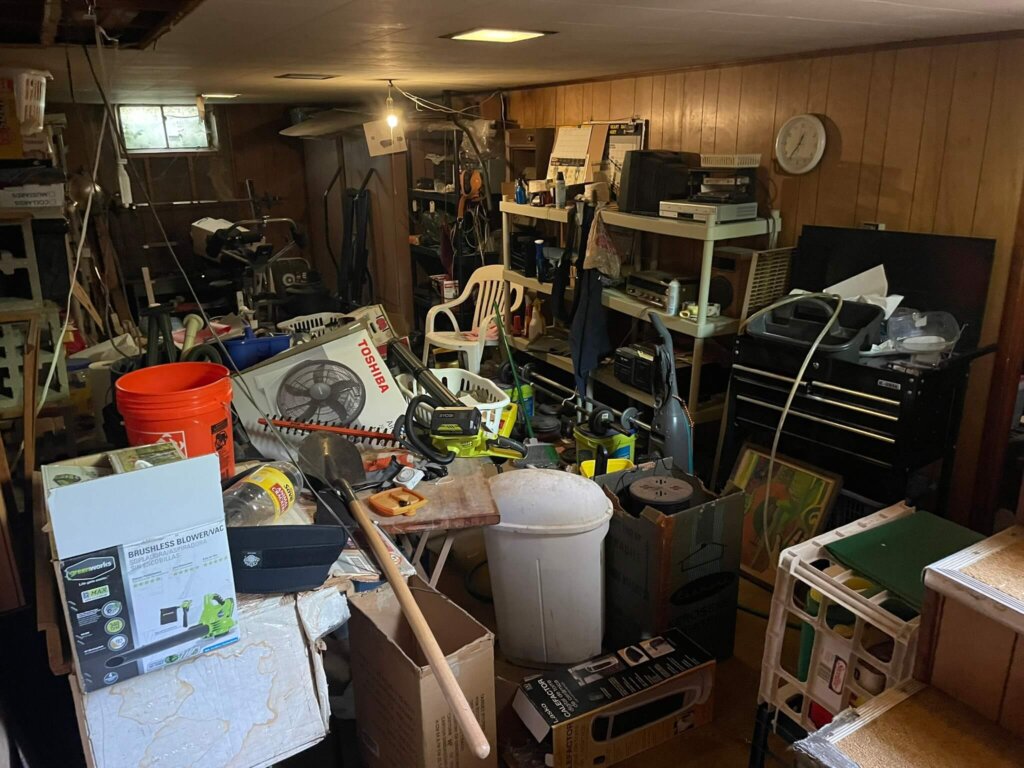
Understanding Hoarding: The Reality Behind the Situation You Are Facing
Before we talk about the house, it helps to understand what hoarding actually is — because how you feel about the situation, and how you move forward, is shaped by understanding what you are really dealing with.
Hoarding disorder is a recognized mental health condition, formally classified in the Diagnostic and Statistical Manual of Mental Disorders (DSM-5). It is characterized by persistent difficulty discarding or parting with possessions, regardless of their actual value, leading to a level of accumulation that disrupts the safe and functional use of living spaces. It is not laziness. It is not a personality flaw. It is not something that could have been fixed with a stern conversation or a few tough weekends.
Approximately 2.5% to 6% of the adult population in the United States lives with hoarding disorder — which translates to somewhere between 8 and 20 million Americans. And critically for the situation many families find themselves in, the disorder intensifies with age. Hoarding symptoms are nearly three times more common in adults over the age of 55 compared to younger adults, and they tend to worsen with each decade if untreated. What begins as a cluttered spare bedroom in someone’s 40s can, by the time they reach their 70s, become rooms that are completely inaccessible, hallways with narrow paths between stacked possessions, and living conditions that would shock the children who grew up in that house.
Hoarding is also deeply connected to trauma, grief, and loss. Many individuals who develop significant hoarding disorder experienced traumatic life events — the death of a spouse, a major illness, financial hardship, or the deep loneliness of outliving friends and social connections. The items they accumulate often represent security, memory, and connection to people or periods of their lives they cannot bear to let go of. Understanding this does not fix anything practically, but it can help family members feel less angry and more compassionate as they face the task of what comes next.
The impact on families is profound. Research published in peer-reviewed psychiatric literature describes hoarding as a condition that impairs the social, physical, and emotional functioning not only of the person living with it, but of their family members as well. Adult children often carry years of complicated feelings about a parent’s hoarded home — frustration at being unable to help, guilt about the relief they feel when the situation is finally over, grief about the home they remembered versus the one that exists now, and exhaustion from carrying the emotional weight of a problem they were powerless to solve.
If you are feeling any combination of those things right now, you are entirely normal. This is genuinely hard. And part of my job, when I work with families in this situation, is simply to acknowledge that before we ever talk about real estate.
What a Hoarder House Actually Looks Like: The Five Levels
Not all hoarder homes are equal in severity, and understanding where the home you are dealing with falls on the spectrum helps you make realistic decisions about your options.
Level 1: The mildest level — some excessive clutter, difficulty throwing things away, but the home is still functional and largely safe. Most rooms can be used for their intended purpose. A Level 1 home might simply look messy and overfull to an outsider but does not pose immediate health or safety concerns.
Level 2: Clutter has expanded beyond one or two rooms. There may be stacks of newspapers, magazines, or mail on surfaces throughout the home. Cleaning has become inconsistent. Some pathways between rooms are narrowing. There may be a mild odor.
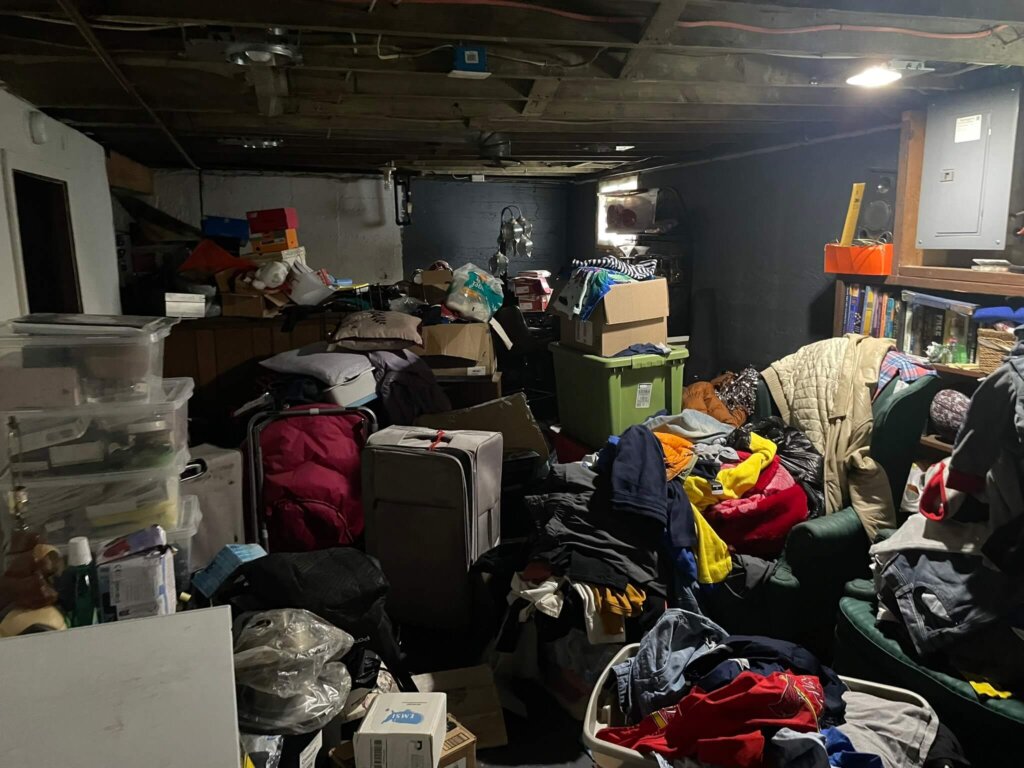
Level 3: Significant clutter throughout most of the home. Some rooms may have become inaccessible or can only be entered by navigating narrow pathways between stacked items. Cleaning has largely stopped in affected areas. There may be pest activity, evidence of mold, or structural concerns beginning to emerge.
Level 4: The home has serious health and safety issues. Multiple rooms are fully inaccessible. There may be rotting food, significant pest infestations, broken appliances, or damaged infrastructure. Bathrooms and kitchens may be unusable. This level often requires professional biohazard remediation in addition to a standard cleanout.
Level 5: The most severe level. The home may be structurally compromised. Human or animal waste may be present. The property may be condemned or close to condemnation by the city or county. No standard buyer — traditional or cash — can simply walk through this home without proper protective equipment.
Most of the homes I see as a local St. Louis cash buyer fall somewhere in the Level 2 to Level 4 range. And all of them — every single one — is something we can work with.
The Real Challenge: Why Traditional Real Estate Does Not Work for Hoarder Homes
If you are thinking about listing a hoarder home the traditional way — with a real estate agent, on the MLS, with professional photos and open houses — I want to save you a significant amount of pain by being completely honest with you about what that process actually looks like for a property in this condition.
Traditional buyers — meaning families or individuals looking for a home to live in — are financing their purchases through banks. And banks have standards. A conventional or FHA mortgage lender will not approve financing on a home with significant safety hazards, pest infestations, mold, structural issues, or health code violations. A Level 3 or higher hoarder home will fail a lender’s appraisal inspection before the deal ever gets to closing. This means your potential buyer pool for a traditionally listed hoarder home is immediately reduced to cash buyers anyway — the question is just whether you find a good one.
Beyond financing, consider the practical reality of showing a hoarder home to buyers. Standard real estate practice involves professional photography, clean and accessible rooms, and a presentation that allows buyers to envision themselves living in the space. None of that is possible in a hoarder home without first completing the cleanout — which can cost anywhere from $5,000 to $75,000 or more depending on the severity, size, and conditions inside the home.
The national average for mild hoarding cleanup runs approximately $3,000 to $5,000 for a 2,000 square foot home. Moderate hoarding cleanup runs $5,000 to $10,000 or more. In severe cases involving biohazard materials — human or animal waste, rotting food, mold remediation, pest extermination — costs can exceed $25,000 and in extreme situations have reached $100,000 or more for a single property. On top of the cleanout, the home will almost certainly need repairs that were masked or made impossible by the accumulated possessions. Plumbing issues, roof damage, HVAC failures, electrical problems, and structural concerns are all common discoveries in hoarder homes once the belongings are removed.
Then add the traditional real estate costs on top of that: a 5.52% average commission in St. Louis, title fees, carrying costs during a listing period that could stretch 49 to 100 days, and the ever-present risk of inspection renegotiations and deal collapse.
For most families dealing with a hoarder home in St. Louis, the traditional path is not just emotionally exhausting — it is financially impractical. The math simply does not work when you add up the cleanout costs, the repair costs, the commission, and the months of uncertainty.
Your Real Options: A Comprehensive, Honest Guide
Here is the part of this article that I hope you bookmark and come back to, because I want to lay out every legitimate option you have in front of you — without steering you in any particular direction before you understand the full picture.
Option 1: Do the Cleanout Yourself (With Family Help)
For families who have the time, physical ability, and emotional bandwidth, doing the cleanout yourselves is the most cost-effective path — assuming it is practical given the severity of the situation.
What this looks like in practice: You rent a dumpster (typically $300 to $600 in St. Louis for a standard roll-off container), gather family members and friends, and work through the home systematically — room by room, load by load. You make decisions about what to keep, what to donate, what to sell, and what to discard. You coordinate junk removal services in Milpitas for large items — furniture, appliances, and bulk debris that won’t fit in a standard dumpster. You handle the cleaning after the belongings are removed.
This option works reasonably well for Level 1 and Level 2 situations where the home is cluttered but not hazardous, and where the family has the time and emotional resilience to work through it together. It can also provide emotional closure — the experience of going through a loved one’s belongings together, finding items worth preserving, and honoring the life that was lived in that space.
But it is important to be honest about the limitations. For Level 3 and above situations, a DIY cleanout is genuinely dangerous. Mold exposure is a serious health risk. Pest infestations — particularly mice, rats, or roaches in a heavily hoarded home — carry disease risk. Unstable stacks of heavy items pose physical injury risk. If you are dealing with a severe hoarder situation, please do not attempt to tackle it without professional guidance on safety precautions at minimum.
There is also the emotional weight to consider. Going through decades of a parent’s or grandparent’s belongings is not simply a physical task. It is a grief process. Many families underestimate how draining it will be and find themselves stalled midway through a cleanout that they started with the best intentions. That is not a failure — it is a completely human response to an emotionally complex situation.
Option 2: Hire a Professional Hoarding Cleanup Service
Professional hoarding cleanup companies are specifically equipped to handle situations that standard cleaning services are not. They have the tools, the training, the protective equipment, and — critically — the emotional experience to work through a hoarder home efficiently and respectfully.
In St. Louis, professional hoarding cleanup services typically charge on a per-day basis, with industry estimates running approximately $1,000 per day for the crew and equipment. A moderate hoarding situation in a standard 1,200 to 1,500 square foot home might take three to five days, totaling $3,000 to $5,000 for the labor alone, plus dumpster rental and disposal fees. Severe situations can run far longer and far more expensive.
The advantage of professional cleanup is efficiency, safety, and the removal of the burden from the family. The disadvantage is cost — and the reality that even after the cleanout is complete, you are still looking at a home that likely needs significant repairs before it can be listed traditionally.
Option 3: Sell Items Through a Garage Sale
If the home contains items of potential value — furniture, tools, collectibles, kitchenware, electronics — organizing a garage or yard sale can offset some of the cleanout costs while giving belongings a second life with people who will use them.
A garage sale requires significant organizational effort upfront: sorting through items, pricing them, advertising the sale (Facebook Marketplace, neighborhood apps like Nextdoor, and local St. Louis community boards are your best channels), and managing the actual sale day. For families dealing with a hoarder home, this often means multiple weekends of preparation work before anything is ready to sell.
Realistically, a garage sale is a supplement to the cleanout process — not a solution to it. You may raise $500 to $2,000 from a well-organized garage sale in a St. Louis neighborhood, which is helpful but does not fundamentally change the equation of what you are facing.
Option 4: Work With an Estate Sale Company
Estate sale companies are an excellent option for hoarder homes that contain items of genuine value — and more often than you might expect, they do. Decades of accumulated possessions can include antique furniture, vintage collectibles, jewelry, tools, musical instruments, and household items that hold real market value even if they are buried under years of clutter.
An estate sale company handles everything from sorting and pricing to advertising and managing the actual sale. They bring buyers to the home over a weekend or multi-day sale event and handle transactions on your behalf. Their fee is typically a percentage of the total sales revenue — usually 25% to 40% — which means their financial incentive is aligned with yours. They want to sell as much as possible at the best prices possible.
In St. Louis, there are several reputable estate sale companies with specific experience handling hoarder and estate situations. Before hiring one, ask specifically about their experience with hoarded properties, their process for sorting through large quantities of mixed items, and how they handle items that do not sell. A good estate sale company can not only recover real value from a hoarder home’s contents but can also make the process feel more organized and less chaotic for the family.
The limitation is timeline. Organizing and executing an estate sale takes weeks of preparation, and the estate sale company will typically want the home’s contents to be minimally sorted before they can price effectively. This option works best when the family is not under significant time pressure and when there is a reasonable expectation of valuable items in the home.
Option 5: Donate What Has Value and Discard the Rest
For families who want to honor the spirit of a loved one’s belongings without the effort of a garage or estate sale, donation is a meaningful and relatively efficient option. Goodwill, Salvation Army, Habitat for Humanity’s ReStore (which accepts furniture and building materials), and numerous local St. Louis charities accept a wide range of household goods.
Many donation organizations will do a pickup from the home, which removes the burden of transportation. This works particularly well for furniture, clothing, kitchenware, and tools that are in functional condition but not necessarily valuable enough to warrant the effort of a sale.
What cannot be donated — broken items, heavily damaged goods, items with no use value — goes to the dumpster or a junk hauling service. St. Louis junk hauling services typically charge $200 to $600 for a standard load, depending on volume and weight.
Option 6: Sell the House As-Is for Cash to Cash Offer Man
And then there is this option — the one that more and more St. Louis families are choosing when they step back and honestly assess what they are facing.
You leave everything. You take what matters to you personally — family photos, heirlooms, important documents, whatever has meaning — and you walk away. Cash Offer Man buys the house exactly as it sits, contents and all. We handle everything from there.
No cleanout costs. No dumpster rental. No repair bills. No estate sale logistics. No real estate commissions. No weeks or months of showings and uncertainty. No risk of a deal collapsing because a financed buyer’s lender rejected the property.
Just a fair cash offer, a closing date that works for you, and the ability to close one of the most difficult chapters in your family’s story without having to physically work through every layer of it first.
How Cash Offer Man Handles Hoarder Homes: Our Process, Step by Step
I want to be completely transparent about exactly what working with Cash Offer Man looks like when you bring us a hoarder home in St. Louis. There are no surprises in our process, and I want you to understand every step before you ever decide whether it is right for you.
Step 1: The Phone Call
It starts with a conversation — just you and me, or you and a member of my team. We ask some basic questions about the property: the address, the general situation (inherited? Parents transitioning to care? estate situation?), and what your timeline looks like. We do not ask you to describe every room or estimate the severity of the hoarding. We do not need that information before we visit. What we need to know is that you have a property and you are exploring your options.
There is no obligation attached to this call. You can call us, talk for 20 minutes, and decide you want to explore other options first. That is completely fine. Our goal in that first conversation is simply to understand your situation and give you a realistic idea of what a cash offer process looks like for a home in this condition.
Step 2: The Walkthrough
We schedule a visit to the property. This is not a formal home inspection. We are not bringing an inspector looking for leverage to reduce an offer. We are visiting the home as it actually exists — contents, clutter, condition, and all — so that we can make you an honest, accurate offer that reflects what we are actually seeing.
When we walk through a hoarder home, we are looking at the structure and systems — the roof, the foundation, the HVAC, the plumbing and electrical — to the extent we can assess them given what is present. We are not cataloguing the belongings or making judgments about the contents. We have seen it all. There is nothing you can show us that we have not seen before, and there is nothing that will cause us to look at you or your family differently.
The walkthrough typically takes 30 to 60 minutes. You do not need to clean anything before we visit. You do not need to apologize for the condition. You just need to let us see the property.
Step 3: The Cash Offer
Within 24 hours of the walkthrough, we present a written cash offer. This offer is based on the home’s condition, the local St. Louis market, and comparable sales in the neighborhood — not on an idealized version of what the home might be worth after a full renovation.
The offer will be fair and honest. We are not trying to steal your home. We are trying to give you a real number for a property in real condition, taking into account the work that will need to happen after we purchase it. We walk through the numbers with you transparently, and we encourage you to compare our offer against what you would realistically net from a traditional sale after accounting for cleanout costs, repair costs, commissions, carrying costs, and the time involved.
Step 4: You Decide — On Your Timeline
Here is the part that matters most: we do not pressure you. Once you have our offer, you take whatever time you need to think about it, talk to your family, explore other options, and make the decision that is right for your situation.
If you have personal items in the home that you want to retrieve — family photos, important documents, heirlooms, anything of personal significance — we give you the time and access to do that before closing. We are not going to rush you out of a home that holds memories and meaning for your family.
If you need help identifying or retrieving specific items, we can assist with that too. Part of what makes Cash Offer Man different from a faceless national company is that we are local people who understand that this is not just a real estate transaction — it is a deeply personal and often emotionally charged moment in your family’s life.
Step 5: Closing
Once you accept the offer, we engage a local St. Louis title company to handle the closing process. This typically takes 14 to 30 days, depending on the title work required and your preferred timeline. We cover the closing costs. There are no real estate commissions deducted. On closing day, you sign the documents, the funds are transferred, and the property — and everything in it — becomes our responsibility.
From that moment forward, you do not have to think about the cleanout. You do not have to worry about the contents, the repairs, or the condition. We handle every bit of it. That is what we are here for.
What Happens to the Belongings After Cash Offer Man Buys the House?
This is a question families ask me regularly, and I want to answer it honestly because it matters.
After we close on a hoarder home, we work with a combination of local junk hauling companies, donation organizations, and estate liquidation contacts to manage the property’s contents. Items with genuine value — furniture, tools, collectibles, household goods in functional condition — are frequently donated to local St. Louis charities, sold through resale channels, or repurposed. Items without use value go to disposal.
We do not approach a hoarder home’s contents with contempt or carelessness. These were a person’s belongings — often items that held real meaning to the person who accumulated them, even if that meaning is not apparent to an outside observer. We handle the contents with basic respect, and we try to find second lives for items that can serve someone else.
If there is something specific in the home that you are worried about — a particular piece of furniture, a collection, documents that might contain important personal or financial information — tell us. We will make sure it is addressed before the cleanout begins.
The Emotional Side: What Families Are Really Dealing With
I want to spend a moment on something that does not often get acknowledged in real estate articles, because it is at the core of so many of the conversations I have with families dealing with hoarder homes.
When you walk into a parent’s or grandparent’s hoarder home — particularly if you are doing so after their death or as you are transitioning them into a care facility — you are not just seeing a messy house. You are seeing decades of a life that was lived in a specific kind of struggle. You may be seeing a home you have not been allowed inside in years, because your loved one was too ashamed to let you visit. You may be finding items that reveal a person you did not fully know. You may be discovering the extent of a problem that family members tried to address and were never able to change.
That is grief. And it is complicated grief — layered with relief, guilt, exhaustion, and sometimes anger. All of those feelings are legitimate and normal.
What I have learned from years of working with families in this situation is that the single most important gift you can give yourself is permission to take the path that is honest about what you are capable of right now. If you have the time, the physical ability, and the emotional bandwidth to work through the home yourselves, that can be a valuable and healing process. If you do not — if the thought of sorting through every drawer and every closet in a home full of decades of accumulated belongings feels like more than you can handle while also managing your grief, your job, your family, and your own life — that is not a failure. That is being honest about what you are.
Cash Offer Man exists, in part, precisely for families in that second category. We take the physical burden off your shoulders so you can focus on the parts of this chapter that actually matter — honoring your loved one, supporting each other, and moving forward.
Common Questions Families Ask About Selling a Hoarder House in St. Louis
Over the years, certain questions come up in nearly every conversation I have with families in this situation. Let me answer the most common ones directly.
Does the severity of the hoarding affect your offer?
Yes, honestly — the condition of the property affects the offer, just as it would with any buyer. A home with a Level 2 hoarding situation that is fundamentally sound structurally will command a higher offer than a Level 4 property with significant structural damage, mold, pest infestation, and systems that need replacement. That is not punishing you for the situation — it reflects the actual work and cost involved in rehabilitating the property. What does not change is our willingness to make an offer and our commitment to treating you and your family with respect throughout the process.
What if we want to go through the belongings first and take what we want?
Absolutely, and we encourage this. Before we close, you have full access to the property to retrieve any personal items, documents, heirlooms, or belongings that matter to your family. We can be flexible about the timeline if you need more time to sort through things carefully. There is no rush.
What if we have already started a cleanout and only gotten partway through?
That is completely fine. We can assess the home in whatever state it is in — partially cleaned out, fully as-is, or anywhere in between. If you have made progress on the cleanout and want credit for that in the offer, we are happy to discuss that.
What if the house has serious problems beyond just the hoarding — foundation issues, roof damage, code violations?
That is exactly the kind of situation we handle. A home that a traditional buyer could never finance, that a traditional real estate agent could not practically list, and that a family cannot reasonably afford to repair — that is precisely where Cash Offer Man is most useful. We factor the structural and systems issues into our offer, and we take on the responsibility of addressing them after closing.
What if there is still an existing mortgage on the property?
That is not a problem. The cash offer proceeds at closing are used to satisfy any outstanding mortgage balance first, with the remaining equity going to you. If there are liens, judgments, or unpaid taxes on the property, those can frequently be resolved through the closing process as well. We work with experienced local title companies in St. Louis who handle complex title situations regularly.
Is this a judgment-free process?
Completely. I want to say this clearly: in all the hoarder homes I have walked through in St. Louis, I have never once judged the person who lived in it or the family dealing with it afterward. Hoarding is a mental health condition. The people who develop it are not bad people. The families who are left navigating the aftermath are not doing anything wrong by choosing a practical solution. You will never hear a word of judgment from anyone at Cash Offer Man.
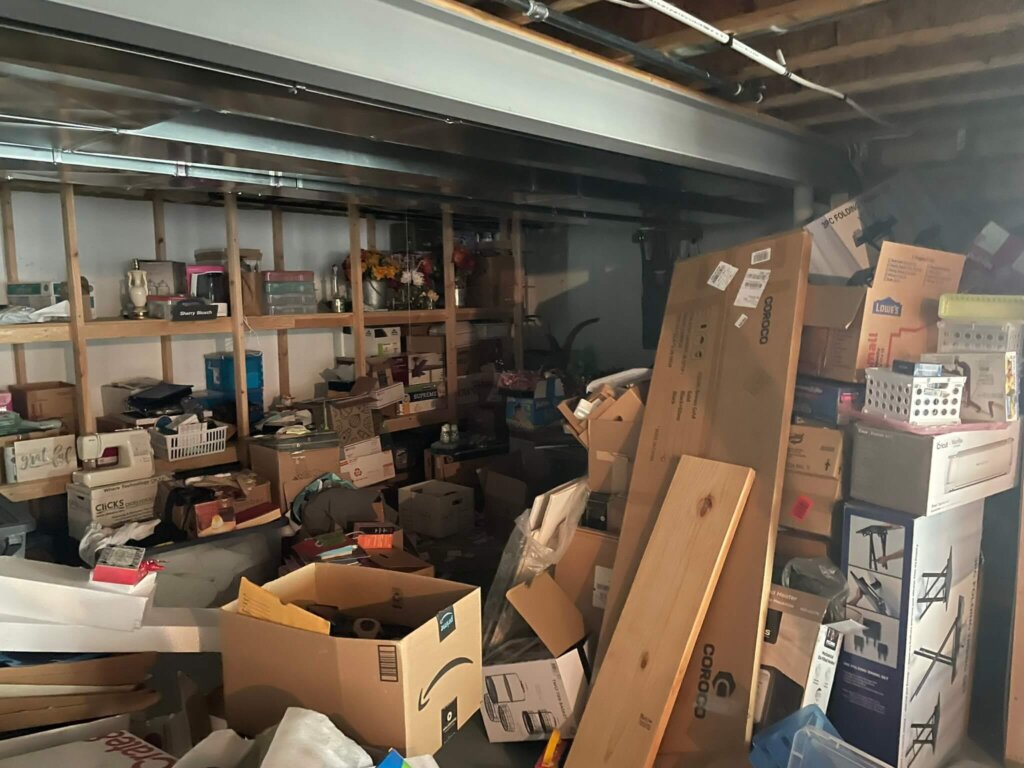
The True Cost of the Alternatives: Why Many Families Choose the Cash Path
Let me be honest about one more thing, because I think it helps families make clearer decisions when they understand the actual financial picture.
Suppose you are dealing with a Level 3 hoarder home in St. Louis with a fair market value, if fully cleaned and renovated, of approximately $160,000. Here is what the path to a traditional sale actually costs:
Professional hoarding cleanup: $8,000 to $15,000. Dumpster rental and disposal: $1,500. Post-cleanout repairs (HVAC, plumbing, paint, flooring — very common in hoarder homes): $15,000 to $30,000. Real estate commission at 5.52%: $8,832. Carrying costs during listing and escrow (90 days): $3,600. Post-inspection concessions: $3,000.
Total costs before you see a dollar: $39,932 to $61,932.
Net proceeds from a traditional sale: between $98,068 and $120,068 — and that assumes everything goes smoothly, the deal does not fall through, and the repair costs do not exceed estimates (they frequently do).
A fair cash offer from Cash Offer Man on that same home in as-is condition: somewhere in the range of $95,000 to $110,000, depending on the specific condition of the structure and systems, and the local comparable sales.
The gap between the two paths is often measured in months of stress, tens of thousands of dollars in upfront costs, and the genuine risk that the traditional path falls apart entirely — leaving you with a partially cleaned-out home, more money spent, and the whole process to start over.
For many families, especially those who are simultaneously managing grief, estate logistics, family dynamics, and the demands of their own everyday lives, the cash offer is not a compromise — it is the right answer.
When a Traditional Sale Might Still Make Sense
I want to be straightforward with you: Cash Offer Man is not the right answer for every hoarder home situation, and I would rather tell you that honestly than have you make a decision that is not in your best interest.
If the home is in a Level 1 or Level 2 condition — cluttered but fundamentally sound, without serious structural or health issues — and if your family has the time, energy, and financial resources to invest in a cleanup and basic repairs, a traditional listing may genuinely produce a higher net outcome. If the home is in a high-demand St. Louis neighborhood where fully renovated comparable sales are substantially higher, the math may shift in favor of investing in the cleanup and listing.
The honest answer is: run the real numbers for your specific situation. Calculate the realistic cleanout cost, the realistic repair cost, the realistic commission and carrying cost, and compare that against what a fair cash offer would deliver. If the traditional path pencils out and you have the capacity to execute it, that may be your best option. If it does not — or if the capacity simply is not there — Cash Offer Man is here to provide a real, reliable alternative.
A Final Word: You Are Not Alone in This
Every week in St. Louis, families are walking into homes they inherited from people they loved — homes that were kept secret, homes that look nothing like the memories they carry, homes that represent the final, complicated chapter of a long and complicated story.
You are not the first person to stand in a doorway and feel completely overwhelmed by what is in front of you. You are not the first person to feel the mix of sadness, relief, guilt, and exhaustion that comes with this situation. And you are not the first person to wonder how you are ever going to get through this.
I have been through this with a lot of St. Louis families. I have seen how it goes when people try to muscle through a cleanout that was more than they could handle. I have seen the relief that families feel when they give themselves permission to take a different path. And I have had the privilege of being part of helping people close some of the hardest chapters of their lives so they can move forward.
If you are dealing with a hoarder home in St. Louis — whether it belonged to a parent, a grandparent, a sibling, or yourself — and you want to talk through your options with someone who will be honest with you and genuinely try to help you figure out the right path, call Cash Offer Man. There is no obligation. There is no pressure. There is just a conversation with a local St. Louis guy who has been in this situation many times and wants to help you find your way through it.
We will make you an offer if you want one. But even if you do not, we will help you understand your options — all of them, honestly — so you can make the decision that is right for you and your family.
Because at the end of the day, that is what this is really about. Not the house. The family.
Aaron Eller is the founder of Cash Offer Man, a local home buying company serving St. Louis City, St. Louis County, and surrounding Missouri communities. Cash Offer Man purchases homes in any condition — including hoarder homes — for cash, with closings in as little as 14 days. For a no-obligation conversation about your situation, contact Aaron directly through CashOfferMan.com.
Get An Offer Today, Sell In A Matter Of Days